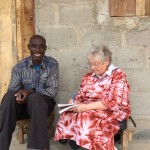
Education Must Continue Initiative is changing the statistics

Logo for EMCI

Logo for EMCI

Education for children in Northeast Nigeria has suffered immensely. Here is a description of the problems from an article in International Business Times.

Destroying Nigeria’s Children – Before Boko Haram launched its brutal insurgency in northeast Nigeria six years ago, the region recorded the lowest school enrollment rate in the country, especially for girls, as well as the lowest level of literacy and highest incidence of poverty. The insurgency has exacerbated the situation. Over half a million children in northeast Nigeria have had to flee to safety in the past five months, bringing the total number of displaced children in the conflict-torn region to 1.4 million, the United Nations said in September. More than 208,000 of them are not in school.

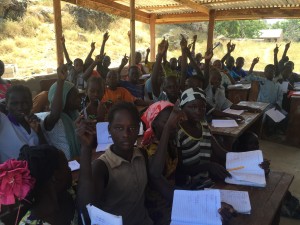
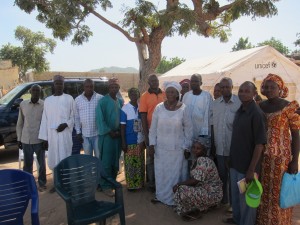
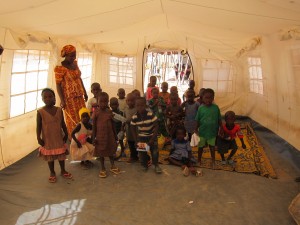
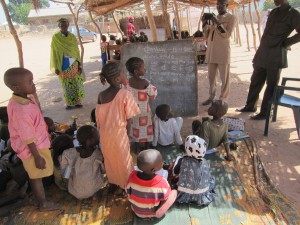
But the NGO, Education Must Continue Initiative, refuses to let these statistics stand. They are working hard to get the children back in schools. Here are some pictures(by Jay Wittmeyer and Roy Winter) from a recent visit to one of their temporary school in Yola.

Makeshift classrooms

Makeshift classrooms

Teachers at the Yola temporary school

Teachers at the Yola temporary school

School in a tent donated by Unicef

School in a tent donated by Unicef

More tentative classes

More temporary classes

Violence and Suffering Become a Way Life

This was a good article (link below) highlighting what it is like to live long term under chaos and violence. Sadly, life goes on and people adapt to a new normal. Continue to pray for our brothers and sisters in Nigeria. 

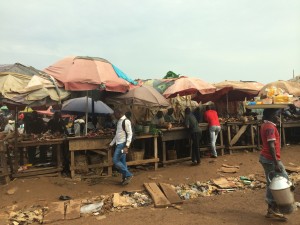
Market scene in Nigeria

Market scene in Nigeria

QUOTE from the article (see link below):

“Just a few weeks ago a suicide bomber with alleged affiliations to Boko Haram struck at a newly opened mosque in Jimeta, a suburb of the city, as hundreds of worshippers gathered to pray there for the first time. More than 100 people were wounded and 42 were killed.

The attack came not long after a double bombing in the city’s main market, killing traders and commuters alike. “It only took two days for the market to reopen,” says local Asauten Anderibom. “Everyone has to feed their families so they went back to trading right at the same spot Boko Haram struck.”

http://www.theguardian.com/world/2015/nov/09/nigeria-stories-life-in-the-time-of-boko-haram

2 visits to Chibok – 50 years apart

Chibok has always been a difficult place to get to. Here are stories of two journeys to Chibok 50 years apart.

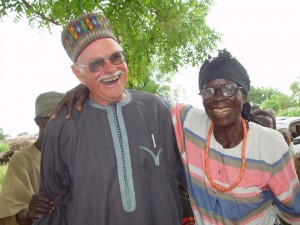
Ralph Royer (2003 visit to Nigeria)

Ralph Royer (2003 visit to Nigeria)

 Story #1 Chibok Visit – A trip to Remember

(recalled by Ralph Royer – long time missionary in Nigeria, Supervisor of the 40 Church of the Brethren Elementary Schools during the 1960’s)

In the early 1960s the government of northern Nigeria announced a desire to transfer primary schools, both mission and native schools, to what were called Local Education Authorities (LEA). There being only a few non native schools in Borno LEA made it a good place to start. I made several trips to Maiduguri to help work out some of the details to transfer our three schools in Borno LEA – Chibok, Kaurwatikari and Mbalala. It was decided to do the transfer in 1963 and I felt the schools and teachers needed to know this as ownership and employment etc was to transfer to the LEA.

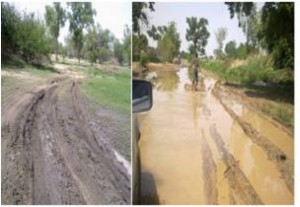
Current road to Chibok

Current road to Chibok

Usually Chibok was cut off by road from July to October, but this was August so I decided to take a small 50cc motorcycle from Lassa for the thirty miles to Chibok. At the Musa stream I had to get men to help hoist it over our heads to cross the stream. One of the shorter men stepped in a hole and briefly disappeared below the surface. When I was within seven miles of Chibok, I came to a large flowing stream at a spot I knew to be only a low area with an occasional mud puddle. Now it flowed two hundred feet across. I had already had help several times crossing streams, so seeing no around, I parked my moped by a tree and started walking in water up to my chest. A few miles on I met some Fulani cattle herders and their dog, but we could not converse and we each went on. After separating some distance, I heard a funny sound and turned around to see their dog really bearing down on me. I reached at it and the dog veered off, but it raised the hair on my neck and added to the seriousness of the whole situation with water everywhere. As I approached the last stream just behind the mission station, I began to wonder where the station was. There was nothing but water as far as I could see. A slight movement ahead caught my eye, it was a woman climbing into the branches of a tree. I watched as she went through to the other side and down holding onto small trees as she went forward. I followed and later found that this tree grew in the middle of the stream and we had crossed the stream where it was ten feet deep and three feet beyond each bank.

It was a very surprised Grace Brumbaugh who met me when I arrived at her house! They had four and a half inches of rain that afternoon and many mud houses had collapsed. It was also an appreciative group of teachers to whom I explained the upcoming changes in the running of the schools.

Over the next several years we arranged for the transfer of all of our forty-two schools. Informing these teachers required less “heroism”!

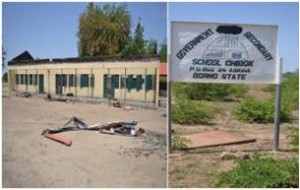
School from which the "Chibok girls" were abducted

School from which the “Chibok girls” were abducted

Story # 2 My Wilderness Journey To Land Of Chibok (An excerpt)

By Naija247news Posted In Crime & Investigative Reports

(A journalist tells of his trip to Chibok some time after Boko Haram had captured 276 girls)


The road to Chibok is bad and full of uncertainty; checking points everywhere mounted by vigilante group. Bombed cars, trucks and buses abound on the road to Chibok. Burnt houses and hot. Several villages sacked by the insurgents whose inhabitants now live under trees with their children begging for aid from travelers. Abandoned Police Posts that had received the insurgents’ baptism of fire! The Damboa-Chibok Road is particularly very bad. The major road has been taking over by flood. Drivers now drive through the desert forest like antelopes sneaking to avoid wet bushes from touching them. Some have been killed on the road by the insurgents and many escaped with varying degrees of gunshots injuries. Pastor Manasseh for instance, showed me injuries he escaped with on this road. At some checking points mounted by policemen and soldiers passengers are asked to step out of the car and walk through the check point.

We continue to remember those abducted by the Boko Haram and pray for their safe return.

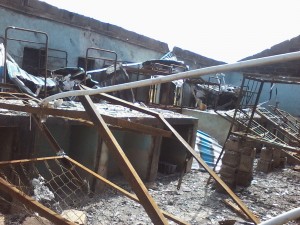
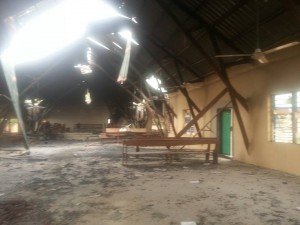
Destroyed Chibok school

Destroyed Chibok school


Completing a Degree During Troubled Times

by Janet Crago

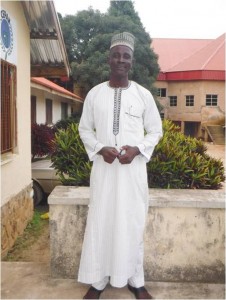
Zakariya Musa

Zakariya Musa

In 2014, Zakariya Musa was pursuing his Bachelor of Science degree in Mass Communication at the University of Maiduguri.  It was supposed to be a 6-year journey.  He works for EYN Headquarters as the Editor of Sabon Haske, which is an EYN publication reporting on major events in EYN.  The University of Maiduguri offered a program where he could travel to Maiduguri to attend classes on Friday evening and all day Saturday.  He would travel earlier in the day on Friday to get to Maiduguri for the Friday classes, then travel on Sunday to get back to EYN Headquarters at Kwarhi.  He was given study assignments to work on during the two weeks he would spend at EYN Headquarters before again returning to Maiduguri for the Fri – Sat classes, then back to Kwarhi again.  Zakariya would work at EYN Headquarters during the day, and study at night.  He has 8 children, so to get a quiet place to study, he would frequently go to the Library or the classrooms at Kulp Bible College (KBC) at night to study.  It was a very busy life.  But, this was a schedule he expected — before the Boko Haram insurgency geared up.


Maiduguri is a very large city north of EYN Headquarters.  If you travel on the road that goes north and is the shortest route, it takes about 4 hours.  Soon, however, it became unsafe to travel the shortest road up to Maiduguri.  Even today, because of the insurgency, it is not safe to pass on the road through Bama / Gwoza.  Instead, travelers leaving Kwarhi must first travel to Yola which is about 4 hours SOUTH of EYN Headquarters.  Then you have to travel from Yola to Numan, Adamawa state /to Gombe, Gombe state/ to Damaturu, Yobe State/to Maiduguri, Borno State, a further trip of approximately 10 hours through 3 state capitals.  So, total trip time now become 14 hours one way.  Getting his degree became very difficult as Zakariya continued to pursue it.  Not only did the travel time increase so much that it became almost impossible, but the trip is not even very safe in some places like Damaturu.  Another problem was that the city of Maiduguri imposed a curfew during this time to help ensure the safety of the city.  Zakariya’s probem was that they kept changing the time.  Sometimes it was 5 pm to 6 am, sometimes it was 6 pm to 7 am, and sometimes it was 7 pm to 7 am.  Zakariya always called ahead to determine the time so he didn’t have to stay in the bush.  He had to stay over night in Yola several times.   But, Zakariya still persevered toward his degree.

Then, to make matters worse, Boko Haram began an all-out effort to carve out a radical Islamic state in a section of northeast Nigeria.  They weren’t having success in overcoming Maiduguri itself so their eyes moved toward its surroundings with a bomb blast here and there within the city despite the heavy military checkpoints at all road linkages. They began a march south, overrunning Bama, Gwoza, Madagali and Michika in mid September, moving into KBC on Oct 29 and overrunning Mubi on Oct 30.  People were anxious all over the area, but didn’t want to abandon their homes and crops.  They didn’t want to run away until they had no other choice.

But, Oct 29th was that day for Zakariya’s family, who lived in Kwarhi near the EYN Headquarters.  His older children abandoned their house early in the morning of Oct 29th by starting their trek, on foot, toward Gashala, then Hong, then Gombi, before getting transport to Yola.  Unfortunately, Zakariya’s wife didn’t leave soon enough.  She got trapped in her home in Kwarhi.  Thankfully, she was able to sneak out later in the day.  She went through the bush to Gashala, then Hong.  She trekked about 15 miles before spending the night in Gashala.  She and her group (which included a pregnant woman who was in her eighth month) were finally able to get transport from Hong to Yola.  That same day, Zakariya had made the long journey back from Maiduguri and arrived in Yola the evening of Oct 29th.  His wife arrived on the 30th.

The pastor and parishioners of the Vinikilang EYN church, just outside Yola, were allowing displaced people to gather in a large open area near their church.  Zakariya estimates that there were about 400 adults staying in this open area.  Sometimes they were able to get one plate of food for the younger children.  He had very little money with him, but was able to purchase a little food for the rest of them.  They stayed there for 6 days.  Ultimately, the displaced people there dispersed to many areas, wherever they could get a safe place to stay until they could return home.  After discussing their options, Zakariya’s family decided to move to a refugee camp in Bukuru (near Jos) run by the Stephanos Foundation.  There they stayed in a shelter which only had half walls.  They decided to hang cloth around the open top half so they could have a little privacy.

Then, Zakariya got word from his university supervisors that he needed to finish his final project as his allotted time had almost expired.  He didn’t know how he was going to finish his project while living in a camp.  There was no private area to work in.  His advisor agreed to communicate with him about his project through email.  He had a laptop, but how was he going to power it?  Well, Zakariya is resourceful, and again he pulled off the almost impossible.  He finished his project on time and was able to complete his Bachelor of Science Degree.  But, the story doesn’t end there —

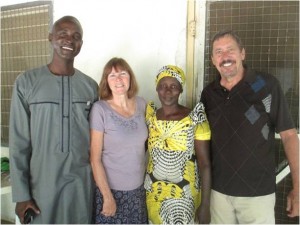
Zakariya with his wife and Carl & Roxane Hill

Zakariya with his wife and Carl & Roxane Hill

While working on his final project he got word from Gavva that his parents had been killedby the insurgents.  Gavva is one of the villages in northeast Nigeria very close to the Cameroon border where people are still afraid to go back because they are likely to be killed.  Then, he then got word that his mother had been seen alive.  But — he has now not heard from his mother for over 6 months, and he’s doubtful that this is really true. His father and mother lived in Gavva their whole lives, and Zakariya grew up there.  The death of his parents has been a terrible blow for him.

Zakariya thanks God for getting him through the difficult challenges of getting his degree.  He is also grateful to Stephanos Foundation for helping to provide for his family during a time when he’s also mourned for his parents and the other colleagues he has lost to the Boko Haram conflict.

When he reflects on what has happened to him he says he appreciates people, particularly in Jos, for their concern for EYN.  His prayer is for peace to come back to Nigeria, especially in the northeast where the insurgency has taken over.  He prays for God to give EYN a forgiving heart because we have all sinned before God.  He prays for the new government of Nigeria under the leadership of President Muhammadu Buhari and for the betterment of all citizens.


EYN Disaster Team Brings Relief for Maiduguri’s Displaced

Rev. Yuguda

Rev. Yuguda

By Rev. Yuguda Mdurvwa (Manager of EYN Disaster Team)

By the special grace of God, we took off for Maiduguri on the 15th of October to bring much needed food and household items to the displaced people in Maiduguri. Rev. Amos Dwala (also a member of the Disaster Team) and I passed through the towns of Potuskum, Damaturu, Beneshek and many others on our way to the capitol of Borno State.  Indeed, the Boko Haram has done much damage to these towns, and many places remain desolated. As we traveled, we were moving with fear and pains in our hearts seeing the kind of damage that has been done. One positive thing we noticed on the road is that the military are patrolling and stationed in these dangerous zones leading to Maiduguri. When we arrived on Thursday, we witnessed three bomb blasts, one in Moloi (a section of Maiduguri) at a Mosque. More than 50 people were killed, and the next day another bomb blast at Ajalari killed 20 more. On Saturday, the 17th, another bomb was exploded at Ummurari where 8 other people lost their lives. On Sunday, a lady suicide bomber was about to enter Maimalari Army Barracks but was shot dead by the soldiers.

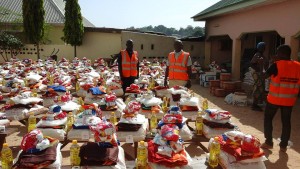
Food and Household items ready for distribution

Food and Household items ready for distribution

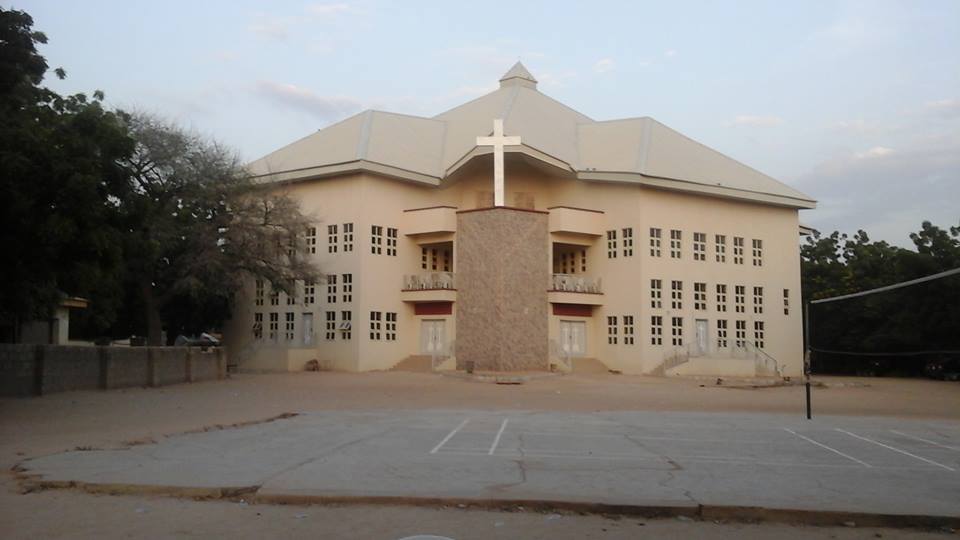
The people in Maiduguri are always living in fear of the unknown, but despite all these violent things happening, God is still in control. We distributed food and household items to 544 households. The items included were: rice, blankets, mosquito netting, cooking oil, detergent, salt, Vaseline, maggi cubes and sugar. The IDPs (Internally Displaced Persons) were happy to receive this kind of help. They said this was the best assistance they had received, so far. Those that are living in the camps in and around Maiduguri are 7,572 in number, while the people living with host families and rented houses are over 3,ooo. These are the people we gave out assistance to because the Borno government is taking care of the ones in the camps. After the distribution, I worshipped in my former church EYN Maiduguri which was burnt by the insurgents in July of 2009, when I served as pastor there. We rebuild it in two years and the final improvements were completed this year.  Worshippers that day were up to 3,700 in number. What a great God we are serving, in him we put our trust. On Monday 19th of October, we returned safely back to Jos and the EYN headquarters.

EYN #1 Maiduguri Church

EYN #1 Maiduguri Church

Saratu’s Escape

By Janet Crago

Personal Note:  This story was especially important to Tom and Janet Crago because Saratu’s goat herd got its beginning in 2007 with a donation of $100 from Florence Crago, Tom’s mother, who was moved to help a widow in Nigeria when she heard her story.

Saratu and Rita

Saratu and Rita

It was Oct 3, 2014.  They first came as thieves, and were dressed as soldiers.  They surrounded the whole village of Gavva East.  Saratu and her mother were at home.  It was 8 o’clock in the morning and Saratu was taking her bath.  When they started firing their guns, the sound of gunshots came from all over the village.  Everyone started running for the mountain.  The Boko Haram insurgents killed some people and kidnapped many women and children that day.  Saratu was one of the lucky ones.  Her mother was with her and they were fast enough to run and escape captivity.  Saratu tells of gunshots passing very close to her and how panicked she felt.  She ran until she thought she would burst from lack of breath.  It is a steep climb up the mountain.

After that day, the Christians from Gavva East did not return to live in their village.  They were too frightened. They stayed on the mountain.  They didn’t want to leave their home area and were hopeful that the Boko Haram had gone away for good.  This area of northeast Nigeria has had a very lucrative farming history.  They grow guinea corn, sesame seed, and onions.  But the Boko Haram were persistent in their aim of driving Christians from the area.  They came again on Oct 14, 2014.  They dressed in football (soccer) uniforms and pretended they were Christians.  They told everyone to come out and that it was safe, but the ones who came out were killed or captured.  Many more women and children were kidnapped.  The men were killed.

The word spread that the Muslims from Gavva East went to the Sambisa forest and joined Boko Haram.   So, the neighbors and former friends of Christians in Gavva East had now become their enemies who were trying to kill them or drive them away from their homeland.  The Boko Haram insurgents came back to the mountain hideaway on Oct 24, 2014.  They came from all directions around the mountain and surrounded it.  Saratu and her mother hid in a small cave.  The Boko Haram spent one week of relentless searching by surrounding the mountain and calling out to people to come out.  They would cry out every day saying, “Come out, come out, you will not be killed if you convert to Islam”.  But if you refused to convert they would slaughter you (cut your throat) and throw pieces of your body into the community’s mountain spring water source. They spoiled the water for everyone.  Saratu and her mother never came out.  They remained true to their Christian faith.  They stayed hidden while trembling with fear.  They refused to convert.  During this horrible week of intense fear, other insurgents were in the village of Gavva East looting houses.  They took away everything valuable, including the zinc roofs of the houses.  Then they set fire to the Christian homes.  It was a very difficult week.  The Christians in hiding would come out in the dead of night to search for a way to Cameroon.  Finally, they left on their trek to Cameroon.  Because they didn’t have water, they kept their eyes open for wet spots on the ground.  When they spotted a wet site, they would dig down until water started filling the hole.  When the water filled the hole enough, they would drink the water.  They did not eat for a week on this trek to Cameroon.

Survival in the Cameroon, too, was difficult. The town where they went was predominantly Islamic.  They discovered that if they could do a little work for a Muslim home, they would be given a little money for food.

At one point, a Muslim man who took passengers to Yola told them that he would take them to Yola for 5,000 Naira ($25) each, but he just took their money and disappeared.  Many others fell for this trick as well.  Finally, Saratu and her mother were able to arrange transport for the two of them to be taken to Yola for 18,000 ($90) each.  Saratu’s father was able to send them the money.  When they got to Yola, it was easy to arrange transport back to Maiduguri.  By that time, Saratu’s girls had not heard from their mother for 6 months.  They had lost hope that she was still alive.

Saratu is a widow with four daughters.  Her husband, Daniel, was killed in a road accident

Twins Walla and Wassa

Twins Walla and Wassa

when Saratu was just 27.  Walla and Wassa are her oldest children and twins. They are attending university.  Rita has just completed secondary school and is staying with an uncle.  Her youngest, Renate, is attending boarding school.  Saratu left 22 goats behind when she had to flee.  Losing her goats was a big concern because she was using the money from the sale of goats to pay for her girl’s school fees.  They also gave her a source of protein for her own family.


Saratu is now about the business of recovery.  She recently got a job at the Center for Caring and Empowerment Initiative (CCEPI) in Jos, run by Dr. Rebeccah Dali, the wife of EYN’s President.  She is very happy to have work again.  Before her escape, she had been employed by the Literacy program in Gavva.  This program was a function of EYN providing much needed education in the Gavva area.  That program doesn’t exist any more because all Christians have had to leave the area and all the buildings have been destroyed.  The Christians of Gavva East are still mourning the loss of the Literacy program.  They now have to focus on moving on with their lives in another area.  Please pray that God will bless them in their new workplaces and that their industry and Godliness will have a huge influence in the new place.

NIGERIA HAS DETERIORATED INTO A MAJOR HUMANITARIAN CRISIS

by Katherine Edelen

Amid similar announcements made by his European counterparts, Secretary of State John Kerry, announced that the U.S. would accept 85,000 Syrian refugees in 2016 and 100,000 by 2017.  This, no doubt, is welcomed news. Yet, while we celebrate this extension of good will to Syria’s refugees, there is another conflict that rages on with little attention to the humanitarian crisis it has wrought. In Nigeria, humanitarian interventions remain woefully under-resourced by the international community, leaving Nigerian civilians and churches to fill the void unsupported. The international community must and can do more.

Despite President Buhari’s campaign promise to rid Nigeria of Boko Haram, violence has escalated.  Since Nigeria’s national election, the already severe situation in Nigeria has deteriorated into a major humanitarian crisis. Not only are the 1.5 million internally displaced peoples (IDP) fleeing from the conflict targets of direct violence, they are also going without food. More than 4 million are facing severe acute levels of food insecurity and malnutrition in northeast Nigeria alone. The number grows to 5.5 million when you include neighboring countries, and these numbers are expected to increase in anticipation of an exceptionally rainy season

The Nigerian National Emergency Management Agency, the State Emergency Management Agencies, Nigerian civil society, INGOs, and UN agencies are frantically attempting to scale up their response, however, lack of capacity and chronic underfunding remain major challenges. Few humanitarian actors remain in the Northeast and many can only reach those in government-sponsored camps, which only account for 8-10% of those affected by the conflict. The remaining 90% of IDPs live hidden in host communities and informal settlements, resulting in vast unmet needs.  The UN OCHA estimates that only 50% of all conflict-affected peoples are receiving any assistance. The Ekklesiyar Yan’uwa A Nigeria (EYN), or Church of the Brethren in Nigeria, is one of the few local groups filling in the gaps. With support coming from the US Church of the Brethren, EYN leadership found new footing and created a crisis response team.

As the violence spread in the fall of 2014, EYN Liaison Officer, Markus Gamache, opened his home to displaced families, friends, and others.  Soon 50 people were living in his two bedroom home located in Jos.  As the violence spread and needs grew, Markus developed the vision for an interfaith camp to assist displaced Muslim and Christian families and promote interfaith co-existence.  Working with the interfaith group, Lifeline Compassionate Global Initiatives, Markus developed a plan to build ten houses.  By the spring of 2015, 62 homes neared completion with a projected goal to help 100 families. These efforts have resulted in thousands receiving food, water, and shelter. EYN’s Peace program is providing trauma-healing workshops for pastors, women’s groups, and lay leaders to help those suffering from spiritual and emotional trauma.

Roy Winter, Associate Executive Director of the Church of the Brethren Global Disaster Ministries, highlighted the impressive show of resiliency and leadership the EYN team has demonstrated in providing relief to thousands through the remaining church structures.

“Under the inspired leadership of Reverend Dr. Samuel Dali, EYN president, construction is underway for care centers that will support those displaced from the current crisis and future violence in Nigeria.  The Church is not only helping serve those in need, it is imagining how to better serve beyond this crisis.  An impressive effort with displaced staff and only 30% of the Church body intact.”

Despite the incredible work of this organization, and others like it, the needs of displaced people in Nigeria continue to outpace capacity and assistance, and barriers persist.  Reports on the Nigerian Federal Government’s limited, and sometimes counterproductive, response to the IDP situation have included the forced resettlement of IDPs back to conflict zones in an attempt to present a good image of the government’s efforts against Boko Haram. Trucks carrying hundreds of IDPs, without access to food, water, or health assistance during the journey, have made their way from Maiduguri to Gwoza, a stronghold of Boko Haram.  Even among those who aren’t physically relocated back to active conflict zones, there are many who have decided to return, despite the security risk, when met with the harsh reality of limited assistance and conditions at IDP camps.

The international community must act to properly fund operational humanitarian organizations and ensure that there is adequate funding for capacity training for local government agencies, civil society, and church organizations that are on the front lines of relief efforts. Moreover, the U.S. can do more to address and investigate allegations of forced migrations conducted by the Federal government. Civilian protection and assistance, particularly those most vulnerable, such as the elderly, women, and children, should be the priority.

Authors: Kate Edelen and Nathan Holser, Director of Office of Public Witness. He formerly worked in Nigeria on peacebuilding programs. 

The Hosts (by Janet Crago)

Markus and Janada

Markus and Janada

Markus Gamache is the Church of the Brethren (COB) Mission Coordinator in Nigeria.  He’s from a small village in northeast Nigeria called Wagga, very close to the Cameroon border and the Sambisa forest.  His wife Janada is also from a village in northeast Nigeria called Lassa.  Both places have been seriously impacted by the insurgency in Northeast Nigeria.  Wagga has been overrun by Boko Haram seven times while Lassa has also been overrun several times.  While some people are returning to Lassa today, no one has yet been able to return to Wagga.  Markus and Janada have five children.  Their two older children are away at boarding school, but the rest of their family is living with them in Jos, an area largely unaffected by the insurgency in Northeastern Nigeria.  But, this is their story of how the insurgency has affected the lives of people hosting refugees.

It began at the end of May, 2014.  Refugees started arriving at their house 2 or 3 at a time,

Janada and the younger children

Janada and the younger children

until the numbers swelled to 60 people living in their home.  Can you imagine how to house 60 people in a home built for 5 or 6?  The home has a small office, 3 bedrooms, a living/dining room, kitchen, and laundry room.  In this case, they put all the men in one of the bedrooms and in the office.  Small children slept on the floor in Markus and Janada’s bedroom.  They reserved the living room and dining room for the women and other children.  They moved all their furniture against the walls, placing sleeping mats on the floor where people slept.  Janada tells me there wasn’t any place left on the floor for anyone else to sleep.  All sleeping space was taken.  They had 60 people sleeping in their house like this until earlier this year!

The refugees told them stories of how they were terrorized.  Many men were slaughtered (throats cut) with knives.  The Boko Haram didn’t want to shoot them.  They wanted to see blood flow.  To prepare for such slaughter, it’s believed that the Boko Haram take drugs that affect their minds.  It makes them indifferent to the cries of helpless people.  The Boko Haram told local Muslims they wouldn’t kill them or their families if they pointed out the Christians.  When they arrived in a village they shouted, “Allahu’akbar,” meaning “God Is Great”, then “Arna” meaning “Pagans” signaling their intent to kill Christians who they consider to be pagans.  Many of the refugees related this same story.  The refugees mourned the loss of relatives and friends and were also very sad about this betrayal by their Muslim neighbors.

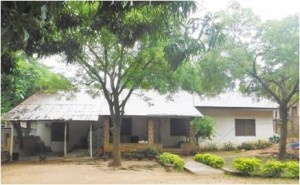
The Home

The Home

But back to the story — How can you take care of 60 people staying in your house?  Janada happens to have 1400 laying chickens.  Having eggs readily available helped tremendously.  The eggs provided protein and could be prepared in many different ways.  Nigerian daily meals ordinarily consist of two things.  “Tuwo” is the grain base for the meal.  It can be prepared from ground corn, ground maize, or semovita (a very fine tapioca).  Tuwo is prepared by slowly dropping the grain into boiling water until it forms a thick, heavy mass of grain and water.  This mass is divided up into balls that are about 4 inches in diameter.  The balls are each placed in a plastic wrap.  That is a single serving.  Another option is to cook rice instead of grain for the tuwo.  Then they prepare the “Miya”.  This is what provides the flavoring.  The flavor of the miya varies.  It is prepared with oil, leaves such as aleho (a form of spinach) yakwa, or bitterroot, Maggi cubes (bouillon), tomatoes, onions, and a small amount of some kind of protein like beef, goat, fish, or chicken.  To prepare enough miya alone, Janada tells me she spent 5500 Naira ($27.50) per day.  That did not include the protein she used in the miya.  Tuwo was prepared from the grain they harvested from last year’s crop.  Thankfully, Markus and Janada had a bountiful harvest last year. (They also received assistance though food districutions of EYN and CCEPI)

In Nigeria, it is a cultural expectation that you will take care of refugees coming to you in this type of situation.  Refugees know that they have a place to go to.

Markus medicalMany of these refugees had medical issues.  Some hiked for miles to escape.  They traveled heartbroken by the scenes of relatives and friends killed before them.  They frequently were starving, had no water to drink, slept in unsafe places, and were miserable.  Some suffered from snakebites and died on the way.  Others died of starvation.  Many had skin issues, foot and back aches, and lack of medications for problems like high blood pressure or diabetes.

Some problems that Markus and Janada faced were the poor attitudes of some of the refugees.  Some of them didn’t care for the food that was prepared and criticized its’ taste.  Markus and Janada’s children didn’t get as much attention as before.  Also their food wasn’t quite as healthy.  They were stretching their budget to care for so many people.

Some the good things that have resulted from taking in this enormous number of refugees are the feelings of satisfaction they got from being able to help so many of their family and friends.  All the refugees have been able to physically recover.  Two women who arrived pregnant were able to safely deliver their babies.  The children who got separated from their parents have found them and are living together.  Most of the men have been able to find jobs.

Janada tells me that the main thing she learned is that it is very important to have patience when around so many people.  All people are different. She learned that she needed a large heart and the patience to deal with different people and their problems.  She learned to firmly articulate her house rules and to speak respectfully.  She says you must have patience, patience, patience.

Most of the refugees have now relocated to places that have more room and are better for their situation.  But, God Bless such Hosts!  Markus and Janada are only one household among the great many who have provided a refuge for people who were able to escape.  They helped people to recover physically, but now the emotional recovery must continue.


What Persecution Feels Like

Written by Janet Crago

Written by Janet Crago

We recently had an opportunity to visit one of the EYN resettlement camps at Luvu Masaka, located near Nigeria’s capital city of Abuja, and collected several different stories about how people ended up there.  All of the people interviewed had fled from the far Northeastern part of the EYN Mission area, located near the Sambisa Forest and Gwoza, the self-proclaimed Capital of Boko Haram’s Islamic State.  The people in this area have endured attack after attack from Boko Haram over the past several years.  And, as this is written in August of 2015, the area is still considered to be unsafe for these Christians to return. Many Christians think they will never be able to return to this area.  The stories are hard to hear, and even harder to imagine, but I’m reporting their stories as told to me.

John  – In Barawa, John had a flat with 4 bedrooms. But, in 2011, Boko
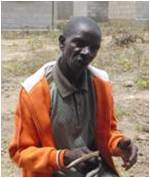
John

John

Haram came and burned his house.  He ran one way while his wife and children ran another.  John ran to the Cameroon mountains with other refugees where he stayed for about a year.  Then, Boko Haram found them there, and killed many more people. Eventually, he heard from his wife and learned that she had gone to Autabalfe in Nasarawa State located south and west of Jos, which is right in the center of Nigeria.  Six children are with her.  He traveled to Autabalfe to be with them, but they don’t have a place to live yet.  He came to the camp hoping to find a place to stay.  He is a farmer but he says he is willing to do any kind of work to support his family and will accept any type of accommodation.  He is desperate.
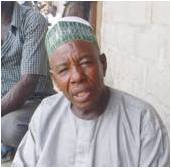
Adamu

Adamu

Adamu  – On March 13, 2013, Boko Haram came to Gavva West and burned and looted their church.  Four people were killed.  Then, in April of 2013, Boko Haram came again and burned his son’s house and car.  And, in September and October of 2013, they came and chased everyone away, when they burnt the entire village, killing another 15 people.  Adamu finally fled to the neighboring village of Gavva close to the Cameroon border.  When Boko Haram came to Gavva, they burned two EYN churches and many houses.  This time, when they were chased from Gavva, he fled to Michika.  Then Boko Haram came to Michika and he fled to Maiduguri where he spent about four months while his son supported him.  When he left Maiduguri, he only had 2 trousers and 2 shirts.  He’s now come to the resettlement camp at Masaka looking for a place to stay.  He has seven children and his wife living with him.  He thanks God, and the relief team, for his very survival.  He got transport money from his sons and was able to come to the camp at Masaka, where he is looking for a new place to settle.

Zakariya  was not at home in Gavva when the Boko Haram attacks came.  He
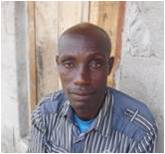
Zakariya

Zakariya

had been studying in Maiduguri, where he graduated with a Higher National Diploma in Banking and Finance.  He related the story as told to him by his relatives.  Boko Haram came to Gavva East in Nov of 2013 and destroyed 18 houses and killed three people.  Then they left and many people stayed.  In Sept of 2014, Boko Haram came back.  Anyone that ran away was shot. They killed all the men they could find and burned the houses of all the Christians, looting personal property by taking TVs, clothes, cars, cows, and stores of food. People were forced to convert to Islam or die.

Those who were able to get away ran to the mountains.  Older people who couldn’t climb were killed.  They weren’t killing women, but forced them to convert and enslaved them.  Some people escaped to Cameroon.  Some who escaped to the mountains are still there, where many have died of hunger and some can’t get out.  As Zakariya was telling his story, one man who spent many months in the mountains volunteered the information that he and another man repeatedly came down into Gavva in the night to search for food left behind so they could carry it back up to the mountains to be shared around.  This is how they are surviving.

Zakaria’s mother initially refused to come out of the village but has now gone to live in the mountains.  Another person reported to him that she is alive, but he hasn’t heard from her in many months.  If they have a fire to cook something, the smoke from the fire will reveal their presence and get them killed.  He doesn’t know if she is surviving.
Musa

Musa

Musa  – On June 13, 2014 many people were going to church when Boko Haram came with their machine guns and attacked.  Three people were killed before the people of Attagara chased the Boko Haram away, killing some of the Boko Haram in the process.  The Christians were so angry that they burned Muslim homes in Attagara and chased them away.  Before long, though, Boko Haram came back and chased all the Christians away, killing 84 people in the process.  All the survivors fled.  The Boko Haram looted goods and burned all the houses where Christians lived.  Musa fled into Cameroon.  After some time and a difficult journey, he has now come to the camp in Masaka.  He has been assigned a home and has a job working in the Gurku camp.  He has a wife and 4 children.  He has committed everything unto God and is enduring.

The day we were at Masaka, we witnessed a distribution of food and supplies to the residents of the camp.  All these supplies were provided by the EYN Relief Distribution Team who, receive funding from CAM (Christian Aid Ministries) and the COB Crisis Relief Fund.  Families in this camp feel very fortunate to have a small home that they can move into.  Those homes were built with funds from the COB Crisis Relief Fund, and some land around the houses was also purchased.  It requires hard work to till, plant and harvest but there’s still time to plant some things and get them harvested before the rains end in October.  Our prayer this day was that God will bless the new homes that are being established, and provide these people with a bountiful harvest.
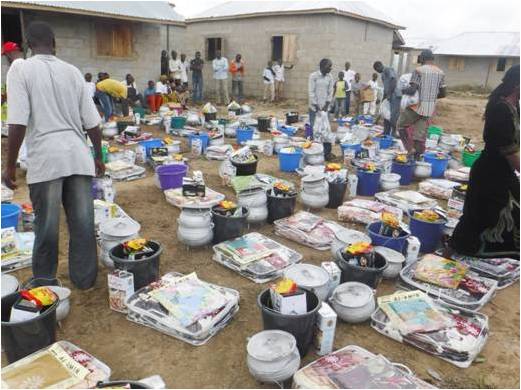
Distribution of household items at Masaka

Distribution of household items at Masaka

Footnote:   This is a little history of the tribes in the Gavva area.                                     The people in this area have a very rich tribal history.  Most of the villages have their own language.  In the days of the slavers (the early 1800’s) where they were trying to capture people to sell into slavery, the Islamic slavers had horses they used to chase the people and capture them by running them down.  Soon the people retreated to the mountaintops where they could live in relative peace.  There was water on the mountaintops and they only had to come down sometimes to plant and harvest crops.  If the slavers came while they were on the mountaintops they could throw rocks down on them or throw spears at them, making it much more difficult for them to capture people.  While living on the mountaintops, each mountaintop developed its own language, different from all the rest.  So today, if you are from a small area in northeast Nigeria, you share a common language with only a few people.  This creates a very strong bond.  This area has a rich farming background where these people have been farmers for many generations.


Susan’s Story

Written by Janet Crago

Written by Janet Crago

It was a very special Sunday called “Children’s Sunday”.  All the children’s classes prepare presentations and songs for the worship service.  Many parents were there who didn’t attend regularly.  It was also a combined service.  On an ordinary Sunday they have two worship services, one in Hausa (northern Nigeria’s market language) and one in Kamwe (the language of the local people), but on this special Sunday, they combined the two.  The church was full to overflowing.

Susan was surprised when the pastor cut his sermon so short.  She was more surprised when the church secretary ran out of church.  Within seconds he was back yelling, “Everybody run, the BH are coming”.

Susan's Destroyed Church

Susan’s Destroyed Church

Everyone dispersed in a different direction.  Susan ran into the bush.  After some time she decided to go back home.  She found her daughter Rose and Rose joined her.  She also discovered that her husband had taken one car.  Her two mother-in-laws were also there.  Susan’s husband Mark had a Muslim father who had two wives.  Her mother-in-laws both have infirmities.  One can see but not walk while the other can walk but her vision is seriously unpaired.  They are a team.  They help each other.

Shortly after Susan arrived home, they heard some of the BH banging on the front door.  Susan and her daughter Rose, ran out the back door leaving her mother-in-laws at home.  They jumped the back fence and ran into the bush.  They walked to the next village where they found her husband Mark with their car.  He had also driven through the bush to get there.  He drove through corn rows.  They picked up an old woman who stated that the car was now her home and she wouldn’t leave it.  A local family gave them food.  They spent the night in the car.

In the morning they picked up others who had fled BH.  One woman was very distraught.  She had gone to church in the morning leaving her baby and two older children at home.  When she ran from the church she did not know what had happened to her children.  They ended up with 11 people and 3 babies in a car whose maximum is 7.  They drove to the river crossing.  The river was swollen with the rains and the car could not drive through it.  They had to abandon the car and take canoes across.  There were many children at the crossing who also ran from church.  Susan paid the passage for many children so they could reach the other side on the canoe ferries.  Then they hiked to another village about 8 miles away.

People in this village helped them with food.  Susan bought some cloth for the children so they could have clean clothes.  Susan is the ZME (Zumuznta Mata Ekklesiyar, or Women’s Fellowship) Director.  The ZME has a bus, with a driver, to transport women for meetings.  Susan called the driver to come get all of them.  He came, and late the next day they all rode to Yola, a trip of about 120 miles. There were 27 in the bus, including 9 children.  These children had relatives in Yola, and it was safe in there.

When she arrived in Yola, Susan was getting multiple phone calls from people who were stranded in another village after they ran from BH.  They expained that they didn’t have transport money.  Susan would talk to the drivers and promise to pay the transport when they arrived in Yola.  Since she has been the Principal of John Guli Bible School for 17 years, and she is also the ZME Director, the drivers agreed to transport the fleeing people with her assurance of payment on their arrival.

During this time, Susan was making lots of calls.  Because Nigerians need to purchase cell phone time in advance, she had many people call her and give her the necessary security numbers to increase her calling time.  These people had already paid for the security numbers.  This effort made it possible to call the childrens’ parents, and many others who needed to be contacted.

Susan in Jos

Susan in Jos

Susan stayed two days in a friend’s house in Yola where 100 others were also staying.  Her brother then invited her to stay in a house in Abuja.  That is where she went for some time.  She’s now located in Jos, where she is the Director of Women’s Ministry for EYN.  Another person has been appointed as Principal of John Guli Bible School.

Susan says she learned some things from this experience that she wants to share.

  • It is good to be relational.  The relationships she developed were key to the safe escape of her and many others.
  • She now knows that she is not better than anyone else who was escaping.
  • Life is not all about wealth.  She says that life is more than riches.
  • She says that she’s had a good life, but has now been tested. She says that until you are tested, you can only imagine what you might do, you don’t know for sure what you will do.

The “After” Stories:

 The woman who went to church and left her children at home found out that a neighbor woman rescued her children and fled to Cameroon with them.  Cameroon is the neighboring country to the east.  The children are safe.

The old woman who said the car was her home stayed in the car by the river.  The fate of the woman is not clear.

Susan’s mother-in-laws are both alive, but some local townspeople who joined BH abused them.  They came morning and evening and lashed the old women.  They gave them 20 lashes each.  The BH were actually somewhat good to them.  They came frequently to take chickens from Susan’s layers (she had 1000 layers).  Occasionally they would bring the old women some other food.

What Susan and her family lost:

One car was abandoned at the river.  It has now burned.  Another car left at home was smashed.  Her 1000 laying chickens are gone.  Her and her husband’s books were burned.  She is living in a rented home and doesn’t know whether she can go back to her home village.  Her husband is going back home soon to assess the situation.

The children are all with relatives or with their parents in a safer location.