The ministry of calling

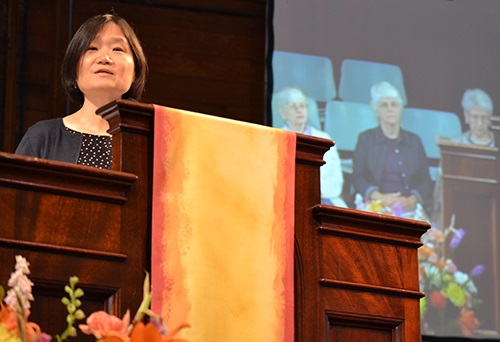
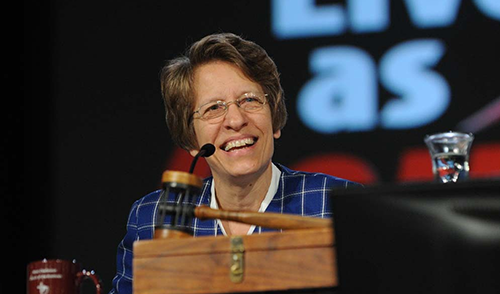
Nancy Sollenberger Heishman as Annual Conference 2014 moderator.
Photo by Glenn Riegel

By Nancy Sollenberger Heishman, director of the Office of Ministry

“And day by day the Lord added to their number those who were being saved” (Acts 2:47b).

Every year I look forward to the celebration of the Pentecost season. It is an opportunity to marvel anew at the awesome power of the Holy Spirit at work in the church and the world. What wonders were unleashed by the Spirit’s power as, like a persistent wind, it swept into the souls and lives of new believers. Persons of varying cultures and generations, and socioeconomic, educational, and religious backgrounds were caught up in the mighty power. Being called into the body of Christ, they also were sent out to look for those on the margins and to call others into the new community of God.

In my work as director of the Office of Ministry, I hear wondrous stories of persons being called to something bigger than they ever dreamed of. David Banaszak, the newly called district executive of Middle Pennsylvania District, recently shared the story of his call, and it struck me as particularly delightful.

As a young man, David drove his wife, Linda, to choir practice at Windber Church of the Brethren but sat out in the car with their dog, Skippy, until practice concluded. Being raised a nominal Catholic, David didn’t feel comfortable entering the church building and preferred to spend the evening with Skippy instead. Each Thursday evening, taking notice of the situation, pastor Dave Shetler would visit with David at his car window, and, without fail, would invite him inside. And every week, David would politely choose to remain in the car. Eventually, however, Pastor Dave convinced him to come inside, and the rest is history, as the expression goes.

David became a member of the Windber congregation and Pastor Dave, seeing great potential in him, invited him to consider a call to the ministry. And now, after 30 years of pastoral ministry, David has been called to district executive leadership. For David and many others, great service for the family of God has come from the persistent call of the Spirit through a faithful pastor, a fellow Christ-follower, or a nurturing community.

The stories I hear and the conversations I have while traveling throughout the denomination encourage me to remember that the Holy Spirit’s desire is still to stir us by a revolutionary call. God intends for us to invite persons to dive deeply into the life of our congregations, to eagerly look for gifts of ministry in new persons, and to persistently welcome and offer hospitality to all whom we encounter.

The Holy Spirit binds us together with others in ministry, service, and mutual love, and this often includes those from whom we initially choose to be separate. As we open ourselves to one another, share about our calling, and hear how it intertwines with theirs, we participate in God’s deep yearning for this world to be reconciled on earth just as spectacularly as it is in heaven.

As you celebrate this season of Pentecost and share in the ministry of calling in your own congregation, we invite you to also support this ministry in the denomination. Your gifts support the calling and training of new ministers and leaders so that they may serve God, their communities, and the larger church.

Thank you for partnering in the ministry of calling.

Learn more about the work of the Office of Ministry at www.brethren.org/ministryoffice or support it today at www.brethren.org/give.

(Read this issue of eBrethren)

Wells benefit Christian and Muslim communities

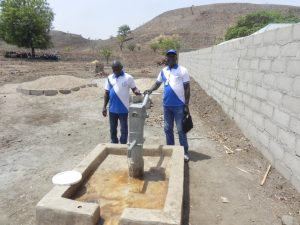
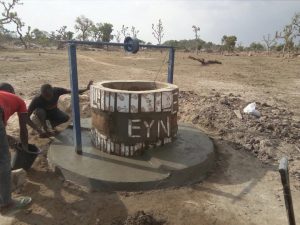
EYN Disaster Ministry put in 2 wells and 2 bore holes around Shaffa and Kwajaffa area. Many wells were destroyed during the occupation by Boko Haram. These water sources will serve 300 families each. At one site, the majority of the people accessing the water are Internally Displaced Persons from the Gwoza area (they are mainly farmers who cannot return to their homes.) At another area, the well will be used by mostly Muslim families. Peaceful coexistence between Muslims and Christians is one of the goals for Northeast Nigeria. This water source put in by the church is a big step toward maintaining peace.

Were You There When They Killed King?

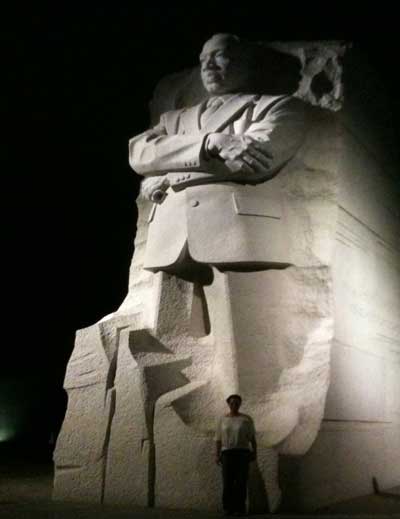
Gimbiya Kettering at the MLK memorial in Washington DC (2012).

We need all of you. And you know what’s beautiful to me is to see all of these ministers of the Gospel. It’s a marvelous picture. Who is it that is supposed to articulate the longings and aspirations of the people more than the preacher? Somehow the preacher must have a kind of fire shut up in his bones. And whenever injustice is around he tell it.
-Rev. Dr. Martin Luther King Jr.
3 April 1968, “I’ve been to the Mountain Top”

Depending on your social circles, you may have recently had many conversations about the passing of Martin Luther King Jr. — or none. The fiftieth anniversary of King’s assignation has been commemorated in magazines and radio programs. The National Council of Churches held a rally in Washington DC and a number of communities held local rallies. At the same time, the day seemed to generate less awareness than the annual MLK holiday which for many families mean a day off from school with a scramble to find childcare or the excitement of a three day weekend. Fifty years is a lifetime – and in that time our nation’s understandings and interpretations of the life of Martin Luther King Jr. has changed. At the time of his death he was disliked and unpopular, with over 70% of White Americans by some polls of the era. While he is now seen as integral to our national story –and there are spaces around the country named in his honor.

The May “Continuing Together” call sponsored by Intercultural Ministries, was a conversation about the legacy of Martin Luther King Jr. Using National Geographic articles available online from the April 2018 issue that focused on race, we asked two questions that spun into a conversation that considered family histories, imaged hypotheticals, and how our values are shaped by the valules of MLK:

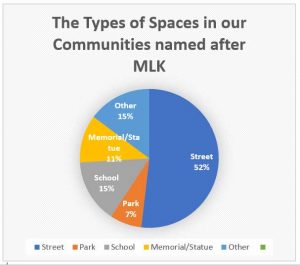
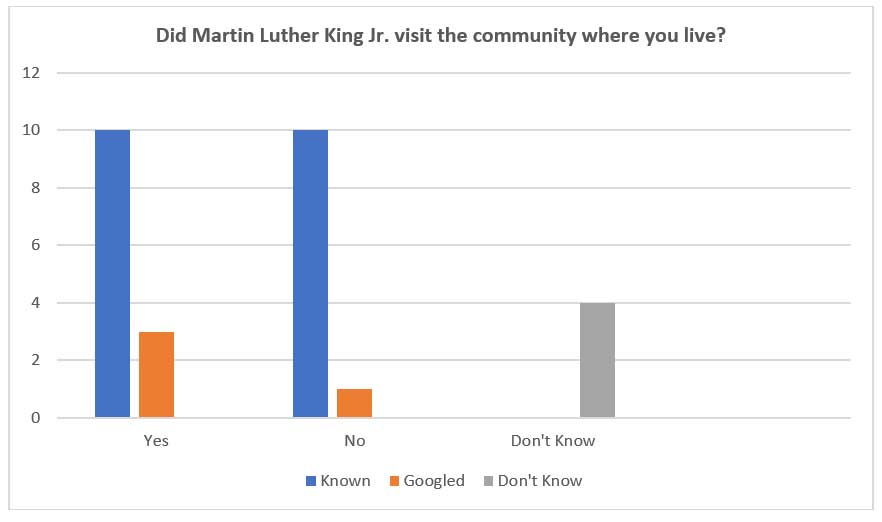
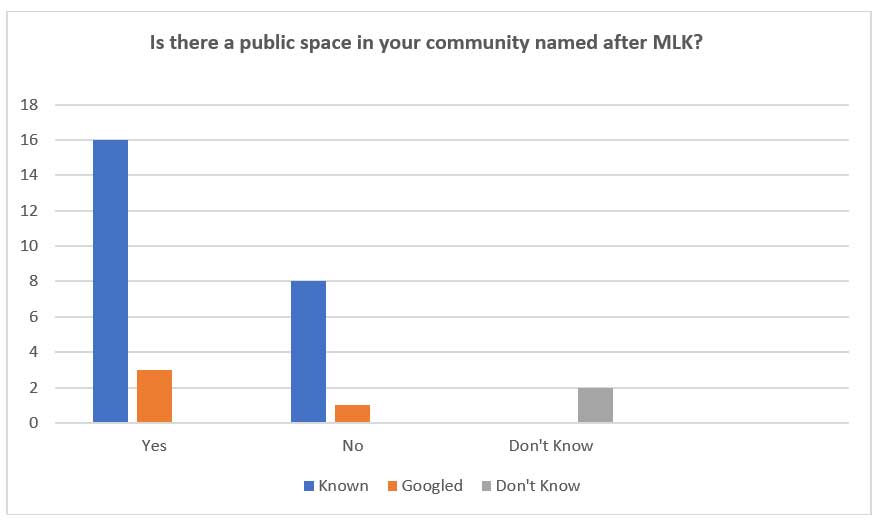
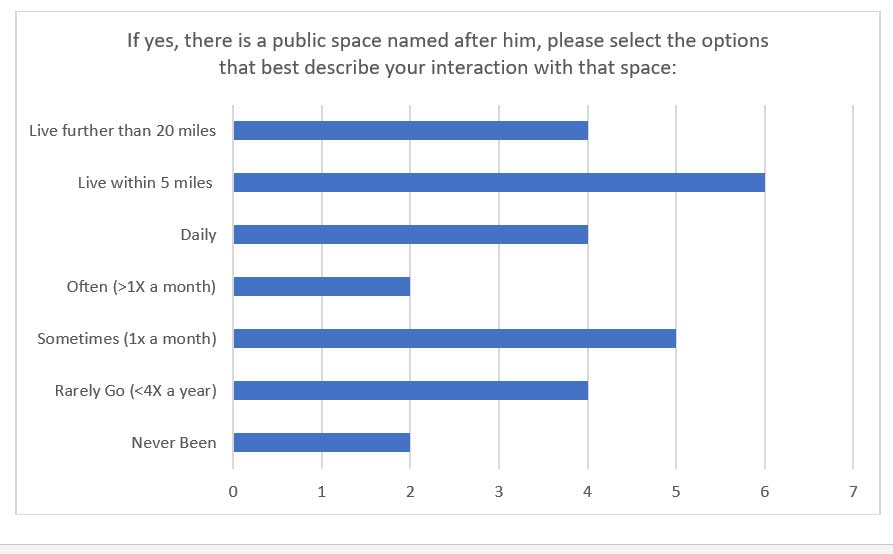
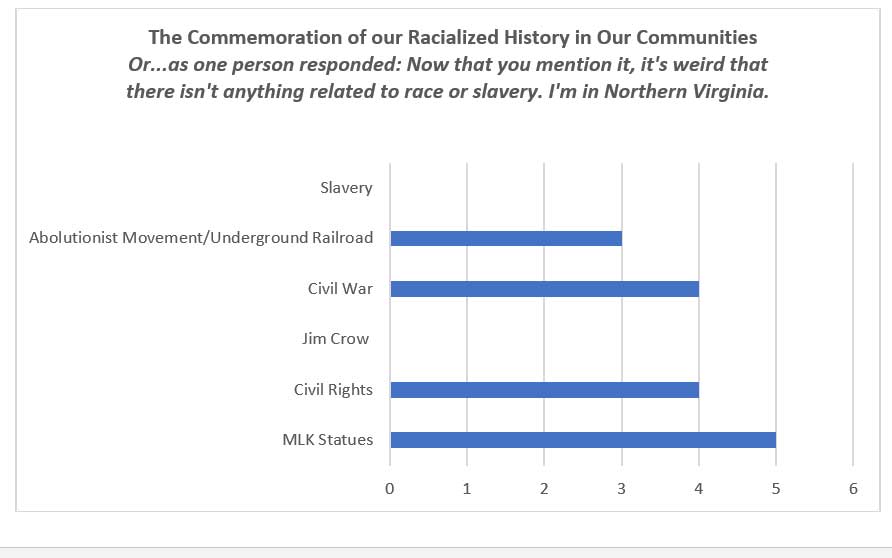
Where is Martin Luther King Jr. in your neighborhood? Participants took a survey that asked them to look at their neighborhoods and communities and also the National Geographic article Martin Luther King Streets World Wide. (See the results of our survey in the charts below.)

How would our national history be different if he had never been assassinated? The National Geographic explored this question in the article, What if Martin Luther King Jr. Were Never Assassinated.

SAVE THE DATE: The next Continuing Together call will be Thursday, June 14, 2018 – 1:00-3:00 EST.

Gimbiya Kettering, Director, Intercultural Ministries
Church of the Brethren

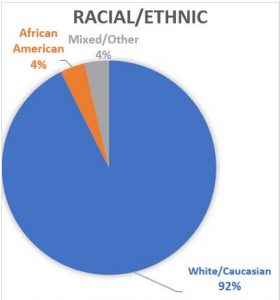
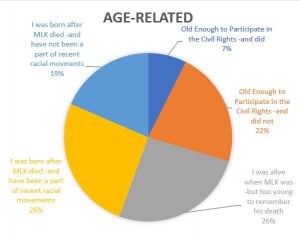
Results for MLK Near You Survey

Demographics of survey responders:

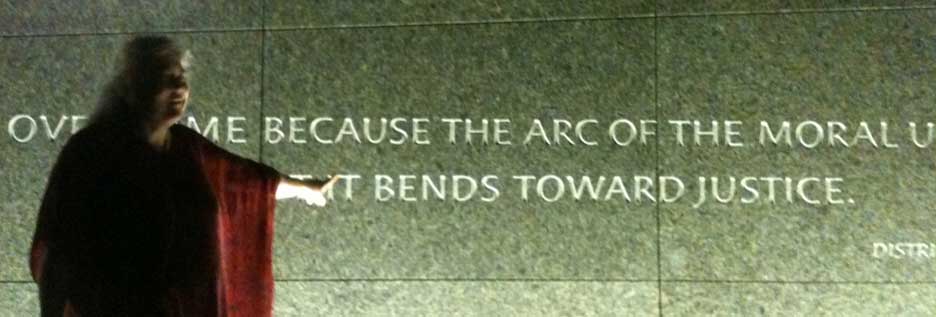
Barbara Daté at the MLK Memorial in Washington DC (2012)

Barbara Daté, member of Intercultural Ministries Advisory Committee and Revelation 7:9 Awardee, at the MLK Memorial in Washington DC (2012). The quotes included in the memorial are an example of how we selectively remember King. King also said:
Time itself is neutral; it can be used either destructively or constructively. More and more I feel that the people of ill will have used time much more effectively than have the people of good will…Human progress never rolls in on wheels of inevitability; it comes through the tireless efforts of men willing to work to be co-workers with God, and without this hard work, time itself becomes an ally of the forces of social stagnation. We must use time creatively, in the knowledge that the time is always ripe to do right. (Why We Can’t Wait)

Publishing good news

Wendy McFadden speaking at Inspiration 2017.

By Wendy McFadden, publisher of Brethren Press and Communications

The other day, Esther, a faithful supporter of the denomination, called to say how much she liked the April issue of Messenger. A call like that is always a pleasure, but in this phone call I also learned two fun facts: 1) Esther was turning 100, and 2) she has a life subscription to Messenger magazine.

What is a life subscription? Well, long ago Messenger offered a couple of special prices—a two-year subscription for $5 and a life subscription for $25. At the time, Esther did the math and thought the life subscription sounded like a good deal, which it certainly was. For those with enough foresight to pony up, that subscription has paid dividends!

From the business side, life subscriptions were a short-sighted decision, and it’s no surprise that the offer didn’t last long. But I love encountering the folks who bought them so many years ago. They represent a long-term commitment not just to Messenger, but to the Church of the Brethren. When the communication staff prepare each issue of the magazine, we are heartened by feedback from readers like Esther.

While Messenger magazine is just about the oldest communication medium in our church, it’s not the only one. In fact, in recent years there’s been an explosion of ways to communicate with each other—print newsletters, electronic newsletters, emails by interest group, websites, blog posts, social media, video, podcasts, webinars, exhibits. Nobody sees everything, but everybody can see something. In a church with a wide range of ages and interests, it’s necessary to communicate through as many channels as we can.

The tools are up-to-the-minute, but the ministry of publishing is nothing new. After all, the Old Testament prophet reminds us: “How beautiful upon the mountains are the feet of him who brings good tidings, who publishes peace, who brings good tidings of good, who publishes salvation, who says to Zion, ‘Your God reigns’” (Isaiah 52:7, RSV).

Even though life subscriptions no longer exist for Messenger, faithful supporters like you have life subscriptions to the great work we do together. When you give to the Church of the Brethren, you help publish good news. When you subscribe to Messenger, newsletters, or any of our emails, you share in bearing witness to the work of God among us. Together we “proclaim the good news” (Matthew 10:7, NRSV).

Will you give to the Church of the Brethren today?
www.brethren.org/give

Women’s Ministry holds workshop and skill trainings for young women

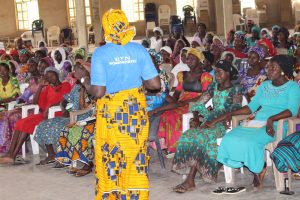
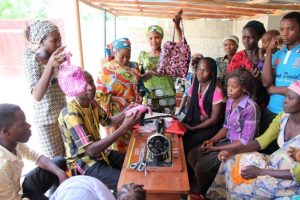
A one day workshop was held at the EYN Headquarters. It was planned for 50-100 women but 329 ended up attending. The topics for the day were 1. Singleness is not a sin  2. Protect your virginity  3. Modesty – Proper ways to dress. The day also included HIV/AIDS education along with spiritual counseling.

Several Muslim girls also attended the workshop. One of these girls was in tears as she told the Women’s Director, Suzan Mark, that both her parents had been killed by Muslims and she wanted to associated with Christians. God has been using the Boko Haram Insurgency to convert Muslims to Christianity. Praise God for this witness and pray for those who convert.

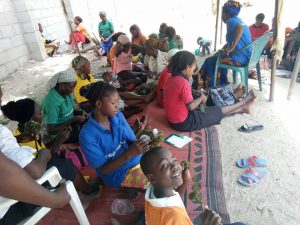
EYN Women’s Ministry also organized skills training workshops in three different areas across the North-east with 186 attending. It was interesting that five boys asked to join the training stating that they too needed encouragement and assistance to make it in life. They were accommodated at the skills training and were such fast learners that they were able to help others in mastering some of the skills. Everyone at the skills training were encouraged to not stay idle but to try some small business that can generate a little income. Leaders of the training gave personal testimonies of how learning a skill gave them a reason for living and added value to their lives.

2018 OCHA report stated that 30% of households in the Northeast now have women heading the homes and have great difficulty in providing for their families. It also reported that 6 out of 10 women have experienced some sort of gender-based violence. Please continue to pray for the women in North-east Nigeria. Keep up the great work, EYN Women’s Ministry!

Where is Martin Luther King Jr.?

“I have never seen, even in Mississippi and Alabama, mobs as hateful as I’ve seen here in Chicago.”  – Rev Martin Luther King Jr., in 1966

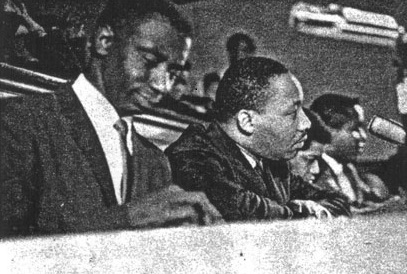
(l-r) Tom Wilson, pastor at First Church of the Brethren Chicago and Martin Luther King Jr, mid 1960s.

Where is Martin Luther King Jr. in your neighborhood? How would our national history be different if he had never been assassinated?

We often think of Rev. Dr. Martin Luther King Jr., in the context of his work in the South – Selma, Montgomery, Atlanta. But in the mid-1960s, Martin Luther King Jr., worked for racial justice and equality in Chicago. Many historians have confirmed his insight, that the racism and resistance he encountered in Chicago was worse than what he encountered in the South. During that time, the Southern Christian Leadership Conference had offices at the First Church of the Brethren in Chicago and King preached from our pulpit. (Pictured above) Before the end of the decade, he would be assassinated in Memphis and the work he began continued…In many ways, is still continuing.

The memory of Martin Luther King Jr is held in many places by streets, libraries, and schools named in his honor, as well as plaques and statues. As we continue to celebrate Martin Luther King Jr’s legacy and commemorate the 50th anniversary of his death, join Intercultural Ministries for a conversation reflecting on his local presence and what could have been. Before joining this call, please read the articles in the National Geographic (April 2018: Special Issue on Race) that explore these questions:

This will call will be Thursday, May 3, 2018 – at 1:00 EST.

To join by video call: https://redbooth.com/vc/2e89810ba4dd1acc

To join by phone: Dial 415-762-9988. Meeting ID is 833919968 (No participant ID)

Gimbiya Kettering, Director, Intercultural Ministries
Church of the Brethren

Food, medical care, school fees, and home repairs are among March activities

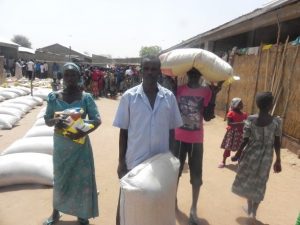
Food Distribution at the Yola Relocation camp.                              Patience, a widow and mother of 8, expressed her thankfulness to the Disaster Ministry. “You can see my tears of joy for what your help means to me and my children.”


Educational assistance for 56 children. School fees were paid for both elementary and high school students. Most high schools are boarding schools with students living at the school. Thousands have been widowed by the Boko Haram insurgence and they cannot afford to send their children to school. The mothers are very thankful for the assistance.

Re-roofing of burned homes continues for the most vulnerable. “We never thought of assistance coming to us this way. (20 homes in the area were given new roofs) We continue to have challenges including lack of good water and fear when going to our farms.”


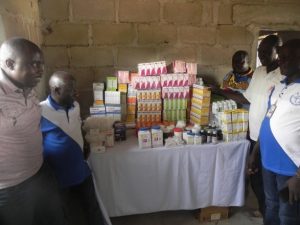
Medical help was given to around 400 persons. Adequate medical care is still unavailable without traveling long distances and then most cannot afford to pay for the care. EYN Disaster Ministry medical staff helped 5000 persons last year.

Please continue to pray for Nigeria and donations are greatly appreciated.

Congressional Briefing on Nigeria

On March 22nd, the Office of Peacebuilding and Policy and the Nigeria Working Group hosted a congressional briefing on the topic of returns to the Lake Chad Basin.  With the Church of the Brethren’s connections to northeast Nigeria, this topic of returning Nigerians to their home regions is very relevant to our work. Accurate and timely information about the situation in Nigeria is essential for quality relevant U.S. policy in the region.

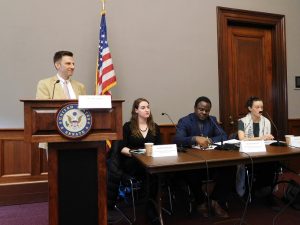
Panelists presented on the topic of returnees and garrison towns in the Lake Chad Basin. Photo by Nathan Hosler.

The briefing was based in part on a report by Refugees International, one of our partners in Washington, DC that does extensive work on Nigeria. Other speakers included staff from Mennonite Central Committee and Search for Common Ground. The report addressed the issue of returnees and garrison towns, and gives recommendations for the various actors in Nigeria to mitigate some of the risks that come with the pressure to return IDP communities to their original homes.

You can find the full Refugees International report here.

One reoccurring theme in the report was the importance of the truth to the success of return policy. First of all, the Nigerian government must provide accurate and timely information on the conditions of regions to which they they plan to return IDPs, and allow the returnees to make the voluntary decision on whether to return to the region or not based on that information. There is fear within the humanitarian community that, because they want to claim successful returns during the upcoming elections, Nigerian officials will force IDPs to return to unsafe areas with inadequate resources and limited accessibility.

The importance of truthful analysis of conditions in IDP camps is also essential to a quality humanitarian response. The report highlights the issue of IDP camp management denying psychosocial support and other support services, because those in charge of the camps want to paint a more positive picture of the crisis situation than is accurate.

Refugees International makes several recommendations to the Nigerian government, including the adoption of an official policy towards IDPs and the creation of a well-planned return strategy that avoids involuntary returns of IDPs. The report also recommends that donor governments continue funding programs in Nigeria.

The Office of Peacebuilding and Policy will continue to coordinate efforts with other Nigeria-focused organizations in Washington, DC to bring these important policy concerns to U.S. lawmakers. The better our policymakers understand the humanitarian and security concerns in Nigeria, the better they will be able to target assistance and peacebuilding efforts in the country. It is important that the United States strive to be a helpful partner to the Nigerian people as they strive towards peace and justice within their communities.

Would You go to the Wakanda Workcamp?

This is what happened when the Church of the Brethren talked about the Black Panther

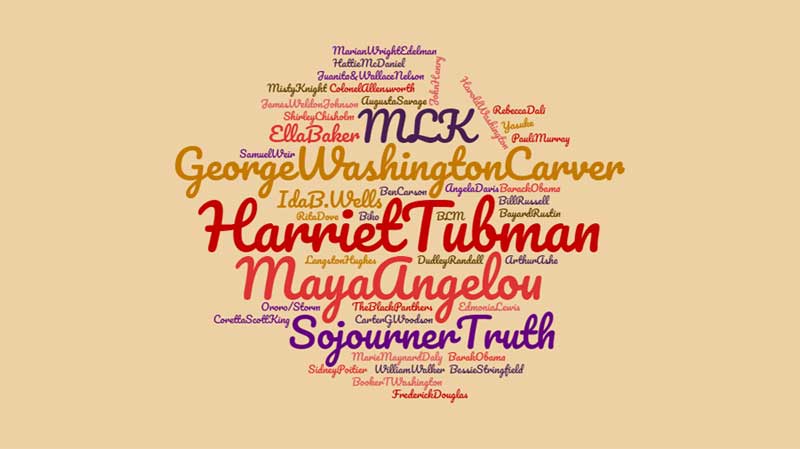
Word cloud of good movie subjects

Whose story would make a great movie?

Last week over 25 people gathered to talk about our experiences of watching Black Panther – the ways it was inspiring, troubling, entertaining and thought-provoking. There was a lot of diversity on the call: We called in from across the country and represented many different communities in our denomination. We were college students and District Executives. Some of us are life-long fans of superheroes and for others this was the first time they were watching a Marvel movie. It was a multiracial call –even more diverse if you counted the racial diversity of the families we represent.

I want to thank everyone who participated for the open, thoughtful, and respectful conversation. The reflections and questions were profound and often surprising. The conversation returned frequently to the portrayal of violence – the amount of it, the graphic nature of it, who were the perpetrators, how it worked as an allegory, and how it reflects the reality of violence. In many ways, I was reminded that I was having a conversation within a community that self identifies as pacifist. (Though when asked to list our favorite movies, most of them could also be described as violent.) The call ended with reflections on the ways we work to create multiracial communities.

Based on the survey before the call, we are twice as likely to watch a Will Smith action movie than one that reflects on race. Below are additional reflections based on the survey.

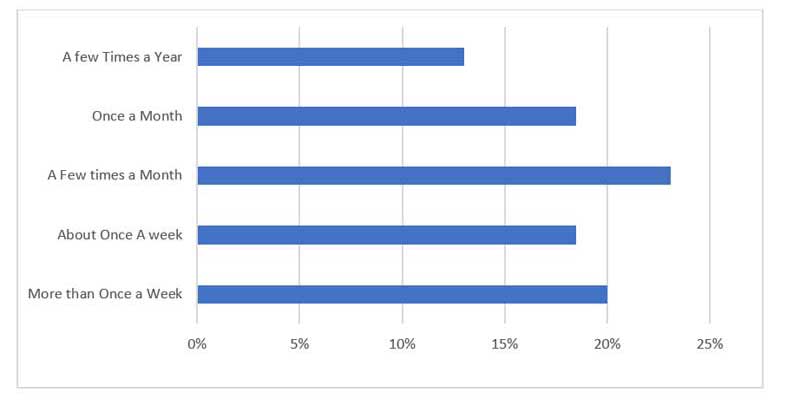
Question 1: How Often Do You Watch Movies? (please include home viewing)How often do you watch movies?

Question 2: Which of the following movies have you seen?

The original survey listed over 40 titles. They were generally grouped by era (i.e., Slavery, Civil Rights, Jim Crow, Contemporary, etc.) and genre (documentaries, inspired by true stories, romance, comedy, etc). In the end, looking at the data, I noticed a few trends:

  • We Watch About History:
    • 237 responses identified watching historical set movies (Civil Rights Movement or earlier) to current (defined as 1980s to now).
    • The top four categories coming in at over 40 each were related to Slavery, the Civil Rights Movement, Classic Novels, and Women biographies.
  • When we watch Current Events – We want to be entertained
    • The 5th most common response was action movies starring Will Smith at 31 responses
    • Contemporary Romances came in next with 29 responses
    • Comedy, Horror, Blaxploitation brought a combined: 51
    • At total 111 responses – this is still less than half of the times we identified watching historically inspired and/or set movies
  • We do NOT watch commentary. Maybe not many are made or maybe not many have nationwide release. Maybe we mean to watch, but put it off because we are afraid of how it will make us feel. Or maybe the way I listed the questions created bias…BUT…
    • 17 Responses for documentaries based on social commentary
    • 14 for movies with a satirical take on race
    • 13 for documentaries about current events
    • And ONLY 7 responses for PBS based series focused on the African American experience in history

Question 3:   Which African American historical figure, book, story, and/or character would you like to see made as a movie?  See word cloud above. The larger the text, the more people listed it as a movie they would be interested in seeing made.

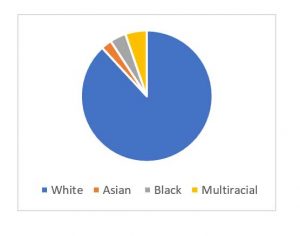
Question 4:   Out of ALL (not just the ones above) the movies you have ever seen, which 2-5 are your favorites? In the interest of space, I would like to say these movies were many and more diverse than I expected. A number of people referenced: Star Wars, Harry Potter, Lord of the Rings. Princess Bride and Selma tied at 5 mentions each. The Butler got 4. Most unexpected to me was Gone with the Wind –three times. Eight people identified Black Panther!Pie chart showing percentage of White (majority), Asian (smallest number), Black (next in number), and Multiracial (largest number other than White) respondents..

Question 5:   Please describe your race/ethnicity.
Note: Based on self-identification, it was necessary that some counted more than once.

RECOMMENDATIONS: Based on the information from the survey, I would recommend we stretch ourselves by watching movies that challenge us to listen to how race impacts the experience of brothers and sisters:

Intercultural Ministries will host a conversation about the National Geographic Issue about Race (April 2018)
–Thursday, April 26 at 1:00pm EST–

Access this video conference:  https://redbooth.com/vc/01f9f83893e4f7e1
By phone: Dial +1 415 762 9988. Meeting ID is 180230133 (no participant ID)
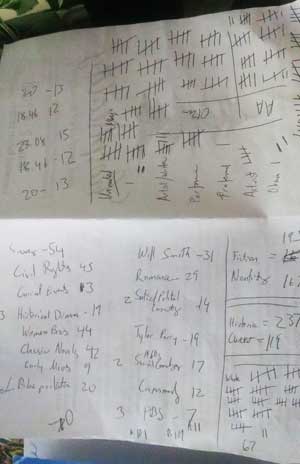
Handwritten calculations of survey responses

DISCLAIMER: This is intended to spark conversation and encourage you to think about the movies you have watched, and not watched, in new ways. Special thanks to the 66 people who took this survey! This survey has absolutely no scientific rigor or standards and there may be errors in calculations I had to make by hand. If you have passion and skill for constructing surveys, crunching data, and want to help with this and/or future surveys, please let me know! Check out my high-tech survey equipment! –→


Gimbiya Kettering, Director, Intercultural Ministries
Church of the Brethren


Caring for the vulnerable

Tori Bateman (far left) at the meeting about Unarmed Civilian Protection.

By Tori Bateman, associate with the Office of Peacebuilding and Policy

“God will never forget the needy; the hope of the afflicted will never perish” (Psalm 9:18, NIV).

The Church of the Brethren’s identity as a historic peace church means that we are committed to nonviolence and peacebuilding around the world. During my time as a Brethren Volunteer Service volunteer in the Office of Peacebuilding and Policy, I have had some amazing opportunities to advocate for peace in Washington, D.C.

Over the past several months, we have advocated for the practice of Unarmed Civilian Protection (UCP) in the Department of State, the United States Agency of International Development (USAID), and the Department of Defense. UCP is a method for keeping peace and safety in tense situations without the use of weapons or military action. Instead, unarmed individuals are empowered to work through relationships, mediation skills, and other peacekeeping methods to protect those living with conflict.

One example of the successful endeavor of UCP is from South Sudan. Women there were often raped by soldiers when they left their camps to collect firewood and water. To reverse this alarming trend, Nonviolent Peaceforce ran an accompaniment program that involved staff members going with women to collect firewood. As a result, whenever they encountered soldiers, the presence of international observers prevented rape from occurring. In 2015, there were no women afflicted by rape who were accompanied by Nonviolent Peaceforce staff. This is a great example of caring for vulnerable persons.

To present this innovative idea to U.S. policymakers, I worked with a colleague from a Catholic organization to coordinate a State Department meeting about Unarmed Civilian Protection. We invited Mel Duncan, co-founder of Nonviolent Peaceforce, and Nonviolent Peaceforce staff members to speak about the effectiveness of their practices.

The event was attended by staff from the Department of State, Department of Defense, and USAID. Attendees heard not only about the work of UCP, but also the amazing stories of the individuals in conflict zones who have been protected by the actions of UCP. The conversation lasted well after the event ended and we are excited about future opportunities to collaborate through relationships made at this meeting.

Your support for the Church of the Brethren makes possible this and other important peacebuilding initiatives. Thank you for helping us reframe the conversation about peacefully supporting and accompanying those in need.

Will you give to the Church of the Brethren today?
www.brethren.org/give

(Read this issue of eBrethren)