Nigeria’s Director of Disaster Ministry visits United States Disaster program

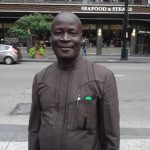
By Rev. Yuguda Mdurvwa

First and foremost, I would want to thank God, and Church of the Brethren for giving me the opportunity to be at the Annual Conference and the one week of refreshing and learning about Brethren Disaster Ministry (BDM).

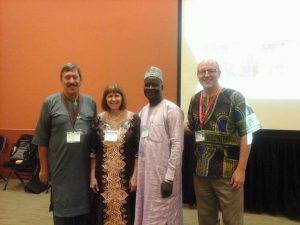
At Annual Conference:  Carl Hill, Roxane Hill, Rev Yuguda, and Roy Winter at Nigerian insight session

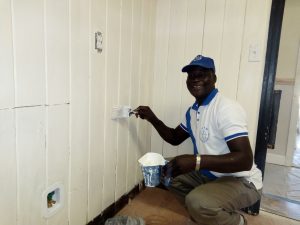
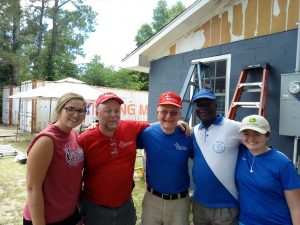
After the Sunday Service at Annual Conference, we started our journey to North Carolina with Brother Roy Winter who was driving. We spent over night at Peterson close to Greensboro. The next day, Monday, we continued with our journey to the rebuilding site. We arrived there at 11.25am. We met Harry and four volunteers working on the building, some were working on painting the interior walls, and others were cleaning the floor. Roy and I were given the permission to do the painting. Indeed, it was so nice that we worked for half an hour, laughing and enjoying the fellowship, we break for lunch at noon. Here I learned the commitment, willingness, sacrifice and humility of the volunteers.

After the lunch, we drove to another site, where we met four active volunteers working on the outer wall of the house. Ann, a young volunteer was leading the team, and I shared a few minutes discussing the work and then we went to the Methodist Church where all the volunteers were sleeping. During dinner I was introduced by Roy and the other volunteers did self-introductions. Afterwards I told my story of how the Lord saved us in Maiduguri in 2009 and in Mubi 2014 when Boko Haram attacked. There was a moment of sympathy and concerns for Nigeria. I saw their love and sacrifice. 

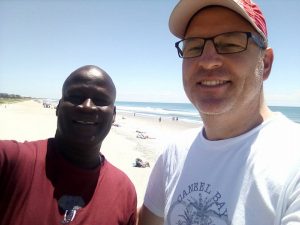
After visiting the Ocean and an Aquarium, we continued with our journey to Maryland. I was first shown the Church of Brethren, where Roy worships. Then the next day, Thursday, 12th July 2018, we visited New Windsor. I was taken round by Roy to the School building which was formally Brethren Service Center property. I was shown where containers are received, from there we went around the warehouse and offices where I met with all volunteers and staff. It was amazing how things are well organized, volunteers are working with joy in their hearts, most especially, the man that is handling the machine for packaging of clothes. After that we had a meeting with Disaster Staff, (Jenn, was absent but she participated through Skype call). I was given the opportunity to share about our work in Nigeria and my story. After our meeting, we went to celebrate our work and my coming to the BSC at a restaurant (Hibachi) with a fantastic demonstration.

These are some of the Lessons Learnt from the visit:

1. Brethren have the Spirit of service and humility 

2. All Volunteers and Staff are caring 

3. Things are well organized 

4. Out of their overabundance, they are willing to touch many lives 

5. Many people are continually praying for peace to reign in Nigeria 

6. I saw a true heart of love, care, service and dedication in Brother Roy.

May the Lord continue to bless the entire Church of the Brethren. 

New and renew

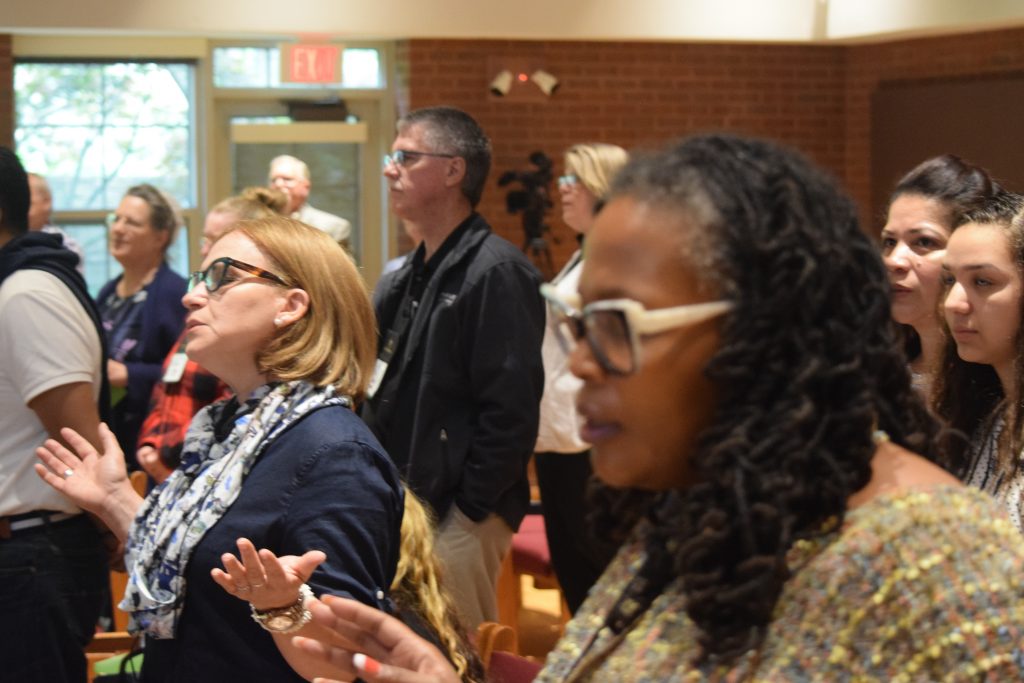
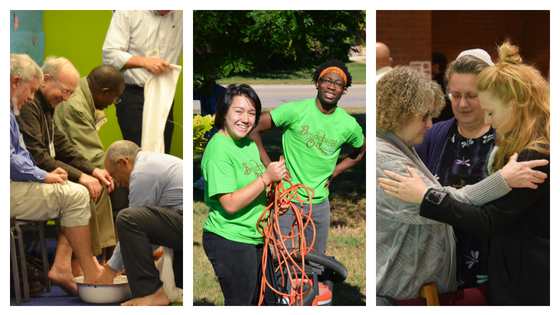
Worshiping together at the New and Renew Church Planting Conference.
Photo by Doug Veal

By Stan Dueck, director of Organizational Leadership

“The Word became flesh and made his dwelling among us. We have seen his glory, the glory of the one and only Son, who came from the Father, full of grace and truth” (John 1:14).

I am on the highest of highs after the New and Renew Church Planting Conference that was held May 16-19. Participants experienced the presence and blessing of God during times of worship, prayer, and connecting with one another. Everyone departed the conference with a greater understanding of ministry and with useful resources to impact a new church plant or bring renewal to an established congregation. As one attendee stated, “This was an energizing conference with practical ideas and resources for different ministry contexts and situations.”

The conference theme, “The Risk, and Reward of Embodying Jesus Locally,” was based on John 1:14. The event provided the space for participants and presenters to share about the challenging and rewarding work of planting a new church, explore ways to be the dynamic presence of Christ in their local community, and offer testimonies of God’s faithfulness.

Another highlight at the event was seeing these pioneering, planting leaders as the embodiment of potential for multicultural diversity within the Church of the Brethren. Several church planters at the conference recently started Hispanic churches, including new projects in Los Banos, Calif. and Las Vegas, Nev.

Diversity could also be identified by the variety of new churches. One planter initiated a project in the Baltimore metropolitan area and it has become a growing multicultural church in just a year. Another leader in Chicago is pioneering a ministry that is extending the reach of their faith community into new places in their local context and also around the world. Another planter is pioneering the renewal of a congregation by connecting it to a startup ministry on a college campus.

The United States today is composed of a multitude of nationalities from every corner of the globe. Few other areas of the world bring together such varied ethnicity. And while all people groups retain some measure of their own historical identity, they also create unique subcultures as they become part of the ever-changing culture of North America.

As a result, the Church of the Brethren faces exceptional ministry opportunities that hold the promise of transforming countless lives through the gospel of Jesus Christ. The opportunities require fresh, creative approaches. These pioneer leaders, who are planting new churches and renewing established congregations, have a passion for seeing God glorified among those who are spiritually apart from the gospel of Jesus.

Discipleship Ministries of the Church of the Brethren, formerly known as Congregational Life Ministries, values the relationship with these pioneers who seek to care for their community as an extension of their call and passion to fulfill the Great Commission. Discipleship Ministries walks along these pioneers through coaching, training, and fostering relational networks.

Thank you for giving to further these ministries of the Church of the Brethren. Your prayerful and financial support of these ministries sustains these men and women as they serve God and their communities. Together we can celebrate the faithfulness of God as people discover Christ’s love and another way of living.

Learn more about Discipleship Ministries at www.brethren.org/discipleshipmin or support them today at www.brethren.org/give .

(Read this issue of eBrethren)

Kids; Kids Everywhere

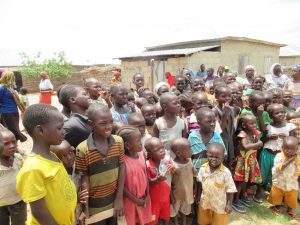
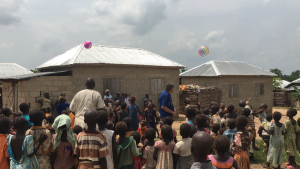
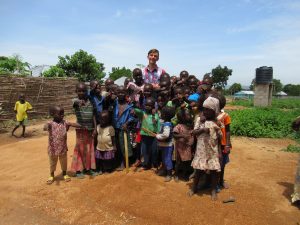
The mean age in Nigeria is 18. That means there are as many people under 18 as there are over 18. That also means there are a lot of children in Nigeria. Everywhere you go, you are surrounded by kids. It was especially fun to take Carter Beecham with us on our last visit to Nigeria. Carter is 14 and he had fun interacting with all the children. Some places we visited the children could hardly speak English so communication was difficult. The Favored Sisters School in Jos has worked hard at teaching and using English and Carter had fun conversations with the children who live at the school. We brought beach balls, soccer balls, and jump ropes to give out to each school and camp that we visited. It was probably the first beach balls the kids had seen and they had a lot of fun keeping them in the air.

Children in Nigeria do a lot of chores to help out around the home. Fetching water, watching younger siblings and helping with the farm are all jobs the children help with. School is not free in Nigeria and parents must come up with money for school fees. This is very difficult especially for the Internally Displaced Person’s who don’t have a way to earn a living. Some of the camps have makeshift schools but still many children have not received adequate education over the last 3 years.

We continue to pray for all the children in Nigeria!

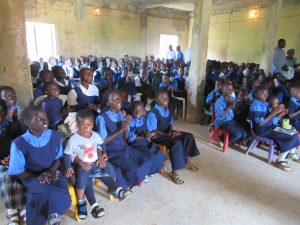
Favored Sisters School

Another way of living

Support Church of the Brethren ministries today at www.brethren.org/give

By David Steele, General Secretary

Greetings to you in the name of Christ our Savior!

Once again, I want to express my gratitude for the many ways you and your congregation faithfully strive to live out the gospel—to simply try to do what Jesus did. The vital ministries of our Church of the Brethren congregations, small and large, are at the heart of our church. We should never diminish the essential role that each unique part of the body plays in our common ministry together.

These are challenging, yet hopeful, times for the Church of the Brethren. It is easy to be consumed by our struggles, yet I am heartened by the incredible ministries and programs that are happening in our congregation, districts, and the denomination. I count it a privilege to work with an incredible team of staff working on your behalf to help us all continue the work of Jesus.

As a denomination, we have been working to refocus our efforts and adapt to meet the changing needs of the church. As has been reported via Newsline, there have been a number of staffing changes and ongoing internal structural adjustments. From an outside perspective, these changes may appear cosmetic, but they represent a shift toward a more holistic approach to our ministries, grounded in mission and discipleship.

Our mission aims to serve as Christ’s presence in communities, establishing local churches, both in the United States and internationally, that offer a cup of cold water to a thirsty world. Where there is conflict, we offer peace. Where there is suffering, we offer healing. Where there is hunger, we offer food. Where there is ignorance, education. Where there is despair, fellowship. Brethren mission stands as Christ’s light in the world, challenging the church to be more than a mere mouthpiece of the gospel, but also a doer of good works that demonstrate God’s love to the world.

Through our discipleship, we embrace Jesus’ call to go make and be disciples, sharing our lives more fully with others. This emerging vision of discipleship has its emphasis on making and growing disciples, forming and developing leaders, and transforming communities. As we strive to support new and renewing congregations, we are recovering a Brethren way of evangelism, helping congregations to disciple new people—more diverse people, more young people.

While intentionally grounding our ministries in mission and discipleship, we are also assessing our efforts at intercultural ministries. We as a church must more fully live into the 2007 Annual Conference statement “Separate No More: Becoming a Multi- racial Church.” This must be more than just a commitment. It must become our desire: desire not only expressed through advocacy but growing out of Christ’s commandment to love our neighbor. A desire that finds its roots in mission and discipleship. We must begin nurturing this kind of desire in our hearts and the hearts of others—into the heart of the church—because it is this kind of desire that will open us to new possibilities to thrive.

My friends, I do hope you believe that our struggle together is worthwhile. We are doing great things together in our congregations, in our districts, and in the denomination. Our efforts of offering the cup of cold water to the world reveals that we are about another way of living—the way of Jesus. May we not forget that through our simple acts of service and peacebuilding we, too, are working to save the world—in Jesus’ name.

I invite you to join me in another way of living.

Will you give to the Church of the Brethren today?
www.brethren.org/give

(Read this issue of eBrethren)

A Cup Full in Southern Ohio


“Fill up my cup, fill up my cup let it overflow. Fill up my cup, fill up my cup let it overflow. Fill up my cup, fill up my cup let it overflow! Let it overflow with love!”

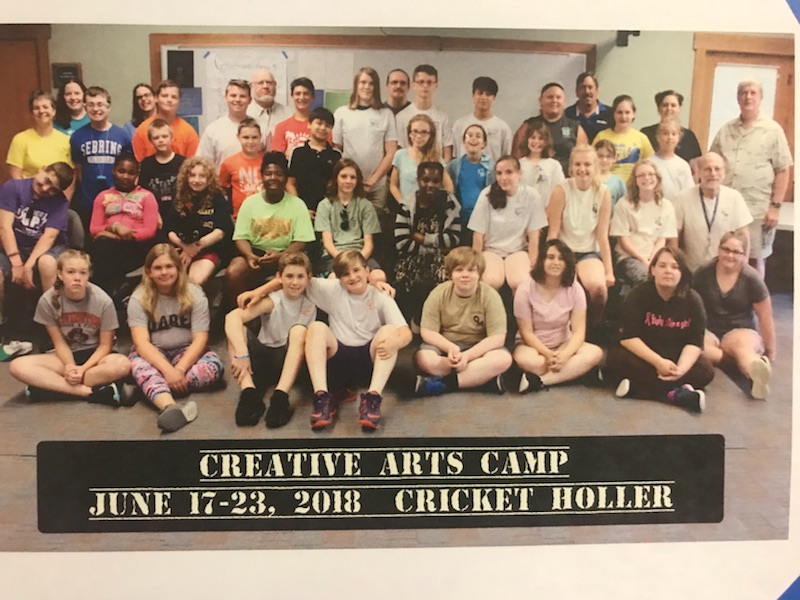
My cup is full as I enter in to the rest of my summer, starting with the beautiful souls at the Southern Ohio Creative Arts Camp. Over this week, these campers blew me away with their love for one another, their willingness to have conversations about tough subjects, and to open their hearts to many brand-new faces, including my own.

The folks here were open to me bringing new ideas that might have seemed a little out of the box at first, such as clowning and improvisation. But after a little time, I think they started to celebrate their own passions, realizing that they can be mouthpieces for the campers’ causes as my passions have become for me.

My first session was with a group of 12 campers ranging from 6-18 years old. They all had so much to add to our conversation about peace and were so willing to jump into the little bit of clowning we did. Bible Study gave us many openings to enter discussion about what it meant to speak up. We talked about the causes we felt most passionate about and how we could be advocates for the things we feel are important. For one of the girls I talked to, that issue was women’s rights, and I got to have a lovely discussion with this young activist about what that meant to her.

During one of the sessions, I asked the campers to explore different words or phrases they associated with “peace.” I got some great answers! Words such as: reassurance, love, Jesus, singing, the ocean, nature, standing up for what you believe in, and color! These words were the threads that built the tapestry of meaning that our group had for the word “peace.”

On Thursday night, I saw a true show of peace during a foot washing service. Before feet washing, Pastor Carl asked the campers and the counselors that if anything was laying on their hearts to let it be lifted by going to the person and giving them a hug. Adults, take notes! These children, who during camp became practically like a family even to the point of bickering, put away the jokes and the arguments and embraced each other. They asked for forgiveness, and pardoned their brothers and sisters in Christ. It was a truly beautiful thing! As we washed feet, we sang “Will you let me be your servant?” During the last verse, as everyone finished, we joined together in unison to sing the last chorus. The peace of Christ was truly tangible in that room!

It was a joy to be in community with the joyful Christians at Creative Arts Camp in Southern Ohio! I am excited to see what is yet to come this summer! Peace will be Prevail. On to camp Stover! 🙂

Until next time,
Laura, Youth Peace Advocate

Human Trafficking: Part II

By Doris Abdullah, CoB representative to the United Nations. To learn more about human trafficking, stop by the human trafficking booth at Annual Conference. 

Human Trafficking Hotline: 1-888-373-7888 Text HELP to: BeFree (233733)

The trafficking hotline is open 24 hours 7 days at week. Over 200 languages are available in addition to English and Spanish. We, in the faith and spiritual community, can also be a hotline as we raise awareness to the trafficked victims around us. Below are several summarized cases of human trafficking which can be found in more details online. I hope we can all become more informed about the subject as information becomes available. We are the eyes and ears of our communities and we should know what is going on all around us.. As a community, let us join together and stop human trafficking.

“As for mortals, their days are like grass; the wind passes over it, and it is gone.”

Psalm 103:15-16

I believe human trafficking is a moral evil driven by material greed for the god of money. The desire for riches, while powerful, can be overcome with the use of the justice systems to punish the illegal buying and selling of human cargo combined with a spiritual commitment to overcome the evils of slavery. All the cases of human trafficking involve material transactions. One rescued young women said she was “an ATM machine”. Of course, she was never a machine. She was the victim of a brutal crime of exploitation for financial gain that is widespread and in our backyards.

“In Our Backyard” is a documentary about sex trafficking in Brooklyn, New York where I live. One of the victims was a young woman from Indonesia who answered an ad for a waitress job in the United States. She arrived at JFK airport and met a man who delivered her to her trafficker. Her traffickers initiation rites included rape among the abuses in the attic where she was held. As a sex slave she was sold every 45 minutes for the price range of $120.00 to $350.00. She was rescued after jumping off the building ledge of the apartment house where she was enslaved. I live in the next neighborhood to where she was held and worked as a slave.

In the USA we do not have a caste system as we find in India and other countries with caste. In those countries women and girls from the Dalit Caste and Bedia and Bachra tribes (in India) accept their fate as ritual sexual slaves (Devadasi, Jogins and Bacchava). These women and girls cannot change their caste, because they are born into it. What we find, in the United States, is forced prostitution hiding under the disguise of entertainment. At large sporting events, such as the Super Bowl, prestigious corporate conventions in major cities and truck stops along major highways and other similar venues, we find runaways teens and unsuspecting women and girls being held by force. They are sold to the highest bidders. The five states where the most trafficked persons have been found in are: California, Texas, Florida, Ohio and New York. But do not think for a moment, that because you do not live in one of those five states, that your state or community does not have human trafficking. Human trafficking can be found in all 50 states. The “entertainment” aspect of trafficking was found in and near the Bakken Shale oil fields in North Dakota. The same coercive and deceptive practices were used for enslavement of Native America women and girls. They left the reservation for the promise of economic advancement not to become prostitutes and certainly not to become slaves.

I became more aware of USA sex trafficking after hearing the harrowing tale of survivor and advocate Withelma “T” Ortiz Walker Pettigrew. T came from California and was trafficked from the age of 10 until she was 17. In her own words on trafficked children:

“Many children, like myself, come from various traumas previously to entering into foster care, and many times, are further exposed to trauma throughout their experience in the foster care system. Although there are many people who uplift the system for its successes, there are many elements within the experience of foster care that make youth more susceptible to being victimized. Youth within the system are more vulnerable to becoming sexually exploited because youth accept and normalize the experience of being used as an object of financial gain by people who are suppose to care for us, we experience various people who control our lives, and we lack the opportunity to gain meaningful relationships and attachments.”

Again we hear about financial gains in trafficking from T. Monetary gain is the only incentive for human trafficking.

The April 24, 2018 PBS Frontline documentary titled “Inside the Hidden Reality of Labor Trafficking in America” gave an up-close look into enslavement of children on an Ohio egg farm in 2014. The teen boys families gave up the deeds to their properties, in Guatemala, in return for a promise that their children would be given a “better life in America”. The total sum owed for their children’s trip and care in America was $15,000.00. HHS released the boys to their trafficker believing that they were relatives and or legal sponsors. The boys had to work 16 hour days for the total sum of $600.00 per week of which $550.00 had to be returned to their traffickers. The original debt sum of $15,000.00 was held over the boys head with threats of killing their parents and other relatives if they ran away. These boys were held in horrible conditions and while Frontline did not focus on harm to the boys, we are aware from similar cases of child labor trafficking that children are often subject to harsh physical abuse. Rape, beatings and malnutrition are often found among abuses and enslaved children.

“The Boys in the Bunkerhouse” by Dan Barry 2014 6 exposes the enslavement of persons with intellectual disabilities. The men worked for 30 years at a turkey farm in Atalissa, Iowa. They worked from sun up to sun down for $65.00 per month. Note deductions in salaries were made for social security, room, board and outside trips such as an outing to amusement parks. Their mental and physical health was not cared for nor were they given an education. They were adult men, but were referred to as boys, even when they reached their 60s and 70s. One man attempted to run away and was later found frozen to death a half mile from where they lived. Their life was one of harsh economic conditions and punishment when they did not work to “full” capacity. 21 men were rescued from the turkey farmhouse. They lived with no windows under lock and keys, in filth with an open toilet and blood embedded in their mangled hands. These men were victims of human trafficking. We must question disabled beggars on our city streets and hidden coop like housing in rural areas. It is better to be wrong than to just ignore unseemly and or unusual signs of trafficking in our backyards. For it is not just egg and turkey farms, but major construction and capital improvement projects, hospitality service centers, mining and agriculture laborers, where we find traffickers taking advantage of labor and moral laws in order to turn a profit.

A very disturbing human trafficking case involved a young women who escaped from a moving car. Her husband was taking her to a hospital where she was due to have her kidney involuntarily removed. Human trafficking is all the more awful when we grasp how often the source of the fraud, force and coercion are family members and other persons known to the victims. We can stop human trafficking only if we are aware that it is a crime and morally wrong regardless to the source. The family members that sell or hold in domestic servitude another family members are just as reprehensible as the business man who buys a child or mentally handicapped persons for labor on their farm or for sex.

We are all aware that slavery has been a part of human history and widely accepted throughout human history. Some even suggest that since Jesus never directly addressed slavery it’s acceptable . Still others extract passages from the written words of the Apostles Paul and Peter to perpetuate slavery and call for obedience to master from the enslaved. I prefer not to ignore Exodus (an entire book dedicated to the topic of slavery), the laws given in Leviticus and Deuteronomy and Jesus’ covenant obligation on us humans: “to love God , love our Neighbor and love Ourselves.” I can not find any space in all that love for human trafficking also known as modern day slavery. Let us all become more aware and human trafficking and work to put an end to it.


Reflections on Burundi

One of the things that I appreciate most about the Christian faith is that it provides a common denominator between people around the world. This common identity can be a catalyst for important relationship building across national boundaries. In early June, I joined the Church of the Brethren young adult work camp trip to Burundi, hoping to both build relationships and see some of the great peacebuilding work being done in the African Great Lakes region. These relationships and my increased understanding of the challenges in Burundi will feed into the work of the Office of Peacebuilding and Policy, as we increase our level of engagement with advocacy relating to the region.

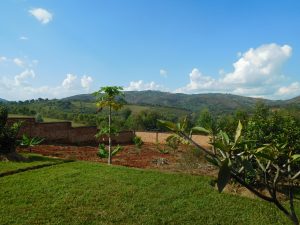
The view from the THARS center porch in Gitega. Photo Credit: Tori Bateman

Located south of Rwanda, Burundi is consistently ranked among the poorest countries in the world. In 2017, the GDP per capita was just $818, according to the International Monetary Fund. In addition to poverty and humanitarian concerns, Burundi has a history of genocide and election violence. Conflict between Hutus and Tutsis killed upwards of 300,000 people in several outbreaks of violence between the 1970s and the early 1990s. More recently, political conflict has led to instability. Just a week before our work camp traveled to the region, 15 people were killed in election violence related to a referendum vote.

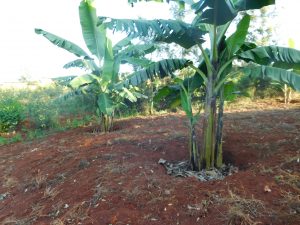
Banana trees planted using the agriculture methods taught by a educational program funded by the Church of the Brethren. Photo Credit: Tori Bateman

Our group was hosted by Trauma Healing and Reconciliation Services (THARS), a partner of the Church of the Brethren’s Global Mission and Service office. THARS provides mental health services to Burundians still impacted by the history of violence. This includes operating listening centers, facilitating support groups, and conducting training workshops. In addition to mental health work, THARS runs two programs that are funded by the Church of the Brethren, including training for farmers and a feeding program for Batwa schoolchildren.

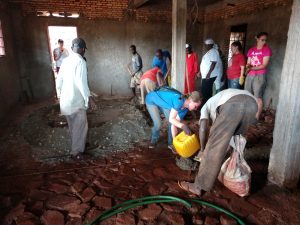
Pouring concrete in the new kitchen building at THARS. Photo Credit: Grey Robinson

While at THARS, our group worked on two construction projects. At one location, the team knocked down walls in a building that was to be re-purposed as a library. Just down the hill, another group was pouring the concrete floor in a new kitchen facility. Our team worked alongside a Burundian construction crew and the national staff of THARS, who had traveled to Gitega to participate in the work camp.  These projects included a lot of shoveling, carrying bags of sand and rock, and transporting concrete via bucket brigade.

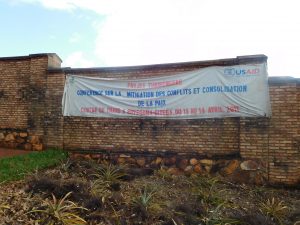
A banner for a USAID-funded peace conference that was held at THARS in 2011. Photo Credit: Tori Bateman

The impact of United States policy on Burundi could be seen everywhere we traveled. The USAID logo denoted vehicles, events and programs that have been funded with U.S. foreign aid money. Because of the reality of this impact, it is important that offices like ours maintain awareness of the situation in the country, and amplify the voices of Burundian peacebuilders in U.S. policy discussions.


My trip provided many useful insights into potential advocacy avenues for our office. During a meeting with one of the Office of Peacebuilding and Policy’s partners in Bujumbura, for example, I heard about one of the biggest challenges facing peacebuilding work in Burundi- a lack of long-term funding for projects. Many peacebuilding projects are only funded for one year, meaning that the work lacks consistency, there is not time to learn from mistakes and adjust programming, and programs have a limited impact. It is important that we share this funding concern with relevant government staff in Washington, D.C, as we seek to make peacebuilding programs as effective as possible.


David Niyonzima, founder of THARS, and Tori in Gitega. Photo Credit: Donna Parcell

I am grateful to THARS and the people of Burundi for their hospitality. Going forward, I am excited to engage with the Burundi Working Group in DC on behalf of the Office of Peacebuilding and Policy. Made up of NGOs and government agencies that work in Burundi, the group plans to engage with legislative staff, the administration, the interfaith community, and broader civil society. The group will work to increase awareness of the political and humanitarian situation in the country, and advocate for policy and funding that will support the important peacebuilding work done by partners like THARS.

Resilience amidst staggering needs

Early in June, Carl and Roxane Hill along with Kucheli Shankster Beecham and her son Carter had an opportunity to visit the ongoing work of the Nigeria Crisis Response.

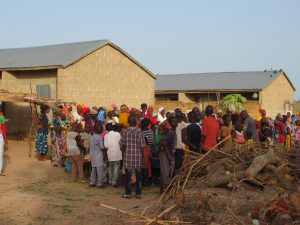
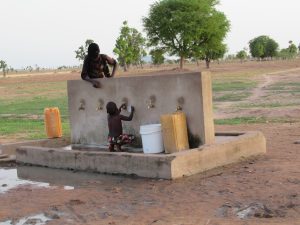
When we visited the “camp” or Relocation Village in Yola, we were greeted by a large group with songs of welcome and introductions. They proudly took us around their new village and showed us their homes. When this village was first built it was far from surrounding homes but the area is growing and now they have others around them. They have built a fence around the property to keep nomads and their cows from coming through the village. There is a solar powered water source and some surrounding lands for planting.

Yes, the people have a safe place to live but they still miss their lives back home. Most of these Internally Displaced Persons are from the Gwoza area where Boko Haram is still in control and they cannot return home. There are many challenges to living in a new village; neighbors are very close by, there is not enough land to plant all the food needed for the upcoming year, there is no school building for the children, the temporary church was blown down in the spring rains and so on.

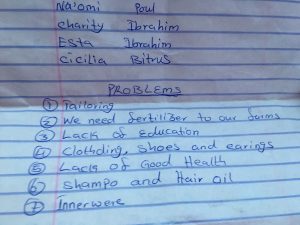
As we prepared to leave this new Relocation Village, the women handed us a list of concerns and items they needed.  A woman from one of the Yola churches was traveling with us and she took the list; hoping her church would reach out to this new community.

Let us continue to pray for Nigeria and all those living in Relocation Villages. (2 Million people in Northeast Nigeria are still displaced and cannot return home.) Pray also for the EYN Disaster Ministry as they try to meet the many needs that are a direct result of the Boko Haram insurgency.

Welcoming the Stranger: A Call for Just Immigration Reform

Update: As more reporting has been done on this issue, more accurate numbers have become available on the number of children separated from their parents. From April 19th-May 31st, 1995 children were separated according to Department of Homeland Security data. 
The Church of the Brethren has long acknowledged the Bible’s call for justice in immigration policy. Matthew 25:35 says, “I was a stranger and you welcomed me,” reminding us that our response to “the least of these” is just as important as the manner in which we would choose to treat Christ. As people of faith, it is essential that we respond to God’s call to welcome strangers, extend hospitality and recognize the inherent dignity of each human being. 
Yesterday, Attorney General Jeff Sessions cited the Bible in an attempt to justify the separation of children from their parents at the border as they flee violence, poverty and oppression in their home countries. Once separated from their parents, these children are held in detention centers. Over 500 children have been detained under this policy, putting them at risk for emotional trauma and abuse. 
This past spring, the world watched as the Deferred Action for Childhood Arrivals (DACA) program was rescinded, leaving hundreds of thousands of students and community members not knowing the future of their immigration status- despite having grown up in the United States. Erick, a Church of the Brethren member, shared his own story with us here. 
Temporary Protected Status (TPS) programs, which gave legal residence to people from nations facing violence or natural disaster, have also been cut. Some TPS holders have been in the country for decades, starting families and businesses, and will be forced to return to their original country if a pathway to citizenship is not created. The Haitian Church of the Brethren in Miami, Florida has been impacted by these policies, and you can read about the March for TPS they held here. 
The uncertainty, fear, and danger faced by immigrants impacted by these broken U.S. immigration policies is not acceptable. Our 1982 Annual Conference Statement on Undocumented Persons and Refugees in the United States calls for the United States government to adopt legislation and policies “which welcome and promote the welfare of immigrants and refugees,” and “to bring about a general amnesty for those people who once entered the United States as ‘undocumented aliens’ but have settled peacefully among their neighbors.” 
As people of faith, we urge the United States government to fix its broken immigration system. U.S. policies must be compassionate and just, and recognize the importance of strong families and communities. The Bible condemns those who exploit immigrants (Ezekiel 22:7), and instead calls for us to love those who are foreigners (Deuteronomy 10:19). Immigrants continue to make valuable contributions to the country, and each human being who enters the United States deserves to be treated with compassion. 

Reflections on the March for TPS

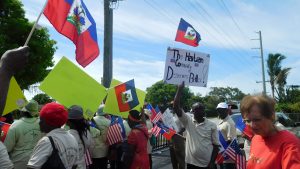
On Friday, May 18th, the Haitian Church of the Brethren in Miami, Florida marched down the streets of Miami to call for justice in U.S. immigration policy. I had the opportunity to represent the Office of Peacebuilding and Policy at the march, standing in solidarity with the Haitian Brethren who organized the march.

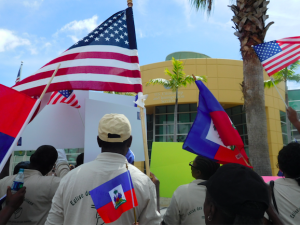
Marchers gathering in front of the Haitian Church of the Brethren Photo: Tori Bateman

A crowd of about 50 people started from the Eglise Des Freres Haitiens in North Miami, marching down a busy street with a police escort. Out of the five days I was in the city, this was the only morning without intense rain- an anomaly we appreciated while marching! The songs of the marchers were punctuated by honks from supportive passerby, and marchers waved both Haitian and American flags. The march ended in front of the Miami U.S. Citizenship and Immigration Services building, where the marchers gathered on the sidewalk to sing and call for just immigration policies.

The march ended in front of the United States Citizenship and Immigration Services building Photo: Tori Bateman

The march’s goal was to support those impacted by Temporary Protected Status (TPS) and Deferred Action for Childhood Arrivals (DACA). TPS is a status given to those from countries experiencing violent conflict, natural disaster, or other extreme situation. Some TPS recipients have been in the country for decades, and have built families, homes and businesses here. Because of the administration’s decision to terminate TPS designations for many countries, community members who had previously been given TPS are now at risk of losing their residency. They have no legal pathway to citizenship because of the nature of the TPS policy. Current bills that would rectify this include the American Promise Act (in the House) and the SECURE Act (in the Senate).

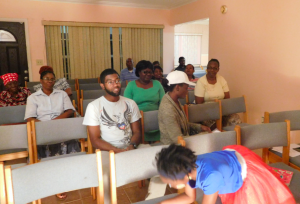
To share these legislative solutions with the marchers, our office led an advocacy training on the evening of the march. During the training, I heard from each of the attendees why they care about immigration issues, and shared our office’s work and resources with them. At the end of the session, participants signed petitions that I will drop off at their Senators’ and Representative’s offices in Washington, DC.

Participants in the advocacy training (photo: Tori Bateman)

I am grateful for the leadership of the Eglise Des Freres Haitiens church on this important justice issue. The church’s willingness to publicly witness for peace and justice in U.S immigration policy is inspiring, and I can’t wait to see where their advocacy efforts take them in the future. Whether they write letters-to-the-editor, visit a local congressional office, or even meet with their representative in Washington, DC, it is important that Brethren voices like theirs are heard in the context of U.S. policy making.