Two Years Since Chibok

The following is a statement from Nathan Hosler, Director of the Office of Public Witness, given at a Congressional briefing entitled, “Nigeria after the Chibok Abductions: An Update on Human Rights and Governance.” The briefing took place on April 13, 2016, the day before the two year anniversary of the Chibok abductions.

Other speakers at the briefing included Omolola Adele-Oso (Co-founder and Executive Director, Act4Accountability), Madeline Rose (Policy and Advocacy Advisor, Mercy Corps), and Lauren Ploch Blanchard (Specialist in African Affairs, Congressional Research Service), with Dr. Carl Levan (Assistant Professor, School of International Service, American University) moderating. Opening Remarks were given by Congresswoman Frederica S. Wilson and Congresswoman Sheila Jackson Lee.


Affected communities of northeast Nigeria, religion, and peacebuilding

The Church of the Brethren is a Protestant denomination and is, along with the Mennonites and Quakers, a Historic Peace Church. In 1922 the first workers from the Church of the Brethren in the United States arrived in Nigeria and immediately traveled to the northeastern part of the country. Since we are gathered today with particular focus on the abductions from Chibok two years ago it is also important to note that the Brethren have been present in Chibok since 1937 and established the first school in either 1939 or 1946 (there are different dates recorded). Additionally, not only was the school where the abductions took place founded by Brethren before being a government school, but the Church of the Brethren in Nigeria (in Hausa Ekklesiyar Yan’uwa a Nigeria—EYN ) reports that a majority of the girls kidnapped two years ago were Brethren. As we consider the 2nd anniversary of these abductions it is vital that we remember the larger regional context, insecurity, and displacement.

Nigeria Briefing 4-13-16

In January this year I traveled to Nigeria and into the northeastern region. Though I had worked with EYN doing peacebuilding work in northeast from September 2009 to December 2011 (which was about a month after the first Boko Haram attacks until the situation began to get dramatically worse), I had not returned until earlier this year. On my trip at the end of January I traveled by car from Abuja through Jos and Bauchi to Yola, the capital of Adamawa state. We then continued north to Mubi and on to Lassa which is in southern Borno state and not far from what is still said to be a “no-go” zone past Michika. I will make several observations based on this trip and the US Church of the Brethren’s work with EYN to address the ongoing crisis of displacement and insecurity.

1. Though many more people had returned than typically reported, security and food security was still tenuous at best.

I observed that at first look things appeared more normal than I expected, however the security situation remains tenuous with many smaller attacks going unreported. Additionally, reporting, verifying, and predicting the number of persons killed, the relative security of certain villages, and general safety is difficult because the area is difficult to access. Though many people have returned, the legitimate fear of attacks continues to disrupt schools, markets, farming, and life in general in a region that had poor development indicators even before Boko Haram arrived. Despite improved security in many areas and the waning attention to the crisis, it is imperative that the Nigerian government and international community expand relief, education, and peacebuilding efforts.

2. Numbers of killed and displaced are likely higher than official reports.

Many who watch Nigeria, do relief work, or attempt to report on the situation say that the officially reported numbers are doubtful. The Church of the Brethren in Nigeria reports that at least 10,000 of its members have been killed and 1,668, or 70%, of its church buildings have been destroyed or abandoned. Boko Haram largely (but not solely) focused on government structures, churches, and Christian communities early on in the insurgency, but has increasingly become more indiscriminant, targeted mosques, Muslim communities, and public spaces such as markets. The massive scale of abductions and deaths as well as displacement and destruction of homes, infrastructure such as bridges, government buildings, places of worship, and schools demand sustained attention and support.

3. Peacebuilding between religious communities is imperative.

On my trip earlier this year I observed expanding efforts in trauma healing and continued interfaith peacebuilding efforts. While working in Nigeria from 2009-2011 I focused almost solely on peacebuilding efforts, especially in equipping the Nigerian Church of the Brethren to engage in multiple levels of peacebuilding with a strong emphasis on interfaith peace efforts. One of the efforts came to be called CAMPI, Christians and Muslims for Peacebuilding Initiatives. This interfaith effort sought to build stronger inter-community relationships and capacity for peace as interfaith relationships and trust weakened from the ongoing crisis in Jos, political violence around the 2011 federal elections, and the resurgence of Boko Haram after the initial government clamp-down on the group. Upon returning I had hoped that religious divisions and tensions would have decreased since Boko Haram is obviously also targeting Muslims. Instead, I heard of deep distrust. Even if Boko Haram were to be defeated tomorrow and the girls from Chibok returned, support for peacebuilding efforts would remain vital for a sustainable peace.

Critical to this work is trauma healing, trust building, and reintegration of those thought to have aided Boko Haram as well as the imperative to reintegrate and care for women and girls who were abducted and then returned through escape or military intervention.

4. Coordination on humanitarian assistance and longer term development is essential.

Some of the hardest hit areas are in southern Borno and northern Adamawa states along the Cameroonian border. I visited a non-registered school in Lassa in southern Borno State, not far from Chibok and areas still considered “no-go” zones. Lassa had been attacked twice near the end of 2014.  Even before this crisis, which started in 2009, there were millions of children out of school. In many of these areas, kids who were in school have been out for at least 2 years. At the school in Lassa, which is called “Education Must Continue” there were less than 20 teachers over 2000 students. They were meeting in nearly destroyed police barracks only partially covered by roofs and outside the buildings under trees. The teachers were essentially volunteering and working without any books, paper, desks, or chairs. While these efforts are remarkable, they are only the beginning and cannot be sustained long-term. Greater coordination between international NGOs, the UN, international community, and Nigerian government is necessary. While in Lassa I was escorted around town by local vigilantes to witness a destroyed large Church of the Brethren building, a heavily damaged seminary, and a partially destroyed hospital. Though attacked more than a year earlier and though the hospital had been in communication with the government, to date they had received no support.

Nathan Hosler

Director

Office of Public Witness

Washington, DC
 

Songs of promise

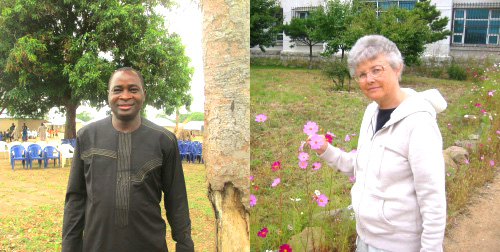
Markus Gamache serving in Nigeria and  Linda Shank serving in North Korea Photos by Carl Hill and Robert Shank

Markus Gamache serving in Nigeria and
Linda Shank serving in North Korea
Photos by Carl Hill and Robert Shank

A reflection by Kendra Harbeck, manager of Global Mission and Service office

Do you remember when you first heard the birds sing this spring? I, unfortunately, do not. I’ve been so caught up in other things these past two months that I’ve missed the birdsongs of promise.

This is ironic because I have longed deeply for spring this year. I probably have every year, but it seems especially acute after the harsh winter our community has experienced with stings of financial concerns, significant leadership changes, and deaths.

I was more in tune last year with the singing of the birds. On a Sunday morning in February, I stepped outside in the still cold air, and I heard it. The sound was so normal and mundane, but had been absent for several months. The birds were singing the arrival of spring, and yet, it was still quite obviously winter by the calendar, the cold temperature, and the desolate landscape.

Curious, I investigated who those songbirds were and why they were singing in February. According to National Geographic, the chickadee and woodpecker are the first birds to announce spring. These birds survive harsh winters by finding whatever food and comfort is available. Woodpeckers, for example, drill into trees to find insects. As John Hanson Mitchell shares, “They must look at a little pinhole and say, there must be something in there.” These resilient winter birds, prompted by change in daylight, begin their singing.

As humans, we are fooled and encouraged by signs that are obvious but deceiving. We moan and groan until it’s noticeably warmer or trees are in bloom, and yet these signs may be gone soon after they appear. Thanks to instincts and hormones, however, birds are much wiser than us. They welcome spring inspired by a more reliable and trusted source: the light. It is also worth noting that it isn’t the newly returned, light-hearted birds that herald the promise of spring. It’s the same birds that remained all along, battered by winter storms but transformed by the changing light within.

In Global Mission and Service, we encounter many “winter birds” in our work— people who persist through cold, dark times, and are sustained by the light and a song within. I think about Markus Gamache, our liaison with EYN, who persists in showing love despite much violence through sharing his home with up to 50 displaced persons and through bringing Muslims and Christians together in shared community. I think about Linda Shank, who each year, despite significant health challenges, returns to North Korea with her husband, Robert, to teach English and agricultural science at Pyongyang University of Science and Technology. We all have winter birds like these in our lives if we stop to think and notice.

We, too, are called to be winter birds. Like the chickadee, we can adapt to the winter by finding strength through community. Like the woodpecker, we can look at something tiny or insignificant, and say “There must be something in there.” Though we are winter birds in a winter world, we have a spring song of promise, energized by the never failing light of Christ that grows in our hearts.

Global Mission and Service is a Core Ministry of the Church of the Brethren. Learn more about our international partnerships at www.brethren.org/partners or support the work of Global Mission and Service today at www.brethren.org/give .

(Read this issue of eBrethren)

Remembering

"How often do I thank God for his unconditional love?" Photo by Cherise Glunz

“How often do I thank God for his unconditional love?”
Photo by Cherise Glunz

A reflection for Holy Week written by Ed Woolf, assistant treasurer of the Church of the Brethren

“Meditate on Jesus, the Messiah, who was raised from the dead and is a descendant of David. This is the gospel I tell others” (2 Timothy 2:8, ISV).

When I used to visit my Grandpa’s house, I would immediately notice how his living room wall was covered with pictures of his 20 grandchildren and 30 great-grandchildren. Over the years, Grandpa was a grace-filled and gentle soul to tolerate my cousins and me and our mischievous behavior while we spent long hours playing pool, table tennis, hide-n-seek, and cards in his basement. Grandpa always loved his family.

Years ago, Grandpa spent long hours at the same factory for over 40 years, selflessly sacrificing his wants to provide for his 7 children. Grandpa was a dedicated worker with the strength and character to endure a hard day’s labor. These examples and fond memories of Grandpa’s love and endurance are especially precious now, since he was laid to rest last week.

As I think about Grandpa’s legacy and the lasting imprint of his life on our family, I consider my own mortality and how I use the life God has given me. Do I carry on the characteristics and lessons learned from Grandpa? Do others see a little bit of him in me?

In saying goodbye and thanking Grandpa for everything he did for me, I was reminded of Jesus—His crucifixion, resurrection, and everything he’s done for me. In sacrificing His life, Jesus took our place and atoned for our sins. How often do I thank God for unconditional love and remember the ultimate sacrifice Jesus paid for me?

With Jesus’ resurrection, God gifted us with eternal life. In times of my greatest need, do I turn away in fear or do I put my faith and trust in God’s promises?

Before ascending to heaven, Jesus gifted us with the Holy Spirit so that it could dwell in us. I wonder if others see Christ in my character, through my words and my actions. I often wonder if my life best reflects what I have learned from Jesus. Can others see that I’ve been changed by my relationship with Him?

At Grandpa’s service, I found a poem by Linda Ellis entitled “The Dash,” which describes the meaning of the line between your year of birth and year of death. The last stanza caught my attention as I considered my final appointment with God and the imprint of Jesus on my life: “So, when your eulogy is being read, with your life’s actions to rehash…would you be proud of the things they say about how you spent your dash?”

As we look to the cross this Easter, let us remember the example that Jesus set of how to live our lives. We are all loved and blessed children of God, each with unique gifts to carry and share with others during the short time that we have. Although the extent of our time here on Earth is unknown, Jesus was the perfect example of how to spend our time well—depending on God’s grace and showing love to one another.

If you have been blessed by this reflection, please consider making an Easter gift to the Church of the Brethren at www.brethren.org/give . Every gift supports the many life-changing ministries that you love.

(Read this issue of eBrethren)

PRAYER – a great way to start the year

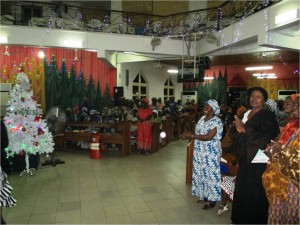
Crossover Service

Crossover Service

A Crossover Service                By Debra A. Ziegler


A Crossover Service

A celebration for crossing over to a new year.

From 2015 to 2016

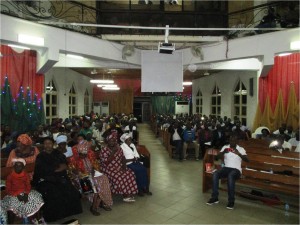
A gathering of people

One Church, many tribes, many languages

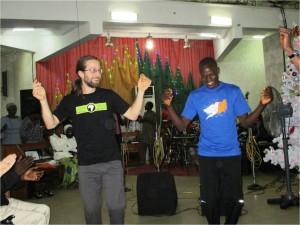
Singing, praise, drums, electric guitar, keyboard, shakers, harmonica

Yukelelie, rhythm and song.

Dancing and music are a part of the service

Dancing and music are a part of the service

A testimony-of the faithful prayer of an aunt, who for 17 years prayed.

Her prayers answered, a relationship begun.

A child now knows who his father is.  Praise to God who is faithful.

Humble thanks for the prayers of God’s children, and for His visions that guide us.

A sermon from Joshua 3

Challenging us to cross over into 2016 on the Lord’s side, to sanctify ourselves,

To leave our sinful trouble behind,

To stand firm in the testimony of the Lord.

This EYN church has many tribes

This EYN church has many tribes

A time of serious prayers in many languages.

Prayers …

For the Chibok community; the girls that were kidnapped and are still missing.  May they know God’s presence and their families be comforted.

For the EYN church – for unity and growth, for good relations with neighbors.

For Boko Haram- to turn from their violent ways and turn to the light.

For church leadership

For marriage and families

For following Christ with a renewed commitment

For safety in travel

And so we began our prayers in 2015 and prayed into 2016

Mary’s Room: A Lenten Reflection

Based on John 12:1-8

I remember when our family first moved to Maryland from Kansas. Leaving behind family, friends, and a familiar home felt overwhelming for that distraught 9 year old. I generally like road trips and the adventure that comes with it, but that first drive to Maryland turned me into a puddle in the backseat. I wanted to see my friends. I wanted to play with Legos in my room. I wanted ride my bike through the neighborhood and skid on the dusty streets. Out of this longing grew fear, confusion, anger, helplessness, and I stewed in it for 22 hours in that car.

Once we got to our new home, I explored it with my characteristic shyness, slowly and cautiously entering each room as though I was being introduced to someone for the first time. Quietly considering every fiber and tile and curtain, I moved from room to room until we got to the one my parents promised me. I got to have the bigger room since I was the older brother, but there was one little stipulation: the carpet. As I followed the long hallway to my room, I happily saw that my room had more than enough space for Lego-building, but it all had to happen, for the time being, on the most luminous, voluptuous, striking swath of shaggy pink carpet to grace all of humanity. It was beyond my wildest dreams – and not in a good way.

The best way I can describe this shock is through a thought experiment called Mary’s Room. Mary is a scientist that knows everything about color – about light waves, the architecture of the rods and cones in the human eye, the neural pathways that interpret color in the brain, all of it. The only catch is that she is isolated in a black and white room for her entire life and has thus never experienced color for herself. The thought experiment suggests that when she finally leaves the room, her experience of color for the first time is profound and new, despite supposedly knowing everything about color.

Ignoring the philosophical headache that comes from analyzing this thought experiment too closely, let’s return to the headaches I inevitably got from staring at that neon monstrosity for too long. Nothing could prepare me for that carpet. I knew it was going to be there, pink and shaggy, but there is no way that words could fully capture the essence of that mutated Muppet pelt of a floor. It was like seeing pink for the first time, and I couldn’t fathom why people would do that to their room, to their eyes. Let’s just say I felt very motivated to unload the moving truck and cover the floor as quickly as possible.

The season of Lent is largely about expectation. The Lenten season follows Jesus’ march towards the cross. We know the importance of death in his story, but even more recognize the renewing resurrection that follows. All of this is expected. As much as we expect and know the outcome of this Gospel story, the more we need to recognize the ways it defies expectations. Jesus’ ministry, his death, his resurrection challenged Roman authority and even the most pious Jews. In defying expectations, this story becomes transformative and creates a new way of looking at the world that cannot be unseen. Was Mary the scientist forever changed when she saw color for the first time? Could you go back to that dark room knowing that reds and greens and blues lay right outside your door? The story of Jesus’ death and resurrection causes a similar, though more profound, transformation that challenges the way things were before.

Our passage today looks at another Mary, the sister of Martha, whose timeliness, humility, and vulnerability reveals Christ’s radical love. We expect to hear this story during Lent, but just as I expected pink shag carpet and still managed to be surprised and more than a little unsettled, maybe we can still be surprised and unsettled by this familiar story. Mary takes a costly perfume worth a years’ salary and anoints Jesus’ feet. Taken aback, Judas criticizes Mary for not spending the 300 denarii spent for the perfume on the poor, at which point Jesus says, “Leave her alone. She bought it so that she might keep it for the day of my burial. You always have the poor with you, but you do not always have me.”

To be fair to Judas, this scene is rather odd. Commentators argue that the scene symbolically prepares Jesus for death, but that alone does not justify Mary’s actions in the context of the story. This story seems to emphasize the value of timeliness. Jesus has been in hiding because of a plot to kill him, making this a tense time Jesus and his followers. Despair is setting in for many of those close to Jesus, but Mary, in an grand display expresses love and appreciation for the one who is about to die. Jesus’ statement about the poor is not meant to discount their value or needs, but rather respects and affirms the timely response to immediate opportunities for discipleship. The notion of witness is closely tied to this call for timely action.

Last fall, the news headlines almost always involved Syrian refugees and that ISIS was going to invade our country through the US refugee program. The terrorist attacks in Paris inflamed this debate further and spawned anti-refugee and anti-Muslim rhetoric that caused many of the DC faith-based organizations to mobilize and counter unwarranted hate speech and misinformation. Representing the Office of Public Witness, I joined several of these coalitions, which aimed at fighting discriminatory legislation, attending Congressional hearings, and educating lawmakers about the importance of refugee resettlement. When thinking of refugees, I think about how jarring my own experience was when I moved away from Kansas. That these persons feel compelled to leave their home country, spend years in refugee camps, and then maybe get settled somewhere else speaks to the desperateness of the situation in Syria and Iraq, to the great need of these persons, and to the power of human resiliency and courage. When I came to Maryland, I left behind a house and some friends. Refugees leave everything behind with no guarantee for a better future. And like 9 year old me, they want nothing more than to go back home. Though Islamophobia and demonization of refugees still scores political points in some circles, the witness of these coalitions offers inspiration for those pursuing the Kingdom of God on earth.

Jesus’ defense of Mary arises from this emphasis on timeliness and witness, but also from the humility she learned from him. In a sermon entitled, “Putting Ourselves in Question: The Triumphal Entry and the Renunciation of Triumphalism,” Mennonite scholar Chris Huebner reminds us “that Jesus emptied himself, became humble, and took the form of a servant. Unlike other rulers, he does not rule by forceful imposition. He rules, not by wielding power, but as a servant.” Jesus spends much of his life avoiding glorification and challenges traditional conceptions of Messiah that anticipate a powerful Jewish warlord tossing off the yolk of Roman rule. Instead they got a tektōn laborer, born in a manger, from the backwater of Galilee, home of thieves and simpletons. Jesus’ embraced this humble past and made it a core part of his ministry. In the Gospel of Mark, he even does all he can to hide his Messianic identity. Considering the rest of his ministry, it is doubtful that Jesus’ defense of Mary springs from a need to be lauded or worshiped or imply that his value is intrinsically greater than the poor who suffer.

This humility is central to the love Jesus calls us to, and he sees this type of love as Mary anoints him. Because her actions are so extravagant, she embodies a love that defies reason, challenges our expectations, and centralizes the humility Jesus himself exhibited. Mary humbly gives of herself both monetarily and physically as she kneels to anoint Jesus’ feet. Exposed to the judging gaze of those present, Mary’s actions recalls the vulnerability necessary to heed Jesus’ call to love our neighbor, the stranger, and even our enemies. When we consider that Jesus soon would wash his disciple’s feet, the collusion of humility and love in this scene is all the more poignant.

Much like the Mary of the thought experiment, the biblical Mary transforms as abstract knowledge becomes a lived experience. Jesus’ anointing is Mary’s instantiation of a learned, Christ-like way of living and reveals the hallmark of discipleship. Jesus ultimately supports Mary because of her actions for her actions, not out of a sense of entitlement or need to be worshiped. She has learned that Jesus calls for love based on vulnerability and intimate connection, flowing from a witness that is sincere, timely, and humble. She is able to see the color that Judas can’t.

We are not to avoid vulnerability, but rather defy reason and embrace it. I received a lot of critical emails about the refugee Action Alerts the Office put out last fall and was told, very bluntly, that because I supported policies that kept doors open to refugees, I would be morally responsible for the Americans killed by members of ISIS infiltrating our country. I didn’t challenge the point directly, but mentioned that the lengthy 1 to 2 year vetting process by the UN and US that makes malicious infiltration impractical and infeasible. Besides that point, there is a more important question: Wouldn’t we be equally responsible for the harm caused to the people we turn away?

Responding directly to people’s concerns sometimes made them more sympathetic. Their concerns for safety mirror the concerns of those fleeing violence in Iraq, Syria, Guatemala, El Salvador, and Honduras. For the ones I could not persuade, I really wish that I emphasized the vulnerability inherent in a deep theological expression of love. Isn’t love greatest when there is risk, when we are vulnerable? We see Christ’s death on the cross as an act of untamed love, but isn’t that only so because Christ became vulnerable? The trust we extend in that vulnerability reveals a genuine desire for connection and honesty that can’t be replicated otherwise and reaches deep into a person. As uncomfortable as it is, this is the challenge before us.

As I close this reflection on Mary’s story, let me go back to the beginning and offer one more thought. Because the scene occurs in Lazarus’ home in Bethany, the scene begins with the acknowledgement that death has been conquered. Inasmuch as this scene foreshadows Jesus impeding death and resurrection, it is situated in liminal space that sits at the threshold of both life and death. This tension and instability is central to Jesus’ ministry. The love that he offers disrupts traditional ways of thinking, disrupts what is comfortable and asks us to witness with humble vulnerability. Inasmuch as we strive to live, to be triumphant, the meaning of resurrection means that we must first accept death and embrace its destabilizing power for transformation. Though some commentators emphasize that Mary prepares Jesus’ body for death, I think we should go a step further and say that Mary is preparing Jesus for resurrection, ushering in new life and a new way of seeing that challenges expectations. How can we be that catalyst for renewal? Sometimes it involves returning to something familiar. Sometimes it’s in embracing something or someone new. Either way, we can end up surprised.

The Office of Public Witness offers many chances to be engaged in this kind of transformation, and I encourage you to sign up for our Action Alerts to stay connected with us. The Office plans help organize events for World Refugee Day in June to show support for refugees across the world. If you are interested in helping with one of these events individually or as a congregation, sign up for Action Alerts and contact me directly at jwinter@brethren.org. May we walk together, unsettled and empowered by this radical vision of love that hinges on humility and vulnerability. May our actions be timely as we pursue God’s work.

In Christ’s Peace,

Jesse Winter

Peacebuilding and Policy Associate

Office of Public Witness

Washington, DC

 

Female Theologians in Nigeria

Kanadi Dauda Gava

Kanadi Dauda Gava

by   Mrs. Kanadi Dauda Gava, treasurer EYN Female Theologians

This group, Female Theologians EYN (Church of the Brethren in Nigeria), was started in 2008 when Rev. Ndamsai saw the need of refreshment course for Women in the Ministry. He first shared this idea with the EYN former President Rev. Filibus Gwama and Mrs. Christine Guhne the then Mission 21 representative to Nigeria and TEE Consultant. They both agreed with this idea and Guhne promised that Mission 21 would support the group through sponsoring their yearly workshop. This support is ongoing.
MISSION: our mission is to empower and encourage women for effective service in the church and society, spiritually and administratively.

Dr. Yamti - lecturer at Kulp Bible College

Dr. Yamti – lecturer at Kulp Bible College

Dr. Safiya - Director of Education

Dr. Safiya – Director of Education

AIMS AND OBJECTIVES:
– To encourage one another to serve Christ faithfully despite all challenges.
–  To promote Peace and justice in the church and society.
–  To serve as a spiritual and intellectual force to the church and the society.
–  To help and cooperate with the church on fulfilling her mission
–  To bring EYN church of the Brethren in Nigeria Female Theologians together in order to be      effective in the service of the church.
–  To work hand in hand with Zumuntan Mata Ekklisiya (ZME) (Women Fellowship) in time of evangelism.
 

BOOK PRODUCTION: some of our objectives are to encourage intellectual and spiritual activities of the members. So we embark on writing book. The first book was produced in 2010 and many members contributed since it had to do with African Women. Now the second volume is with the publisher hoping that by March it will be ready for sale. The title is, African Women Voices.
 

INSURGENCY: The attack by the insurgents on the EYN Headquarters on the 29th October 2014 has affected the group because the attackers went away with our money worth 3 thousand dollars, and we need about 3 thousand dollars to print 2,000 copies of the current book.

Dr. Rebecca

Dr. Rebecca


Sharing great love

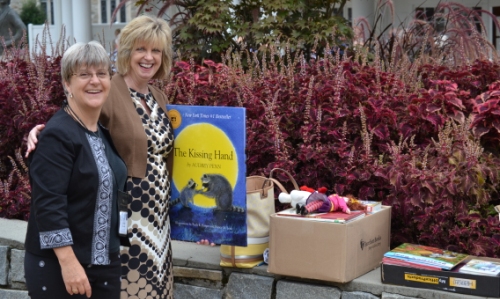
Debbie Eisenbise with Sherri Arrington, principal of Junaluska Elementary School. Photo by Cheryl Brumbaugh-Cayford

Debbie Eisenbise with Sherri Arrington, principal of Junaluska Elementary School.
Photo by Cheryl Brumbaugh-Cayford

By Debbie Eisenbise, director of Intergenerational Ministries

“Don’t look for big things; just do small things with great love.”—Mother Theresa

Sometimes all it takes is a simple request. The theme of National Older Adult Conference (NOAC) last September “Then Jesus Told Them a Story” inspired such a request. The goal: collect enough new picture books to give one to each of the 450 students at Junaluska Elementary School. This challenge was met with great generosity! It was a blessing to see the story unfold.

Jim and Libby Kinsey of Hope Church of the Brethren in Freeport, Mich., participated in the service project, making their donation and witnessing the presentation of those 450 books to Principal Sherri Arrington. Before going home, they volunteered to deliver two additional donations to Junaluska Elementary. Libby shared that the building was beautiful and relatively new, but state budget cuts severely impacted school programming.

Libby and Jim had the opportunity to meet with the Principal Arrington, who was delighted with the gift of books from NOAC. “I feel so blessed,” said Principal Arrington. “I have told the story over and over of this remarkable event that occurred in the life of my school. When things have been incredibly tough—budget cuts, a charter school opening in town, and other struggles—your group [showed up]. In my 37 years of public education, I have never experienced such generosity and kindness.”

Jim and Libby’s experience, which began at NOAC, inspired them to more service. Libby shares, “Our picture book donation was priceless, but I kept thinking about how strapped their budget had become, and how classroom libraries had been hit so hard…. Since little is nearer and dearer to our hearts than boosting literacy, Jim and I discussed our commitment on our way home: to get 200 new books into each third through fifth grade classroom by NOAC 2017.”

Since her retirement from 38 years of teaching, Libby regularly volunteers at the Scholastic Books warehouse, and is “paid” with boxes of new books. These books are now sent to children at Junaluska Elementary School. To increase their donation, Libby and Jim involved family, asking for additional donations to be made in lieu of adults exchanging gifts at Christmastime.

New books and the stories they tell lift children’s spirits, help them make sense of this challenging world, and encourage them to read. What began at NOAC 2015, a simple act of sharing something small, will make a positive impact on the givers and receivers for years to come. It is in this way that a small request produces a great outpouring of God’s love.

National Older Adult Conference is one of several conferences hosted by Congregational Life Ministries, a Core Ministry of the Church of the Brethren. Learn more about National Older Adult Conference 2015 at www.brethren.org/noac or support it and other life-changing ministries of your church at www.brethren.org/give .

(Read this issue of eBrethren)

Widow’s Oven Provides Income

Special Oven at Gurku

Special Oven at Gurku

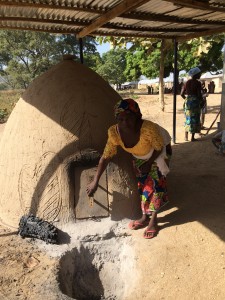
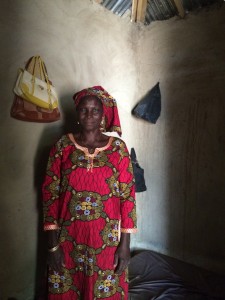
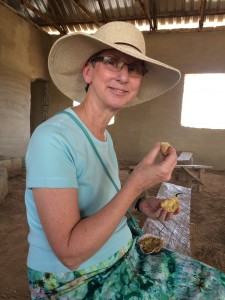
While visiting the Interfaith Camp at Gurku, I met Esther. She is a widow with five children; two of which are living with her at the camp. A special oven was built with funds donated from Germany. The widows in the camp make muffins daily to sell to others at the camp and in the neighboring town. I bought 10 muffins and shared them with our group. They were a tasty snack and held us over between breakfast and lunch. This gift of the oven gives widows a way to work together and provides independence for life under difficult circumstances.


Esther( a widow)

Esther (a widow)

Julie Heisey enjoys a muffin

Julie Heisey enjoys a muffin


Walking Together

One Great Hour of Sharing 2016

One Great Hour of Sharing 2016

Adapted from a sermon starter by José Francisco Morales Torres, director of Pastoral Formation at Disciples Seminary Foundation

“Where you go I will go; and where you stay I will stay” (Ruth 1:16, NIV).

The story of Ruth is a beautiful narrative about resilience and accompaniment. Rendered vulnerable by the deaths of their husbands and the natural disaster of famine, Ruth and Naomi clung to one another for comfort and strength.

As we read the book of Ruth, we see both a human story and a God story, the former “incarnating” the latter. As a human story, we read about the spirituality of solidarity. In the divine realm, we read of God’s redemption, which is mirrored in human action.

Redemption is a sign of God being with us. The divine act of redemption can be seen in the sacrificial commitment Ruth makes to Naomi to go where she goes and stay where she stays. Through Ruth, God is revealed in the very act of accompanying the most vulnerable in society—both then and now. This commitment to walk together is good news for a globalizing world that so often separates people groups into “them” and “us.”

As God walks with those who are vulnerable, we see God as we walk together with them as well. Consequently, we, like the outcast, come face-to-face with our own need and vulnerability; we need them to see God in our midst. Walking with those in need is an opportunity for us to reignite our faith and reframe our humanity in our encounter with the faith and humanity of another. We are able to recognize the transforming power of solidarity, not just for “them” but for “us.” Through the eyes of accompaniment, there is only a united “us!”

One Great Hour of Sharing is a special opportunity for you and your congregation to walk with those in need through the work of the Church of the Brethren. When you give to this special offering, you support Core Ministries like Brethren Volunteer Service, Congregational Life Ministries, Global Mission and Service, the Office of Ministry, and the Office of Public Witness. You also support the work of Brethren Disaster Ministries and Global Food Crisis Fund. With your help, we accompany those in need across the country and around the world. As we walk together, we recognize God among us and receive strength for the journey ahead.

The suggested date for One Great Hour of Sharing is March 20. Learn more and find worship resources for the offering at www.brethren.org/oghs or give today at www.brethren.org/giveoghs .

(Read this issue of eBrethren)

ACCEPTING GOD’S GIFT OF GRACE – EYN’s Theme for the Year

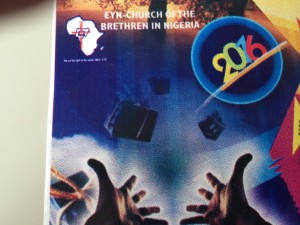
accepting the giftIn January, each EYN church usually chooses a theme for the year. It is based on Scripture and a banner is made and hung in the church for that year.  This year at the request of Dr. Samuel Dali and EYN leaders, every church has been asked to use the same theme; Accepting God’s Gift of Grace. The theme is based on 2 Corinthians 6:1 “Working together with him, then, we entreat you not to accept the grace of God in vain.” (RSV) The theme is designed to remind churches that there is a responsibility involved when we accept God’s gift of grace. Individuals and churches are encouraged to continue as ambassadors for Christ (2 Cor 5:20) and to spread the good news of God’s grace to all. Dr. Samuel Dali is encouraging EYN to make the most of the new opportunities brought about by the insurgency of Boko Haram. As EYN members have been scattered across Nigeria, the hope is that they continue to share about Jesus Christ and bring the message of peace and reconciliation wherever they are located.

Banner in Abuja

Banner in Abuja