Nigeria: Office of Public Witness analysis and update

In July, Nigerian President Muhammadu Buhari arrived in the United States for his first Presidential visit to D.C. President Buhari’s visit came just seven weeks after an historic electoral victory over incumbent President Goodluck Jonathan, which marked the nation’s first successful and peaceful transition of power from an incumbent to an opposition party.

This success took center stage as President Obama sat down with President Buhari on Monday to commend him on this achievement.  But looming over Buhari’s visit and his recent electoral victory, is Boko Haram’s renewed bloody campaign.

The visit included a series of several high-profile meetings with President Obama, senior members of the Obama Administration and Congressional leaders. Framing these dialogues is a surge in Boko Haram-related violence throughout Nigeria and into neighboring Chad and Cameroon despite increased presence and funding of multi-national security forces.

As such, much of the official visit and its media coverage has focused on the expansion of US-Nigeria military cooperation in countering Boko Haram. Yet this is only one piece of the puzzle.

There is, however, a great resource that continues to go ignored and untapped in countering violent extremism—namely the brave and resilient communities on the frontlines of the violence. And if we are to take a more holistic approach that addresses the underlying causes of terrorism, as asserted by President Obama and Buhari, then there should be a greater concerted effort to develop a strategy that ensures accountability of military forces to local communities and puts civil society leaders and peacebuilders at the center of countering violent extremism.

Even though displaced to Yola, Jos, Abuja and many places in between, the Church of the Brethren Nigeria (EYN) have already begun to rebuild. During these weeks the region has experienced increasing attacks from Boko Haram, which has left more than 625 more people dead since President Buhari’s inauguration. To be sure, they have felt the acute brutality of Boko Haram. Their hearts are still heavy from the loss of the 273 Chibok girls, most of whom were members of the Church of the Brethren in Nigeria (EYN), taken by Boko Haram. Since 2009, more than 1350 women and children have been kidnapped, confirmed 10,000 EYN members killed, over 280,000 members displaced, and 70% of EYN churches burned or abandoned due to the conflict.

As the violence spread in the fall of 2014, EYN Liaison Officer, Markus Gamache, opened his home to displace family friends and others.  Soon 50 people were living in his 2-bedroom home located in Jos.  As the violence spread and the needs grew, Markus developed the vision for an interfaith camp to relocate both Muslim and Christian families while demonstrating how people of different faiths can live in peace.  Working with an interfaith group called Lifeline Compassionate Global Initiatives, Markus started with a plan to build 10 homes to help those living in his home.  By the spring of 2015 the list grew to 100 families, even as the construction on the first 62 homes, sanitation, water well and kitchens are completed.

When the EYN Church headquarters near Mubi where over run by Boko Haram in October 2014, displacing all national church leadership and the related Bible College staff and students, the loss and shock of the situation was more than overwhelming, we wondered if the Church would continue.  With support coming from the US Church of the Brethren, EYN leadership soon found new footing and created a crisis response team.  In an impressive show of resiliency and leadership the EYN team have provided relief to thousands through the remaining church structure of districts.  Under the inspired leadership of Reverend Dr. Samuel Dali, EYN president, construction is underway for care centers that will support those displaced from the current crisis and future violence in Nigeria.  The Church is not only helping serve those in need, it is imagining how to better serve beyond this crisis.  An impressive effort with displaced staff and only 30% of the Church body intact.

Yet in the face of such tragedy, our faith and relationship with the Church of the Brethren US and the Swiss and German Mission 21 has united us, fortifying our resolve to live together in peace.  Indeed, over the last year, Church of the Brethren has raised $3.1 million dedicated to a five-year plan for crisis response in the affected areas. In our efforts, thousands are receiving food and shelter, EYN’s Peace program is providing trauma healing workshops for pastors, women’s groups, and lay leaders to help those suffering from spiritual and emotional trauma, and a special interfaith relocation project is building homes that will house more than 100 families or 800 people.

Through these efforts of response, recovery, and rebuilding we have strengthened our communities and connections with our Muslim kindred and brought hope to a people that have been brutalized.  Many times over the populations in the northeast have felt abandoned by their government and international community.

Improved diplomatic relations between the most populous country in Africa and the USA may help Nigeria fight its insurgency more effectively, but only to the extent that the relationship encourages a more holistic response to the Boko Haram insurgency–and not one focused exclusively on the battlefield.  This insurgency will only end when there are real and robust attempts to tackle what is at the root of Boko Haram’s insurgency: political and economic marginalization, corruption, inequality, and abuses committed by political elites and military personnel without recourse. While this visit might not yield any substantial initiatives or agreements in the short term, ideally this initial diplomatic visit could serve to more clearly define the long-term, shared work to be done eradicating the conditions that bring about groups like Boko Haram.

And while state diplomacy and cooperation is an important bulwark against terrorism, the responsiveness and flexibility of civil society cannot be underestimated as an integral part to the solution. Therefore, we encourage both Administrations to consider a more prominent role for civil society and religious organizations in developing a more holistic and regional approach to counter Boko Haram.

Office of Public Witness
Church of the Brethren
Washington, DC

Ending the Isolation–A Statement from the Office of Public Witness on the Recent Violence Against Black Churches

 “In recent years there has been a re-emergence of Klan-like hate groups and increases in racially motivated violence around the country.”

Report of Committee on Brethren and black Americans, 1991 Annual Conference

The horrific violence at the Emanuel African Methodist Episcopal Church in opwCharleston, South Carolina is not an isolated incident. As Jelani Cobb states in his recent New Yorker article, “Even if [Dylann Roof] acted by himself, he was not alone” and the recent burning of 6 predominantly black churches underscores the systemic violence and racism that our black brothers and sisters have always faced in America. Burning of black churches has been an ongoing practice since the Civil War intended to terrorize black communities and leaders.

When black lives and churches are faced with an increased danger, they often feel isolated from the wider, whiter community. While our denomination is predominately white, we are still called to stand in faith and solidarity with all our brothers and sisters in Christ –especially those who persecuted. In response to the shootings at Emanuel AME Church, General Secretary Stan Noffsinger and Director of Intercultural Ministries Gimbiya Kettering sent a letter of condolence and support on behalf of our denomination. We must, as Stan and Gimbiya emphasized in their letter, ask our black sisters and brothers what they would have us do and how we can best stand with them. One way to do this right now is to contact black churches in your community –and let them know that they are not alone.

Crucially, we must also commit ourselves to the task of deconstructing and destroying the racism that lies within ourselves and our church. Our 1991 statement reminds us of the weight and importance of this task saying, “Because racism is built into our way of life, it is extremely difficult to unmask it and honestly face the radical changes that need to be made in ourselves and our institutions if it is to be eradicated.” If we are unwilling to commit ourselves to these tasks then we dishonor the gospel of Jesus and forsake our black brothers and sisters. Paul reminds us in the second chapter of Ephesians that Christ has brought down the dividing wall and destroyed the hostility that once existed between peoples. Thus, any hostility, racism, or violence towards one another is of our own doing and blatantly disregards the reconciling work Christ has done for us all.

It is more important than ever that we call out this racism and violence for the sin that it is, respond to the voices of our black sisters and brothers, join them in solidarity, and live out lives of faith and justice that repudiate racism and follow in the footsteps of our Lord Jesus Christ.

In Christ’s Peace,
Nathan Hosler
Director, Office of Public Witness

*Consider Donating to the National Council of Churches “Burned Churches Fund” to support these churches that have faced this recent violence:  http://nationalcouncilofchurches.us/pages/burned-churches-fund

**If interested in further reflection, the text of Nathan’s sermon given at Washington City Church of the Brethren on this recent violence can be found here: http://washingtoncitycob.org/2015/06/28/there-may-yet-be-hope-a-reflection-on-the-charleston-massacre/

The Glory of Gardening: The Hidden Promises of Community Gardening

going-to-the-garden-title

Monday, June 15th
7:00pm ET

“The glory of gardening: hands in the dirt, head in the sun, heart with nature. To nurture a garden is to feed not just on the body, but the soul.” –Alfred Austin

Through the spring Going to the Garden webinar series, we have explored how to start community gardens and how environmental degradation affects conflicts. Join us for this final webinar of the series as we discuss the hidden benefits of community gardens including spiritual wellness, relationship building, and trauma healing.

Gardening is about more than plants and the hopeful harvest of fruits and vegetables that they promise. Gardens provide a space to bring people from all walks of life together, while also facilitating emotional healing and spiritual growth.

Interested participants will be eligible to receive 0.1 Continuing Education Units. If interested, please e-mail kfurrow@brethren.org

To register for this webinar, please visit this link. Any questions can be directed to kfurrow@brethren.org.

Presenters:

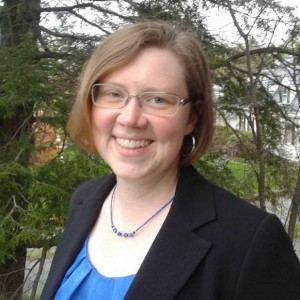
 10325698_10152153201484195_9123992018347122133_nLaura Stone is a theologian and church musician who has most recently been studying at Boston University.  She will soon move back to Indiana, where she grew up, to be a hospital chaplain.  Laura has worked at Gould Farm, a working farm and therapeutic community for adults with mental illnesses, and at Waltham Fields Community Farms, a Boston CSA with an emphasis on urban food access, and through these (and through eating delicious local CSA produce!) has developed a keen interest in the practice and spiritual discipline of gardening and local food.

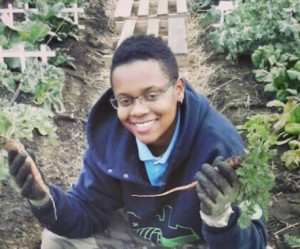
MTaylorMyeasha Taylor manages Perlman Place Farm of Civic Works Real Food, a 1.5 acre urban farm in Baltimore City through Civic Works Real Food Farm.  She is a native Washingtonian dedicated to growing fresh food in urban communities. She has grown food in Baltimore, D.C., and North Carolina.

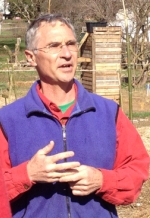
tom_pic2Tom Benevento gives leadership to New Community Project’s Undoing Global Warming campaign based out of their Spring Village Ecology Center in Harrisonburg VA. Tom brings the expertise of a degree in Sustainable Systems, along with years of practical experience in the US and Central America.

Unnamed: Reflecting On Baltimore

A sermon at Washington City Church of the Brethren on May 3, 2015

By: Nathan Hosler

1 John 4:7-21

A week ago a nearby city was set aflame.

We likely felt many things during this time.

I was also reading for this sermon. Particularly reading and rereading the 1st John passage. Both these events and this passage require such depth of thought that I struggled to make sense and unpack all that needed to be considered. The passage was thick with theological considerations and the events contained layers hard to fathom. The passage begins:

7Dear friends, let us love one another, for love comes from God. Everyone who loves has been born of God and knows God. 8Whoever does not love does not know God, because God is love.”

The potency of these words and the words that follow it are shocking when we pay attention and don’t read too quickly. Particularly how knowing and loving are connected in ways that we don’t typically connect.

Likewise the situation and discussions around race and police violence and community response require a depth of consideration that we may find hard to sustain.  What is needed in such a situation? Is it to name the unnamed?  To call out racism in our system—in ourselves? Should we try to “find out” what happened? Reading accounts and forming opinions on who did what and why and how? Do we need to form an opinion on what happened so we can choose a side, stake a position, argue a point? Does the world need me or us to say something, to add words to the cacophony, to argue for justice or truth or the institution or the oppressed community? Should we start with the text or the context? With God or the people?

It is in this situation that it is hard to know where to start.

This passage revolves around a particular, quite clear, and quite dramatic proposition.–

God is love.

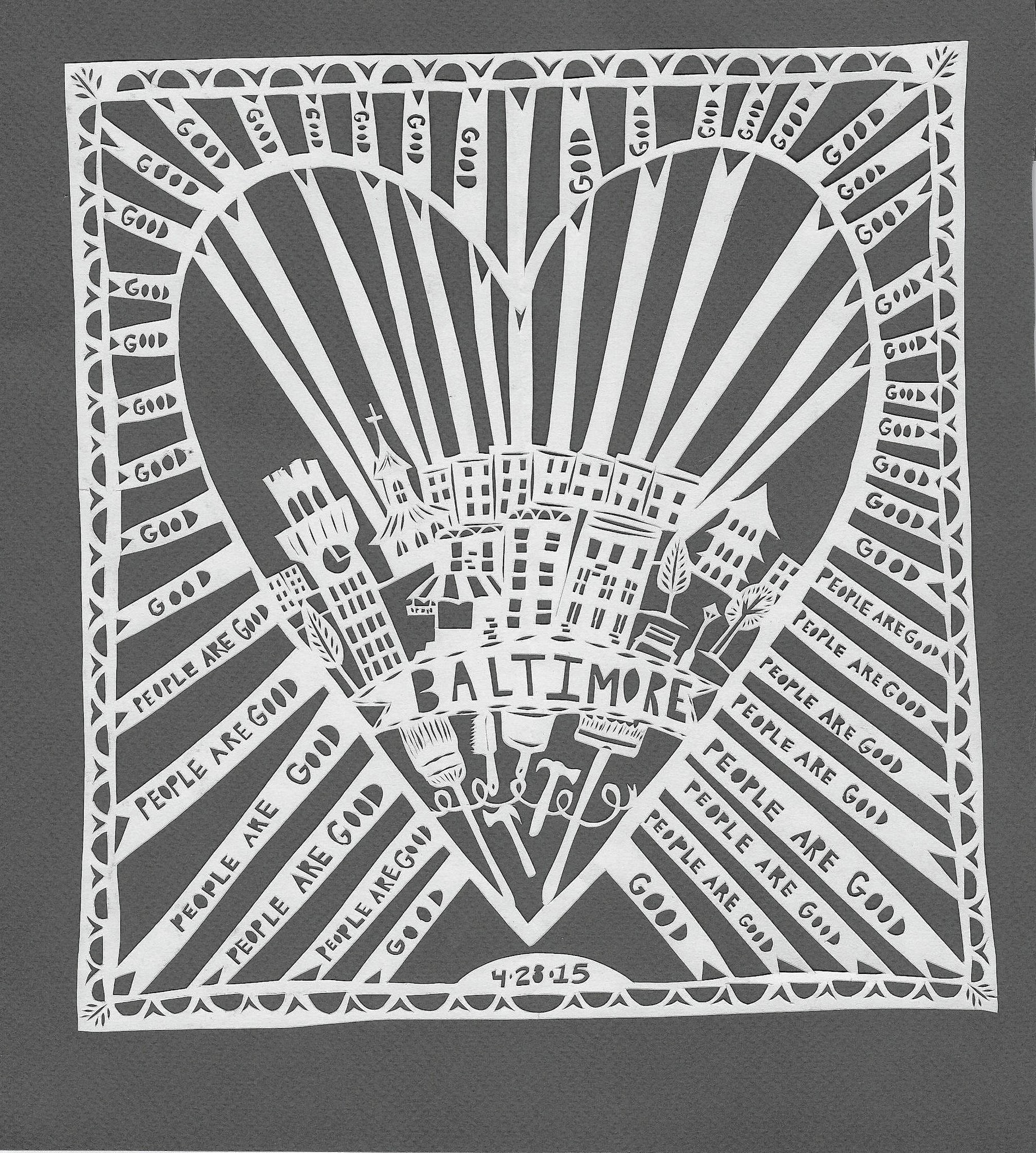
'People Are Good'-Annie Howe/ HandOut

‘People Are Good’-Annie Howe/ HandOut

What does it mean for God to be love? We typically say we love—which is a verb—that is we love someone or something. Or perhaps that someone—perhaps God—is loving, but in this we see “God is love.” If we back up just a verse and a half earlier we read the exhortation “Let us love one another.”  This is predicated off of God as the source of love. It reads “for love comes from God.”

7Dear friends, let us love one another, for love comes from God. Everyone who loves has been born of God and knows God.”

And it continues saying not only is God the source of love but those who love are born of God. The passage includes God being defined as love, being the source of love, noting how God demonstrates God’s love, how Jesus’ appearance is the embodying of love, and how we are also to be defined by love as children of God.

Whoever does not love does not know God, because God is love. This is how God showed his love among us: He sent his one and only Son into the world that we might live through him.

That we might live through him.

This is how God showed his love among us: He sent his one and only Son into the world so that we might live through him. God’s love is demonstrated to us through the giving of life. It is not so much that life is the ultimate goal as that it is the concrete expression of God’s love toward us. As such it is not to be taken lightly. Life is not to be thrown away. However, life is not the ultimate goal. At least life as we tend to describe it. As I believe Shaine Claiborne has said, the goal of life is not to get out of life alive. Meaning that life is of great value but in order to live I need to give my life, and not take life or devalue other’s lives because they are a different race, nationality, political opinion, economic position, or sex.

Why are there so many deaths by police in the news recently? Is there an increase or is what has always happened just making it into the news? I recognize that I am a white man and as such feel both compelled to talk about racism and a little anxious. But I feel that I must at least attempt to speak.

I must admit I am unsure what to say. You have likely heard much talk of what happened and how people responded. You likely heard that though there were many strong responses to Freddie’s death these varied in how they were manifest on the street. You also heard people’s responses to these various actions and then heard other people criticizing certain leaders for calling people involved in destruction “thugs.” I was neither there nor am I an expert on all that was said or done. I, as such, don’t feel qualified to comment very specifically but do feel compelled to respond in some manner—at least give some reflect on how we as a church might respond. I am, of course, not assuming that our congregation or denomination is only white. This would further monopolize who is assumed to be “really” Brethren. I am also not assuming that everyone is either white or black as if those are the two binary options. Nor am I assuming that any of these groups are monolithic without cultural, political, theological, historical, or other differences. Though Brethren are not mono-ethnic or mono-culture it is critical to recognize that Brethren persons of color have often been marginalized and experienced racism and prejudice at Brethren events. The January edition of the Messenger magazine bears witness to this. So while this sermon is not attempting to comprehensively address race and racism in our church I felt these few notations were necessary.

In addition to preaching, I am also a doctoral student in theological ethics. One of the books on my shelf that I hadn’t gotten to reading yet was James Cone’s A Black Theology of Liberation. The book was first published in 1970 to provide an expanded theological reflection and foundation to the Black Power and Civil Rights movements. So while beginning to think toward preaching this Sunday in light of Baltimore I began reading this work. He begins asserting a basic presupposition that should guide the work of theologians. He writes,

“Theology can never be neutral or fail to take sides on issues related to the plight of the oppressed” (James Cone, “A Black Theology of Liberation: Twentieth Anniversary with Critical Responses,” Orbis Books, p4.)

As such, taking sides with the oppressed is the organizing principle rather than fairness. Because when fairness is the dominant approach the dominant will always come out on top. The dominant can control media and hold sway (or control) institutions. This does not however mean that truthfulness is abandoned but that our stance should be partial towards the oppressed. The default presumption is on the side of the oppressed. This is an expression of love as we have experienced in God.

Regarding Baltimore, when I hear claims of racism my default must be to presume that this is the case rather than my default being to question the claim. This means that my basic default is to trust such a claim rather than the counter claim of the system of the empowered and powerful.

“10This is love: not that we loved God, but that he loved us and sent his Son as an atoning sacrifice for our sins. 11Dear friends, since God so loved us, we also ought to love one another. 12No one has ever seen God; but if we love one another, God lives in us and his love is made complete in us.”

The logic and flow of this passage continues on quite clearly. God is love. God demonstrates love to us concretely through the coming of Jesus. Since we are in relation to God and God loved us we should love others. Even though we have not seen God we see God manifest and “made complete” when we demonstrate God living in us by loving on another. We also know that we know that we live in God because he has given his Spirit. Because of this we can rely on God and trust God’s love for us. We also can live without fear. We read:

“18There is no fear in love. But perfect love drives out fear, because fear has to do with punishment. The one who fears is not made perfect in love.”

There is of course the possibility that we get stuck here—with the loving and being loved by God and not fearing because we are relying on the love of God. It is, in fact, a good place to be. We do, however, have the tendency towards narcissism—the tendency to stop with ourselves as if we and our wellbeing are the end goal. This can even happen when we serve our church or our neighbor. It is hard to get outside ourselves. This is, of course, our primary reference point but it also can become our end point.

In these verses the love we experience originates in God and flows to us in Jesus and the Spirit but concretely presently manifest in those around us. We then love but as a response to first being loved. The passage reads,

“19We love because he first loved us. Whoever claims to love God yet hates a brother or sister is a liar. 20For whoever does not love their brother and sister, whom they have seen, cannot love God, whom they have not seen.  21And he has given us this command: Anyone who loves God must also love their brother and sister.”

So the love of God is manifest in those around us and must go out from us to our brother, sister, neighbor, and even those deemed our enemy. This is how we experience and show the love of God.

This love must seek justice. It must challenge racism in our communities and globally which prioritizes certain people over others. This love must also challenge the presumption that violence is ultimately effective by confronting the militarization of our police and foreign policy.

We must name what is unnamed.

Seek justice.

Embody love.

Amen

TODAY–Immigration Webinar: Ending Family Detention

Today at 4 PM EDT, Join us and others from the Interfaith Immigration Coalition for a webinar on Ending Family Detention and Eliminating the Detention Bed Quota.

Recently participants at Christian Citizenship Seminar advocated to their elected officials for an end to family detention, and hundreds of other people of faith marched in Dilley, TX last weekend, prayed outside the White House, and gathered in Berks, Pennsylvania to end family detention. Children and mothers seeking refuge in the U.S. should not be detained. The Obama Administration closed all but one small family detention center in 2009, yet they were opened again after tens of thousands of Central American children and families fled to the U.S. last year. Some children and mothers have now spent as long as 8 months in jail-like facilities as their deportation proceedings move forward. Now momentum is building to end this inhumane practice again.

Meanwhile, the detention bed quota for Immigration Customs Enforcement, set by Congressional appropriators at 34,000 beds, is driving detention decisions and creating huge profits for private prisons that hold contracts with ICE.

Please join the call to find out what we can do to stop family detention and end the bed quota.

Please RSVP Here

Speakers:

Britney Nystrom, Director for Advocacy at Lutheran Immigration Refugee Service

Rev. Kelly Allen, Pastor at University Presbyterian Church, San Antonio and Co-Moderator of the Interfaith Welcome Coalition

Mary Small, Policy Director for Detention Watch Network

Call In Number
805-399-1000
Code 104402

The link for the visual portion is http://join.me/faith4immigration

#SendItBack on International Conscientious Objectors Day: Michael Himlie’s Example

Today is International Conscientious Objectors Day. A day established in recognition of the long and storied history of conscientious objectors across the world. The Church of the Brethren was founded and built by people of conscience and we celebrate our tradition of conscience with a story from Brethren young adult Michael Himlie. Michael has carefully considered his beliefs and we support him in his journey of conscience and faith. Michael shares his story below.

“The official position of the Church of the Brethren is that all war is sin and that we seek the right of conscientious objection to all war. We seek no special privileges from our government. What we seek for ourselves, we seek for all – the right of individual conscience.”

–1970 Annual Conference Statement on War

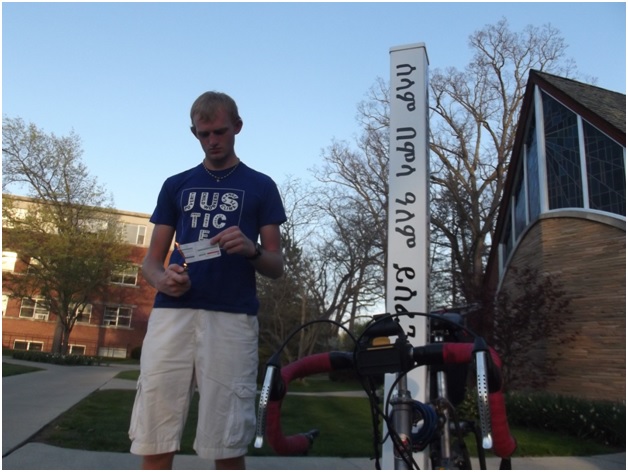
card purning

Hi everyone! Michael Himlie here! In early April, 2015 I decided to further my stance on war, and not only maintain my position as a conscientious objector (C/O), but also submit my draft card to the Selective Service System (SSS), personally considering myself “deregistered from the Selective Service System”. For those of you that are not as familiar with this, it is not possible to deregister, the SSS does not even file C/O claims during “peacetime”. When I sent in my draft card this is the letter that I sent with it:

To whom it may concern,

My name is Michael Himlie; I am from the Root River Church of the Brethren in the Northern Plains District. This letter explains my understanding of war, and because of my beliefs, why I cannot and will not promote the structural violence of the Armed Forces.

As a very young child I was taught that violence is wrong. Today I believe that every problem, threat, or issue can be resolved nonviolently, that war is a curable disease. The Church of the Brethren, the denomination to which I belong, is considered one of the three historic peace churches. In addition to being active in the denomination, my work with organizations such as Brethren Volunteer Service, Christian Peacemaker Teams, On Earth Peace, New Community Project, and more are further proof of my dedication to a non-conformist lifestyle. Furthermore, violence is simply not an option for me; peacemaking is the only way for me to get to where I wish to go. If I want to bring peace to this world I must first find peace within myself, which I cannot do if I belong to the Selective Service System.

A personal commitment and vocation of being a follower of Jesus does not allow for me to submit to a system of violence, where maiming human life is honored by millions. I will not. Being a follower of Jesus, I will not discriminate, I will love all. With this, I choose to submit my draft card (Selective Service System card) back to the United States of America, signifying that I am no longer a part of the Selective Service System. I will personally be following up, to make certain that my stances are understood and accepted.

In Peace,

Michael John Himlie

After submitting this letter to the SSS I had received the following letter back from them with the enclosure of my draft card back to me.

National Headquarters I Arlington, Virginia 22209-2425
http://www.sss.gov
April 7, 2015

Mr. Michael J. Himlie
604 East College Avenue
North Manchester , Indiana 46962

Dear Mr. Himlie:

This responds to your letter postmarked April 2nd expressing your objection to war and promotion of “the structural violence of the Armed forces.” Thus, you enclose your Registration Acknowledgment Card and contend that “I am no longer a part of the Selective Service System.” I am returning your card because there is no authorization under the Military Selective Service Act to remove any man who has registered validly.

Virtually all men in the United States ages 18 through 25 are required by law to be registered with the Selective Service System, even though there has not been a draft since 1973 and none is contemplated in the foreseeable future, and even though they consider themselves a conscientious objector (CO). Registration is both a legal and civic responsibility.

Under the Military Selective Service Act , classification as a conscientious objector (CO) can only be made by a Selective Service Local Board; there is no provision for a self-designation . Further, classifications would only take place if a draft were underway because presently there are no active draft boards in existence nor claims for CO status being considered. In fact, the last draft ended over 41 years ago. However, upon reinstatement of a draft, all individuals who receive a notice to report for induction have an opportunity at that time to file a claim for reclassification, postponement, or exemption, to include CO status . But this opportunity to claim CO status only applies to men who are in our database, are called, and file the claim. Our boards are made up of individual volunteers who are nominated by the State Governor and appointed by the Director of Selective Service on behalf of the President. These uncompensated civilian men and women are from the area covered by the board and are reflective ethnically of the geographic region they serve. The document which describes all claims and the procedures to file for each, our Information for Registrants booklet, can be found at under publications and then under registration materials. Thank you for your observations.

Sincerely,

Richard S. Flahavan
Associate Director of Public &
Intergovernmental Affairs

The SSS had returned my draft card to me, assuring me that it is impossible to deregister from the SSS. I feel that it is only right that I send my draft card back to the SSS, encouraging them that they had made a mistake. That I really do not want my card and that I no longer need it, as I consider myself deregistered from the SSS. While this is my personal decision, I have been blessed with the support of On Earth Peace, the Office of Public Witness of the Church of the Brethren, and Dunker Punks Inc.

michael pole

These actions will most likely never change how the Selective Service System works, but rather is to be more oriented towards building community among Brethren and friends who would like to join the movement in sending our draft cards in unity. I would also like to widen our community to those not submitted to the SSS, like women and those under 18 years of age, but would like to stand in solidarity with the Send It Back community. What I am asking is for you to consider sending you draft card back with me, increasing the number of cards sent in unity, every time the SSS sends our cards back to us, as they had sent mine back to me.

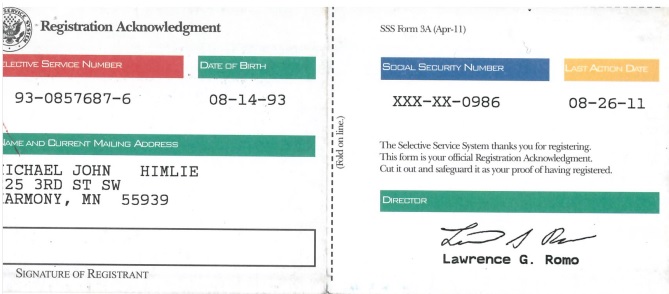
draft card

Above you can see a picture of my draft card, and yours probably looks similar. I would encourage and challenge all of you to consider how you can stand in solidarity with this project. I would encourage you even more to consider being in touch, sending in our draft cards together, assuring the SSS that we will not be silent, and we will not submit to a deeply rooted systemically violent practice. If you would like to learn more, and/or join the Send It Back community, please contact Michael Himlie at mjhimlie_23@hotmail.com or 507-429-4243. with it: https://mjhimlie23.wordpress.com/…/submission-of-draft-car…/ Today I received this letter back from the SSS: https://mjhimlie23.wordpress.com/…/selective-service-syste…/

The SSS had returned my draft card to me, assuring me that it is impossible to deregister from the SSS. I am currently working on ways to strengthen this act of nonviolent protest on war, and would like your help! It the coming days I should have more information about how I intend to strengthen this stance, in reassurance of my decision to deregister from the SSS. May peace be with you, sisters and brothers! #‎SendItBack with it: https://mjhimlie23.wordpress.com/…/submission-of-draft-car…/ Today I received this letter back from the SSS: https://mjhimlie23.wordpress.com/…/selective-service-syste…/ The SSS had returned my draft card to me, assuring me that it is impossible to deregister from the SSS. I am currently working on ways to strengthen this act of nonviolent protest on war, and would like your help! It the coming days I should have more information about how I intend to strengthen this stance, in reassurance of my decision to deregister from the SSS. May peace be with you, sisters and brothers! #‎SendItBack

With much peace and love,

Michael Himlie

Beautiful Things

This post comes from Jenn Hosler, pastor at the Washington City Church of the Brethren. Jenn recently shared this sermon as a reflection on Earth Day.

Daffodils, tulips, cherry blossoms, and magnolia trees. Hyacinths and dandelions, sprouting leaves and singing birds. Friends, spring is here and it is beautiful. Last Sunday was one of my favorite days in DC, when I had the joy of taking my annual visit down to the cherry blossoms in peak bloom. I am always astounded by the magnificence of the cherry blossoms. The sea of pinkish white trees gleaming in the sun makes my heart sing. Each year I go, the cherry blossoms remind me that the world is good and beautiful and that God the Creator is reigning.

You may know that Earth Day is this Wednesday, April 22nd. Because of this, I thought it apt that we should spend this Sunday’s worship reflecting on the Earth. Earth Day, however, does not have a place in the Lectionary, the calendar of readings and scriptures used by many denominations. On that calendar, today is the third Sunday of Easter. Does Earth Day have anything to do with Easter? Should Earth Day be on the church calendar?

What exactly does Scripture teach us about this world in which we live? Do we have a biblical theology of creation? How does creation relate to other parts of theology, like how we understand Christ or salvation? If we look across scripture, we can see three truths that the Bible teaches about creation. First, the earth is created by God and it is good. Second, human sin impacts the earth and all of creation. Third, through Christ, both we and the earth are being reconciled to God and made beautiful.

Created and Good

If we are looking at what the Bible says about the earth, a logical place to start would be at the beginning, at the Creation story presented in Genesis 1. In the Creation story in Genesis, God repeatedly calls the earth “good”. What does it mean to say that something is good? The word “good” has a wide semantic range – we use it for a lot of things. One of my Australian friends found my use of “good” to be very perplexing.

When waiting for him to finish something up so that we could leave and go sightseeing in DC, I asked him, “Are you good?” He replied, “Do you mean ontologically good? Am I in fact a good person, good by nature?” What I meant was, “are you ready?” Are you “good to go?” In North America, we say “good to go” and shorten it to good, which can be a bit perplexing or funny for other English speakers. We use good in a lot of ways: it can mean favorable, righteous, or pleasant. It can mean something is suitable, adequate (or good enough), or even just “okay”.

The meaning here in Genesis 1 is much more than “just okay”. In Genesis, good is pleasing, pleasant, pure, and delightful. “God said, ‘Let there be light’; and there was light. And God saw that the light was good.” God then creates the sun, moon, and stars, calls into existence the sky and land, gathers the waters, makes vegetation, plants, and animals, and He after He is finished each one, He calls each of them “good.”

The Creator gazes upon oceans and rivers and trees and streams and birds and mammals and fish and declares all of them pleasing, pleasant, pure, and delightful.  From the beginning of our human story, we see that physical matter, the biological world around us, and the environment—they are all God-designed, God-crafted, and God-approved.

Genesis 1 teaches us that God created this earth and that He called it good. Genesis 1 also details the creation of human beings. Humans are shown to be in unique relationship with God, the only part of creation that is made in the image of God. In verses 26 through 28, we see God speaking humanity into existence: “Then God said, ‘Let us make humankind in our image, according to our likeness; and let them have dominion over the fish of the sea, and over the birds of the air, and over the cattle, and over all the wild animals of the earth, and over every creeping thing that creeps upon the earth.’ So God created humankind in his image, in the image of God he created them; male and female he created them. God blessed them, and God said to them, ‘Be fruitful and multiply, and fill the earth and subdue it; and have dominion over the fish of the sea and over the birds of the air and over every living thing that moves upon the earth.’” When God is finished, He looks upon the humans and says that it is “very good.”

Being made in the image of God gives us a special relationship with God—and also a special relationship with the rest of creation. Being made in the image of God brings with it a functional authority: there is a task to keep, guard, and protect the earth under human care.

While the words used in our English translation—fill the earth and subdue it, have dominion—seem exploitative, the biblical understanding is anything but. Old Testament theologian Walter Brueggemann (1982) describes how “The ‘dominion’ here mandated is with reference to the animals. The dominance is that of a shepherd who cares for, tends, and feeds the animals… Thus the task of ‘dominion does not have to do with exploitation and abuse. It has to do with securing the well-being of every other creature and bringing the promise of each to full fruition” (p. 32).

From the start, humans were to have an ongoing relationship with the created world, caring for it, tending it, and protecting the earth and its creatures.

Cursed and Broken

In Genesis 1, the beautiful creation story is presented at a macro level. In chapter 2, we get a closer up look at human beings, with God creating people out of the earth itself, out of dust from the ground. Again, we see humans and the earth intertwined—physically this time. From dust we are made. Things get darker, however, as the book of Genesis continues. In Genesis 3, Adam and Eve rebel against God. The consequences of human sin proceed to spread across creation. These consequences include a broken relationship between humans and also a combative relationship between humans and the earth.

In Genesis 3 and other parts of the Old Testament, we see that human sin impacts creation, both directly and indirectly. In Deuteronomy, the Mosaic Covenant between the Israelites and Yahweh contained within it both blessings and curses tied to the Land of Israel. Devotion to Yahweh would bring blessings and the land would produce bountifully.  Turning away from Yahweh—and toward idol worship, greed, and injustice—would lead to drought, devastation, and barrenness.

In the Hebrew prophets, Isaiah, Micah, Jeremiah, and others, the effects of human sin on the land are described in vivid terms of desolation and brokenness. The land is personified as mourning the sin of the Israelites. Jeremiah 12:4 reads, “How long will the grass mourn, and the grass of every field wither? For [Because of] the wickedness of those who live in it the animals and the birds are swept away…”

The prophet Hosea proclaimed something similar in chapter 4, verses 1-3, “Hear the word of the LORD, O people of Israel; for the LORD has an indictment against the inhabitants of the land. There is no faithfulness or loyalty, and no knowledge of God in the land. Swearing [oaths], lying, and murder, and stealing and adultery break out; bloodshed follows bloodshed. Therefore the land mourns, and all who live in it languish, together with the wild animals and the birds of the air, even the fish of the sea are perishing” (Hos. 4: 1-3).

In the Old Testament, human sin is not just an individual problem. Sin affects the well-being of the community and also the well-being of the environment. If human sin impacts all of creation, it would make sense that God’s story of salvation and redemption would not bring healing to our relationship with God, but also to all of creation.

Flesh vs. Spirit? Reconciling all Things

At times throughout history, Christians have had difficulty understanding salvation beyond what it means for an individual soul. Christians have struggled with strains of philosophy that denigrate the physical world, or think that the physical world is something to get past. In dualism and Gnosticism, to use technical terms for some of these philosophies, the immaterial world is spiritual, while the material world is evil, imperfect, and to be shunned.

Some biblical illustrations, like Paul’s use of the word “flesh” for sinful nature (Gal. 5:19-21; Rom. 8), have given the impression that dualism is biblical or scriptural. They’ve pointed to some scriptures and said, “See, the Bible says the physical world is bad.” One of these scriptures is in Romans 8:5-6. Here, Paul says that “those who live according to the flesh set their minds on the things of the flesh, but those who live according to the Spirit set their minds on the things of the Spirit. To set the mind on the flesh is death, but to set the mind on the Spirit is life and peace.”

This contrast between flesh and Spirit, death and life, can leave us confused and perplexed. Does salvation mean we don’t care for the earth – we only the Spirit? As with many theological concepts, it is important to read widely in scripture to get the full context of Christian teaching.

With Paul’s writings, we hear “flesh” bad and Spirit good and can easily assume that Paul was speaking universally. But Paul used “flesh” to describe the sinful nature, but still maintained that God’s creation was good and part of God’s overall all plan. Looking further just within Romans 8, the same chapter that talks about flesh versus Spirit, we can see that Paul is not a dualist. Paul teaches that it is not only humanity that needs Christ’s redemptive power. The earth and all creatures in it also eagerly await Jesus’ redemption.

Paul writes in Romans that “the creation waits in eager expectation for the children of God to be revealed. 20 For the creation was subjected to frustration, not by its own choice, but by the will of the one who subjected it, in hope 21 that the creation itself will be liberated from its bondage to decay and brought into the freedom and glory of the children of God. 22 We know that the whole creation has been groaning as in the pains of childbirth right up to the present time. 23 Not only so, but we ourselves, who have the first-fruits of the Spirit, groan inwardly as we wait eagerly for our adoption [as God’s children], the redemption of our bodies” (8:19-23).

This created world, plants and animals and ecosystems, is tied up in the spiritual and physical fate of humanity. God’s plan of salvation does not just lead to souls being saved, but our physical bodies and the rest of Creation are also being redeemed.

Earlier, I asked, does Earth Day have anything to do with Easter? I think the answer is yes. This morning’s passage in Colossians says that Jesus is the visible image of the invisible God, the firstborn of all creation. “In him all the fullness of God was pleased to dwell, and through him God was pleased to reconcile to himself all things, whether on earth or in heaven, by making peace through the blood of his cross” (1:19). Through Christ Jesus, the Word became flesh and dwelled among us. Through His death and resurrection, God is reconciling to himself all things. He is making all things new. We experience the first fruits through the Holy Spirit now and some day it will all be brought to fulfillment. Destruction, death, and decay will be replaced with wholeness, life, and beauty.

Agents of Reconciliation

So what does this mean for our lives as followers of Jesus? Through Christ, we have been brought from death to life. Because of Jesus’s death and resurrection, we are freed from sin, freed from hatred, freed from greed, freed from our tendency to exploit and consume. It is in this freedom that we learn to love God, learn to love others, and also learn to reclaim our role as shepherds and keepers of the earth. Made in the image of God and empowered by the Holy Spirit, we are called to be agents of God’s reconciliation. We are called to proclaim and live out and model reconciliation in our relationships and also in how we relate to the earth. God is making all things new – and He’s doing this in us and through us by the power of the Holy Spirit – transforming the broken into beautiful things.

Unfortunately, there is no silver bullet to fixing our relationship with our environment. This is because our culture and our standard of living has emphasized consumption and comfort over caring for the earth. Overconsumption and disregard for the earth pervade much of our lives – how we transport ourselves, how we eat, what we buy, whether we fix things, and more. Transforming our relationship with the earth is a long process, one that we are called to undertake both as individuals and as a faith community.

As a church, we have taken some steps to be stewards of the earth, such as our rain barrel and our rain landscaping. Through the Office of Public Witness, we will soon install a demonstration and kitchen garden beside the church. These are all great steps. Yet if reconciliation is a process, we should be asking together, “What is our next step of in reconciling ourselves to God’s good earth?”

This is a question we also ask in our individual lives: how can I make one step further toward being a good steward of God’s creation. How can I reduce what I send to a landfill, maybe by recycling or composting or just buying less? How can I reduce pollution – can I go meatless one day a week? Can I drive less and walk, bike, or metro more? Can I carpool? There isn’t one set plan for everyone: the key goal is to understand how our actions impact the earth which has been entrusted to our care.

Sisters and brothers, let us rejoice. The earth is good and beautiful. Jesus is reconciling us to God, reconciling us with each other, and reconciling us with this earth. We are not passive bystanders in this plan, but active agents of God’s reconciliation. May we be faithful to our call to guard and protect and tend God’s good creation. Amen.


References

Brueggemann, W. (1982). Genesis. Interpretation. Louisville: Westminster/John Knox.

Nigeria: Conflict and the Environment

going-to-the-garden-title

Tuesday, April 28, 2015

7pm EDT

While there are many causes to crisis in Nigeria, natural resources, both plentiful and scarce, contribute to the ongoing situation.  From oil in the south to the rapidly expanding desert in the north many layers of the conflict connect to the environment. This webinar will consider these issues as well as our relationship to them.

As a nation, our consumption of goods is leading to ever increasing strain on our global resources, causing harm to our environment, and is promoting conflicts in parts of the world that have limited resources. The reality of these impacts can be witnessed in the current Nigerian conflict. Join the Church of the Brethren Office of Public Witness as we discuss the environmental impacts of our actions on our world and our global neighbors in the context of the crisis in Nigeria, as well as how we think theologically about this.

During this second webinar of the Going to the Garden spring series, we will focus on ways to live out the call to love our neighbors through our choices that affect all of creation.

To register for this webinar, please visit: http://www.anymeeting.com/PIID=EB57D886854C3D. Any questions can be directed to kfurrow@brethren.org.

Presenters:

Kate Edelen is a Research Associate at the Friends Committee on National Legislation where she conducts research and analysis at the nexus of peacebuilding, environment, and counterterrorism policy, with special focus on Africa. Previously, Edelen was a Fulbright Fellow at the Peace Research Institute Oslo (PRIO) in Norway where she conducted research on the relationship between political violence and climatologically-affected water resources in South Asia. She holds a M.Sc. in Water Science, Policy, and Management from the University of Oxford.

Nathan Hosler is the Director of the Church of the Brethren’s Office of Public Witness in Washington, DC and a minister at the Washington City Church of the Brethren. Previously he worked with Ekklesiyar Yan’uwa a Nigeria (CoB, Nigeria) for two years teaching peacebuilding theology and practice.

Office of Public Witness Welcomes Nuclear Framework Agreement Between P5+1 and Iran

The framework agreement reached last week between the P5+1 and Iran is a welcome sign for the future of US relations in the Middle East and nuclear weapons policy more generally. The framework agreement significantly limits Iran’s capacity to produce material for a nuclear weapon in the near future and is hopefully a building block towards more diplomacy with Iran and other important countries in the region. It took political will and courage for all sides to come together despite their differences and hammer out this framework for an agreement that will benefit all sides in different ways. We commend these diplomatic leaders for coming together and finding common ground even after many groups and actions threatened the potential for an agreement. Anytime diplomacy pushes the world towards peace we applaud these efforts, and we also hope that this agreement will lead to a more substantial conversation about nuclear weapons across the globe.Office of Public Witness

As a Church that has publicly declared and believes, “that peace is the will of God and all war is sin”, we believe that much more must be done on the issue of nuclear weapons. It is not enough to simply limit countries that do not currently have these capabilities from getting them. Rather, as the only country to have employed a nuclear weapon during war, we believe the United States has the unique burden of leading the world towards nuclear disarmament. For decades we have called for and worked towards nuclear non-proliferation and disarmament through denominational, political, ecumenical and interfaith avenues, and we hope that this recent multi-lateral agreement with Iran will be the first step in a radical rethinking of our country’s and the world’s relationship with nuclear weapons.

Guest Post: Jenna Walmer Reflects on Her Call and A Visit to the Office of Public Witness

When I was younger, I always thought I was going to be a Physical Therapist. I was going to study Health and Exercise Science, get my Doctorate, and then be a PT for the rest of my life, helping people of all ages recover from injuries, like my PT had helped me. However, I also felt like I needed (and wanted) to study peace or conflict resolution. Being raised in the Church of the Brethren provided me with a passion for peace, and as I grow up that passion burns brighter.

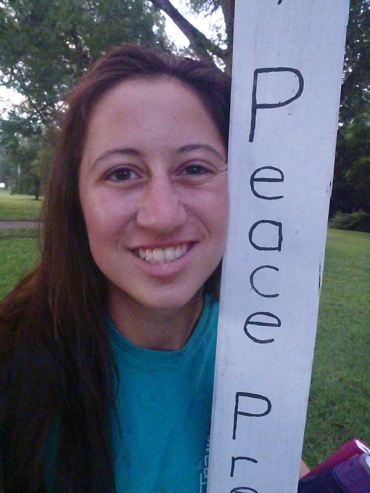
Fast forward to this past summer in Colorado, I had a change of heart. I spent a few days with Seminary professors before National Youth Conference exploring my call. During Exploring Your Calljenna_walmer, we explored ways we know it is God’s will for what we are pursuing. One that especially applies to me is the compelling of the Holy Spirit, or nudges from God.  Over the past few years, the word “peace” has been etched in my heart, and during that week I recognized that this is where I was being ‘nudged’.   During NYC, events such as watching a video about the Nigeria situation and sending a postcard to the Secretary of State led me to feel called to Peace ministry even more.  Who knows where God will lead me with that tidbit, and plans may change. But for now I feel as though I understand what I am called to be and do.

Since I had a change of plans right before my senior year of high school, after I already explored my intended career through previous job shadowing, and finished my college search, I had to essentially start over… but not really. I was already set on going to Bridgewater College for whatever major, so I did not have to go on any more campus tours. However, I was interested in witnessing the tasks of COB’s Office of Public Witness. Since Nate Hosler’s job interested me from his work with Christian Citizenship Seminar (CCS), I thought it would be appropriate to see more of what he does on a daily basis through a job shadowing experience.

I quickly learned that he Office of Public Witness is a small, but mighty office that works on a large variety of topics. The three stay up-to-date with current events that are affecting their more pressing issues, like Nigeria and drones. Also, they are working to implement a more intentional “Going to the Garden” initiative with the denomination advocating for food security.

After the initial time spent in the office, Nate, Bryan, and I went to a meeting at the U.S. State Department Office of International Religious Freedom to inform staff about the atrocities Brethren are facing in Nigeria. This was similar to Congressional visits I have done during CCS. Then, we went to an event at the Wilson Center on resilience and peacebuilding. Events like these are helpful to make connections with other people who are working on similar issues and to become informed about different and up and coming issues.

This visit reiterated that I was called to peace ministry. My plans are to study political science or global studies and minor in peace studies. After learning more about the government and going to the other events, I know I am headed in the right direction. Thanks to Christian Citizenship Seminar, Exploring Your Call, and National Youth Conference, I have been able to accept my call.

-Jenna Walmer