EYN Devotions March 22-28, 2015

DAILY LINK WITH GOD 2015EYN Devotions graphic
A Daily Devotional Guide from the
EYN (Church of the Brethren in Nigeria)

EYN leaders in Nigeria believe prayer is one of the most important ways to support the Nigerian people and the Church.  These daily devotions were written by EYN members and published by the Church of the Brethren in Nigeria. Reading them daily is a powerful way we can be in solidarity and connect with our brothers and sisters caught in this crisis.  EYN’s daily devotional for 2015 will be posted a week at a time on this blog, appearing mid-week for the following week. More information about the crisis can be found at www.nigeriacrisis.org.

Click on this link for the EYN Devotion Blog Mar 22-28 2015

Stories from Nigeria: An Island in the Desert

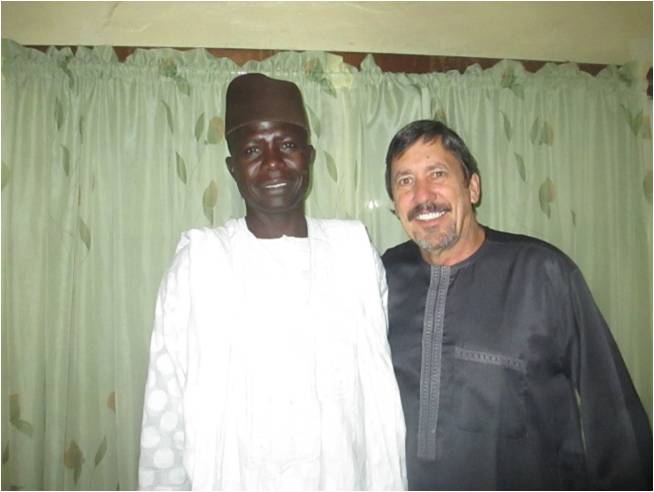
Rev. Yohanna Budwara & Carl

Rev. Yohanna just after he arrived in Jos from Maiduguri

By Carl and Roxane Hill, co-directors of the Nigeria Crisis Response currently in Nigeria

Maiduguri is the Capitol city of Borno State located in northeast Nigeria. It has many distinctions. One is that it is credited as the birthplace of the Islamist insurgent group, Boko Haram. It is the largest city in all of northeast Nigeria with a population of over 2 million. During the violence that has been gripping this part of Nigeria many people have sought refuge in this heavily fortified city, swelling the population by some 50 to 100 thousand. The marketplace in Maiduguri has been closed for some weeks to protect its citizens from suicide bombings.

We met Reverend Yohanna when we were teaching at EYN’s Kulp Bible College. He was not only a lecturer there but served as the campus chaplain. His children were all well versed in English and found us to be welcoming to them and people they could talk to. We really enjoyed this family. However, last December the Chaplain (as we called him) was transferred to become the DCC Secretary of Maiduguri. Besides being a very dangerous assignment the temperatures can get as high as 115 degrees.

As Boko Haram violence escalated throughout 2014 Maiduguri became a bastion of safety for Christians and moderate Muslims. The military also decided that Maiduguri would be protected and additional forces were stationed there. The offensive conducted by the Boko Haram surrounded Maiduguri and became an important target for the terrorists to capture. Fighting rages all around this city in the desert. But it has held out against the radical Islamist sect. As supplies were brought into the city Rev. Yohanna served as the Chairman of the Distribution Committee and provided relief materials for over 50,000 people. He organized peaceful distributions and was one of the only ones to keep accurate records. Based on his documentation the government was able to gauge the amount of supplies to be delivered.

Rev. Yohanna told us that it was a big job to be responsible for so many needy people. He said not all were grateful but most of the people praised God for his fair and honest work. “I really saw the hand of God in this work.”

Reports from Nigeria: Returning Home

By Cliff Kindy, Brethren Disaster Ministries volunteer who wrote this while in Nigeria. He has since returned home safely.

The dynamics of the violence in Nigeria are changing dramatically in the recent weeks. Boko Haram has lost the momentum that they previously had in waging battles where they chose and usually overcoming any opposition. They have been unable to hold the initiative in any recent conflicts. They have sustained heavy losses, had hundreds of fighters arrested by Nigeria, Cameroon, Niger and Chad. Their camps and headquarters have been overrun by Nigerian troops supported by heavy air bombardment.

Boko Haram fighters are scattered but in their frustration are striking out at any soft targets. So places like Chibok are again facing attacks from those groups. An EYN member from Chibok reported that Boko Haram had gone door to door in that community killing inhabitants and burning houses. Suicide bombings are scattered across the north of Nigeria. Individuals carry out those bombings – one seven year old girl was strapped with a bomb and the other recent suicide attack was a man boarding a long distance bus when his explosives detonated. But Boko Haram is no longer able to rally large forces for any major attacks. There are even reports that Nigeria has arrested the Boko Haram leadership.

With these changing dynamics and some communities protected by Nigerian security for a couple months already, individuals and families are anxious to return home. But what does that mean on the ground?

They return with nothing in most cases. Where do they start? What do they eat? Where will there be protection from the rains that have arrived in Jos? What about tools? Seeds? Animals? Electricity? Community infrastructure?

Homes have been burned. Churches are leveled, clinics bombed. Belongings have been looted and carried off. There are no longer stores or shops in most communities. Bridges are destroyed. Cars were stolen. Tools are missing or unusable. Wells in some communities have dead bodies in them. Maybe the departing Boko Haram raiders left explosives to greet returnees. Energy is sapped by the original trauma and there is new trauma facing those returning home.

Government is not likely to generate the massive aid needed in this kind of situation. Relief aid will only make a small dent in the total rebuilding of society that will be required. How does a community gather the united energy required to begin the process of starting over from scratch?

Churches thrive on hope. The love of the church provides encouragement and support when everything is at the bottom. Just as the early church in Acts lived an alternative reality from the Roman political system, so that will be true today with a church like EYN in Nigeria. The woman who told me about Chibok under attack again will be among the leaders of the trauma healing group that crisscrosses EYN in Nigeria and Cameroon.

Returning home will start with little steps from NGOs like Women and Youth Empowerment for Advancement and Health Initiative supplying families with machines to generate income, animals and seeds for providing food. Other NGOs like Lifeline Compassionate Global Initiatives through their interfaith efforts with displaced families are building the relationships for healed societies that will be required if communities will succeed in overcoming enormous obstacles. Both of these NGOs are among others that are funded by the Church of the Brethren through Brethren Disaster Ministries.

The Crisis Management Team of EYN is still doing emergency feeding, is just starting on building temporary housing for displaced families and is ready to begin the training of a large cadre of trauma trainers who face an enormously daunting task. At the same time the Team is helping EYN itself recover from the total displacement of its organization. But what lies ahead is larger by far than all they have tackled thus far. Re-establishing devastated communities from scratch is nearly impossible for strong organizations that have done the work previously, but for a group like EYN which has no experience in disaster response, can it even be imagined?!?

Yes, the hard work of thinking ahead is started in EYN. Church of the Brethren volunteers are walking alongside EYN. The experience of EYN-related NGOs can pave the way for larger responses. EYN is a strong church with creative leaders. EYN’s reliance on God’s care and leading will cover many stumbles in the months and years ahead. The future is rising from the ashes. People are returning home.

EYN Devotions March 15-21, 2015

DAILY LINK WITH GOD 2015EYN Devotions graphic
A Daily Devotional Guide from the
EYN (Church of the Brethren in Nigeria)

EYN leaders in Nigeria believe prayer is one of the most important ways to support the Nigerian people and the Church.  These daily devotions were written by EYN members and published by the Church of the Brethren in Nigeria. Reading them daily is a powerful way we can be in solidarity and connect with our brothers and sisters caught in this crisis.  EYN’s daily devotional for 2015 will be posted a week at a time on this blog, appearing mid-week for the following week. More information about the crisis can be found at www.nigeriacrisis.org.

Click on this link for the EYN Devotion Blog Mar 15-21 2015

Reports from Nigeria: God’s Distribution

God's Distrib in Bui Blog

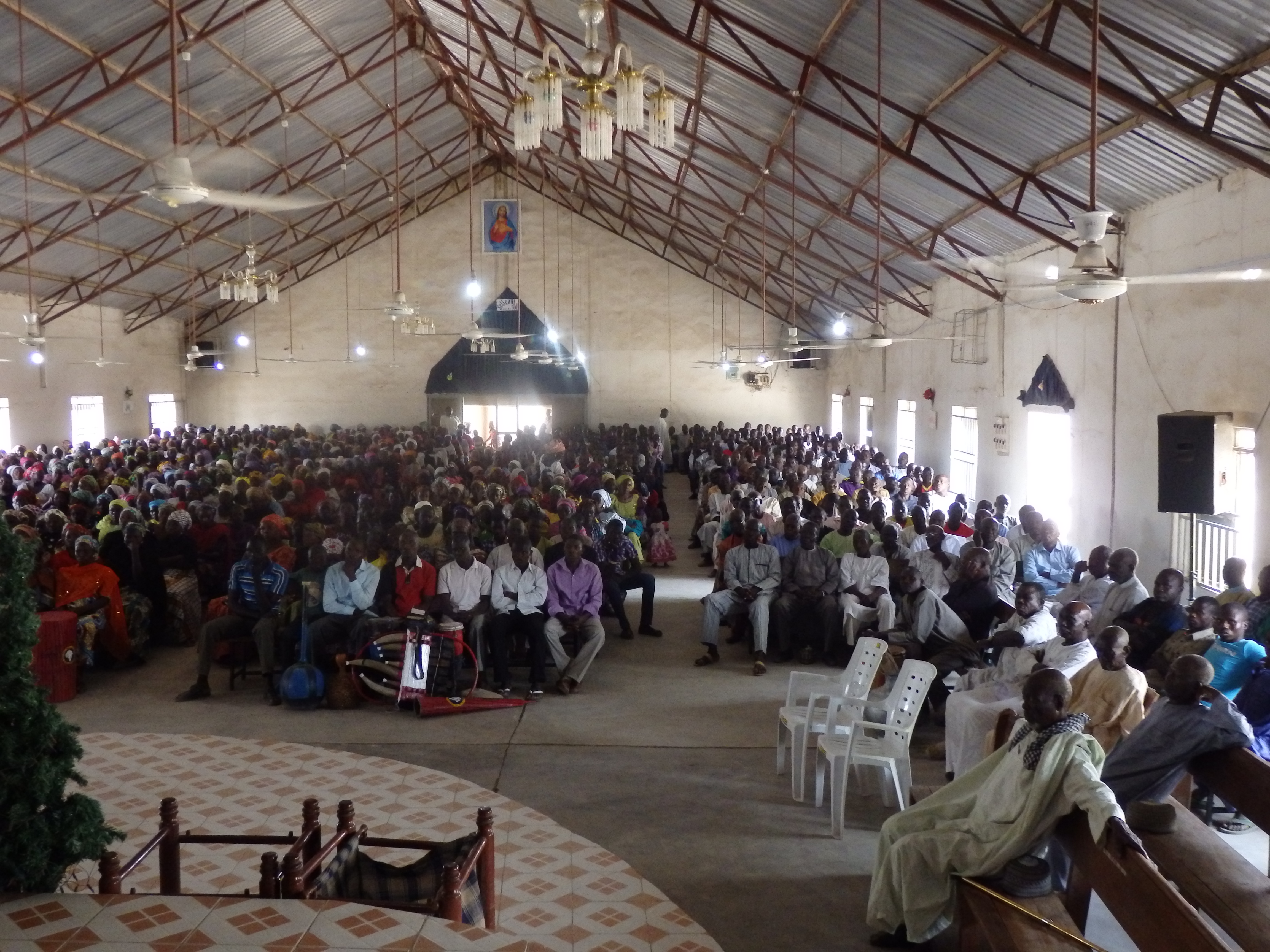
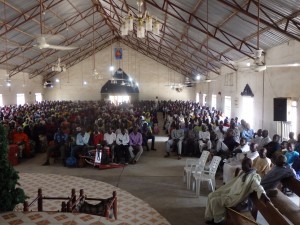
Congregation at EYN church in Biu where distribution took place.

By Cliff Kindy, Brethren Disaster Ministries volunteer who recently returned from Nigeria

Three Crisis Team members traveled to Biu on a Saturday at the end of February to complete a relief distribution. One day earlier it had appeared as though the process might fall through. Vehicle plans were not coming together and finances seemed to be held up even though approval for the funds had taken place a couple weeks earlier.

Our driver picked me up at eight Saturday morning. One of the two DCC secretaries from Biu was traveling with the Team. We stopped to pick up the other two team members as we drove out of Jos. There had been some question whether it was safe for me, a very visible white person, to travel into this region that had experienced Boko Haram attacks several places along the route.

The road deteriorated as we traveled through three states before reaching Borno State. The last two hours were slow because of heavily potholed road surface. There were regular security check points and occasional vigilante road blocks to supplement government patrols. Around Gombe and as we neared Biu there were increasing signs of the Boko Haram suicide bombings and fire attacks against check point sites, police stations, a hospital and a gas station close to an intersection with another security checkpoint.

When we arrived at the EYN LCC #1 Biu compound most of the supplies were already on site, delivered by a local EYN businessman the Team had called the evening before. We still did not have definite numbers for the EYN displaced families or individuals. There were some outdated pages recording IDPs but the numbers we started hearing from the two DCC secretaries were much higher than we had figured because of recent attacks on EYN communities outside of BIU.

We asked congregations during their worship at the six nearby churches to announce our plans for a 1PM relief distribution. All of these churches were hosting IDPs in the churches or with families. When the one o’clock time arrived the church building was packed with people and others were outside.

We had decided the night before to ask for just one representative from each family to attend the distribution and had decided that we only might have enough supplies for one item per family – a big bag of rice, a larger bag of maize or a box containing packages of noodles. We also had boxes of soap and we intended to give two bars to each family. To make the process smoother we made tickets, color coded and numbered for the total supply of the three items.

With the crowds of people before us Sunday afternoon we considered providing one item for every two families. We were worried that the distribution could deteriorate quickly. Then three ideas surfaced in rapid succession. 1) We would prioritize displaced pastors. 2) Widows would also receive priority. 3) We would start handing out tickets (each family representative picked a ticket from a bag), starting with people ages sixty to seventy and keep moving down a decade until all tickets were gone. That ticket indicated which item they would receive and the order in which they could collect the item.

It meant some expectant persons would not receive one of the three food items but it would be the younger persons who could more easily find jobs in the city to provide food. At the start there was a mass push toward the supplies but with local helpers we were able to make clear that the distribution would start with the order of numbers from inside the church.  Inside the church was also much cooler than the hot sun out in the courtyard.

Even with the kinks in the process and a long careful explanation to make the process clear at the beginning over one thousand people received supplies within three hours. One serendipitous event was deciding to not hand out soap to each family. This meant that there was sufficient soap to give three bars to even the individuals who had not received a ticket and others who were waiting hopefully in the courtyard outside the church.

As the distribution proceeded many recipients thanked us for the process and for assuring that everyone received something. It was a team effort that accomplished the distribution task. The DCC secretaries were key to the process. The youth brigade supplied the manpower to move food items to recipients. Local church staff provided escort and number checking for each group of ten people moving from inside the church to the warehouse distribution center. Vigilante volunteers provided security for the courtyard. And the Team of three provided coordination of the process. The patience and good humor of the recipients was essential for a smooth flow during the distribution. As one of the DCC secretaries commented, “The process was an act of God. I was worried when I saw so many potential pitfalls in the distribution.”


EYN Devotions March 8-14, 2015

DAILY LINK WITH GOD 2015EYN Devotions graphic
A Daily Devotional Guide from the
EYN (Church of the Brethren in Nigeria)

EYN leaders in Nigeria believe prayer is one of the most important ways to support the Nigerian people and the Church.  These daily devotions were written by EYN members and published by the Church of the Brethren in Nigeria. Reading them daily is a powerful way we can be in solidarity and connect with our brothers and sisters caught in this crisis.  EYN’s daily devotional for 2015 will be posted a week at a time on this blog, appearing mid-week for the following week. More information about the crisis can be found at www.nigeriacrisis.org.

Click on this link for the EYN Devotion Blog Mar 8-14 2015

EYN Devotions March 1-7, 2015

DAILY LINK WITH GOD 2015EYN Devotions graphic
A Daily Devotional Guide from the
EYN (Church of the Brethren in Nigeria)

EYN leaders in Nigeria believe prayer is one of the most important ways to support the Nigerian people and the Church.  These daily devotions were written by EYN members and published by the Church of the Brethren in Nigeria. Reading them daily is a powerful way we can be in solidarity and connect with our brothers and sisters caught in this crisis.  EYN’s daily devotional for 2015 will be posted a week at a time on this blog, appearing mid-week for the following week. More information about the crisis can be found at www.nigeriacrisis.org.

Click on this link for the EYN Devotion Blog Mar 1-7 2015

Pictures from Nigeria: EYN #1 Michika

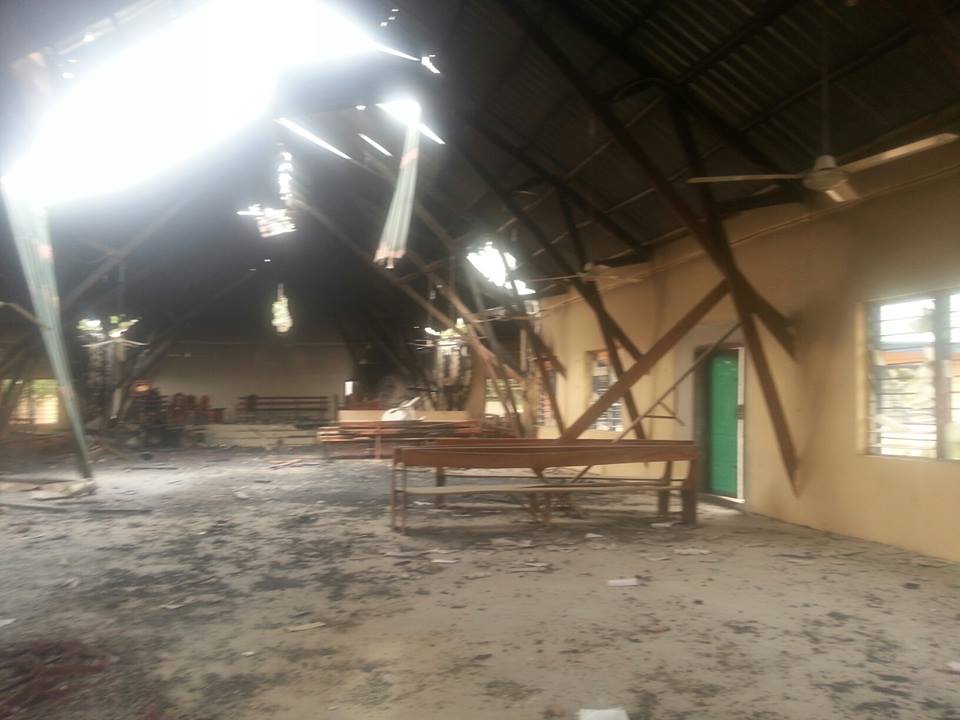
As the military clears the EYN area, some members and pastors have returned to view the damage.

Michika #1 destroyed

Photo Courtesy of Pastor, Rev. Joel, of the Michika #1 church

“This is the remains of EYN No 1 Michika. No human words can describe it. Now Michika is pillaged, plundered and stripped by Boko Haram. No single shop is unaffected; they are either burnt or completely ransacked.” ~Rev. Joel

EYN Devotions February 22-28, 2015

DAILY LINK WITH GOD 2015EYN Devotions graphic
A Daily Devotional Guide from the
EYN (Church of the Brethren in Nigeria)

EYN leaders in Nigeria believe prayer is one of the most important ways to support the Nigerian people and the Church.  These daily devotions were written by EYN members and published by the Church of the Brethren in Nigeria. Reading them daily is a powerful way we can be in solidarity and connect with our brothers and sisters caught in this crisis.  EYN’s daily devotional for 2015 will be posted a week at a time on this blog, appearing mid-week for the following week. More information about the crisis can be found at www.nigeriacrisis.org.

Click on this link for the EYN Devotion Blog Feb 22-28, 2015

Stories from Nigeria: Disempowerment as an IDP

Disempowerment as an IDP – Asabe

ASABE

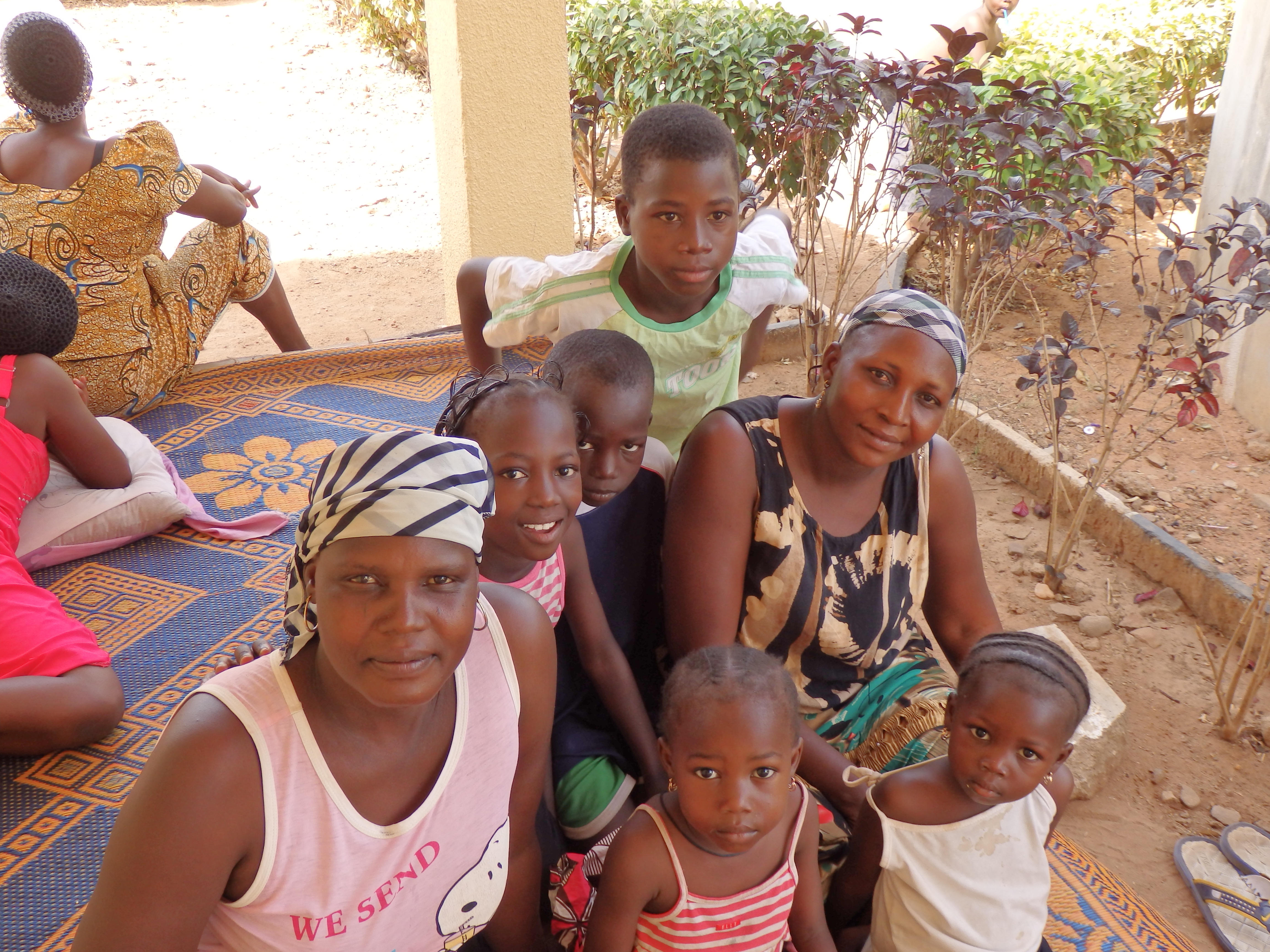
“She and her relatives spend the day moving her mat from one shady spot to another.” Photo Credit: Cliff Kindy

Being an internally displaced person (IDP) in Nigeria means that one is no longer able to live in one’s own home. Here in Nigeria one and a half million persons have become displaced because of the attacks and threats from Boko Haram. Being displaced means having to relocate to another place. It might entail moving to the home of friends or family who are quite welcoming. It might mean living in the bush where conditions might be minimal but a higher level of security is felt. Or it might mean settling into a camp where there are many other IDPs and some level of support from NGOs or government.

Recently I talked more deeply with an IDP who is living here at the Catholic Retreat Center in Yola. Through marriage she is connected with the bishop of this region and was invited to live here with her extended family when Boko Haram took over her village. She and her family are from EYN. Her father pastored at Lassa.

She has been here for five months. At home she would be busy with tasks that care for her family. Here she sits and waits for food to be given to her. She and her relatives spend the day moving her mat from one shady spot to another as the scorching sun moves across the day. She waits for clothes to be provided for her needs because she had to flee with just what she was wearing. She says she feels she has no power.

At home she has her own garden. If she needs food she goes “to pick the food, cashews, lemons, groundnuts,” to feed her family. If she needs clothes she has them in her house or can sell farm produce or animals for money to buy them. She has resources to purchase school supplies for her children.

Here she feels unable to help others – her family or neighbors. She is without the resources that are so available to her at home. This city is a strange place where she does not have access. At home she has connections but here she is rootless and powerless.

What does this feeling of powerlessness do over a long period? One begins to feel very small and helpless. A recognition of total dependency on others builds a new reality. Where one had been self-reliant and quite independent one becomes incapable of changing the dynamics that impact one’s life. For sure the larger problems appear beyond one’s influence. The problem of violence from Boko Haram seems untouchable. And even the smaller issues begin to appear like mountains.

Prayer? Her prayer that Boko Haram would be stopped before reaching her village was not answered. Her prayer that her needs would be met in a positive way seems to be answered only minimally. Her prayer that the threat of Boko Haram would be eradicated by the government so she could return home has seemingly not been heard. Despair starts to set into her life. Does God even care?

The monotony of life here at the Center is nothing like her life in the village. There she can constantly influence her future. Here she has few ways to change her future. Living door to door here with other IDPs who are similarly disempowered and dependent makes her feel small and worthless.

Later in the evening one of her neighbors exploded with anger for the entire neighborhood to listen in to the family squabble. Having no diversions of work or community activity allows tensions to build between people until they explode. Are there networks of healing in this place?

Continue to pray for Asabe and all the IDP’s in Nigeria.   “Carry each other’s burdens, and in this way you will fulfill the law of Christ.” Galatians 6:2