Healing continues in Chibok

Trauma Workshop in Chibok

Trauma Workshop in Chibok

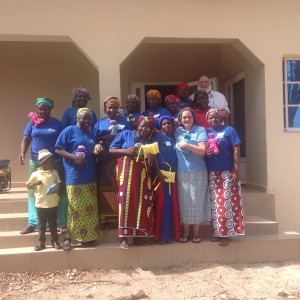
The disaster ministry of Ekklisiyar Yan’uwa a Nigeria (EYN) includes a Peace/Trauma division. This group of 13 trained facilitators holds Trauma workshops throughout North East Nigeria and at various Internally Displaced Person camps.

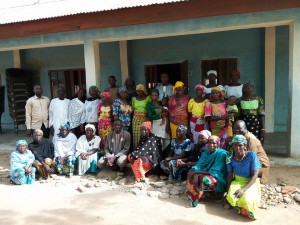
On June 9th-11th, 4 such workshops were held in the Chibok area. [After the abduction of the 276 Chibok girls in April 2014, the area has been the target of  repeated attacks.] The parents of the Chibok girls have suffered greatly over the past two years. The workshops have been very successful in teaching about trauma. The program provides education on the effects of trauma and gives ways to break free of the trauma, emphasizing the role of forgiveness.

The results of these workshops has been amazing! Here are some quotes about the healing provided by the Chibok workshops:

“It helped me because when I came to this workshop I was holding resentment against a particular person. But because of this workshop I have forgiven him.”

“Everyday my heart used to be very heavy with sadness but since I had this teaching I feel OK by God’s grace.”

“Since when you started teaching us about this trauma healing, my heart is healed of some problems. Before I could not sleep but these two days I slept very well. I am one of those that their daughter was taken away by Boko Haram and because of this important teaching of trauma healing, I will help others also.”

We continue to pray for the “Chibok girls” and for their parents and relatives. May forgiveness and non-retaliation continue as the core of our response.

The fine work of the Peace/Trauma division of EYN has not gone unnoticed. Last month the leader, Effraim Kadala, was a recipient of the Michael Sattler Peace Prize in Germany. He spent six weeks in Germany and Switzerland; speaking about the plight in Northeast Nigeria and about his peace work with Christians and Muslims.

Growing in the Garden

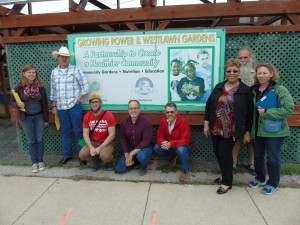
When gardeners from across the country come together for an intense weekend of discussions and visioning, incredible things can take shape. That is precisely what happened when five Going to the Garden partners came together with staff from the Global Food Crisis Fund and the Office of Public Witness for a retreat in Wisconsin earlier this month.

DSC03366-min

Started in 2012, in the midst of a nation-wide drought, Going to the Garden has been a way for congregations throughout the ecumenical community to address local food security and hunger needs by providing one or two grants up to $1000 to start or supplement community gardens. As a collaboration between the Global Food Crisis Fund and the Office of Public Witness in Washington, DC, Going to the Garden has also sought ways to connect this local work with advocacy and addressing larger policy issues relating to food. Due to a decreased volume of grant applications, that portion of Going to the Garden was closed in early 2016, leaving a space to be filled with new ideas and plans to further the work of the program’s partners.

Through group discussions with the garden partners over the course of the weekend and with inspiration from visiting Growing Power, a large and dynamic urban farm in Milwaukee, the theme of wanting to be more strongly involved in local advocacy around issues of community hunger and food security was frequent. One of the original goals of Going to the Garden has been to engage the denomination in larger, nationally-focused, advocacy pieces, but finding and maintaining interest in working on this has been difficult. The conversations from the retreat showed that many of the gardeners are already involved in their own advocacy work but are doing it on local levels in ways that affect their communities directly.

From all of this visioning, a plan to establish a Garden Advocate program emerged. While the gathered group reflected that they were already doing positive local advocacy work, it was noted that having someone who is capable of giving greater attention to such work would strengthen what is being done. Through the Global Food Crisis Fund, several Going to the Garden partners will be able to apply for funding to support someone in their community with interest in this work to act as a Garden Advocate on their behalf. This person will be able to engage in local advocacy work being done around issues of hunger or creation care while also working closely with the Office of Public Witness to connect on larger national issues on the same theme.

It is the hope that the creation of a Garden Advocate program will strengthen the capacity of these gardens to be able to help hungry neighbors while also working for larger systemic change to ensure everyone in our communities and our country no longer has to worry about being hungry.

Youth Peace Travel Team – Inspiration Hills Camp

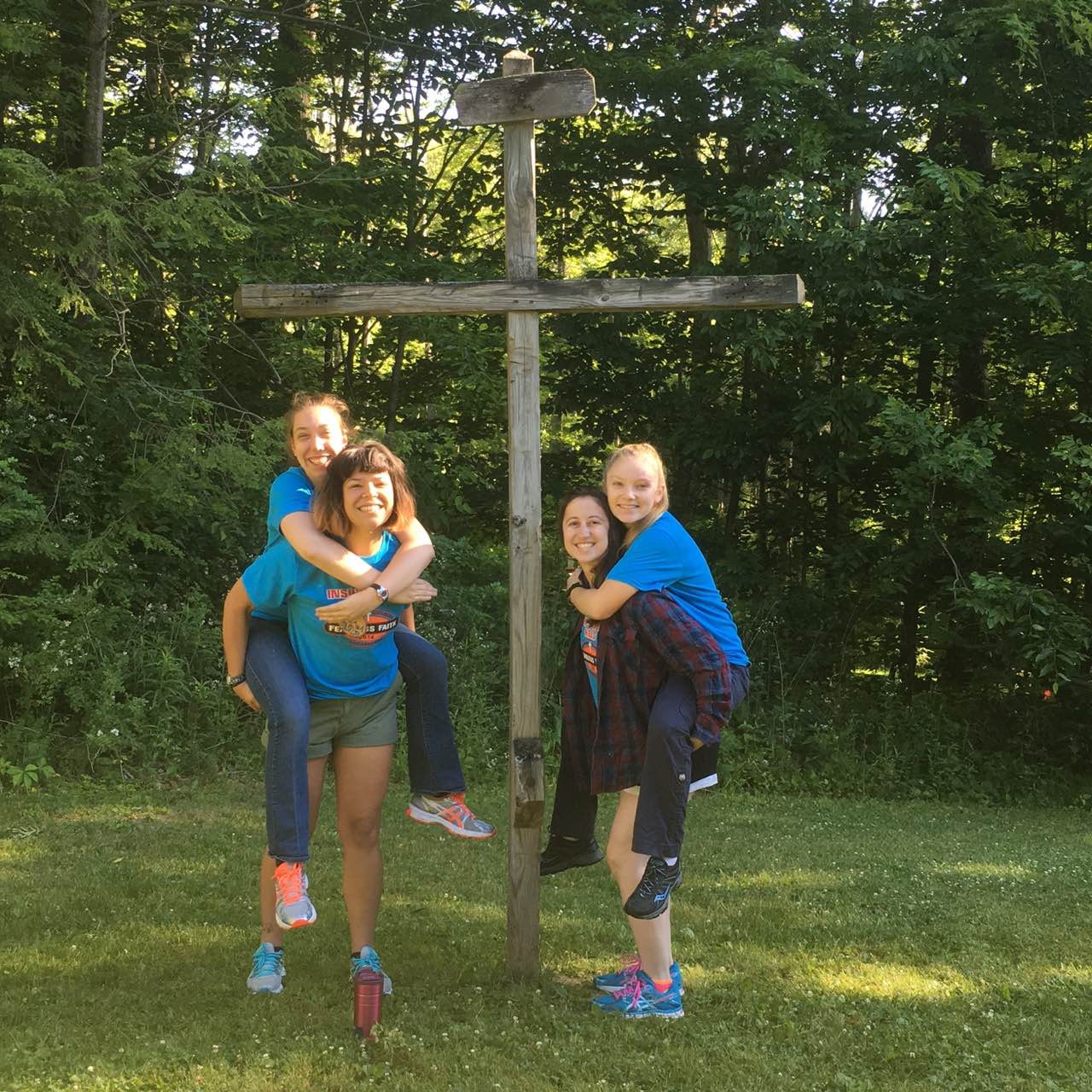
IMG_7999Cicadas! Cicadas! Cicadas! Oh my! This past week the team had the joy to be amidst senior high campers at Inspiration Hills in Ohio. We quickly learned that this was “the summer of the cicadas.” Their deafening buzz, hum, or screech, as some would describe it, left us wondering if we would run into anymore cicadas before their time passes (around July 4th) until the next cica
da summer in seventeen years. With this fascination of cicadas, we would like to share some interesting facts about this peculiar creature.IMG_7352

1. Cicadas will land on you if you are using lawn equipment because they will think you are also a cicada.
2. Cicadas have five eyes.
3. People eat them… but the peace team was not that adventurous.
4. Cicadas pee and it’s called cicada sap. We probably got hit by it and didn’t even notice.
5. You can find other facts at this website dedicated to cicadas. http://www.cicadamania.com/cicadas/the-most-interesting-17-year-cicada-facts/

What a way to start the summer! From building a cabin, to swimming out to the dock, to singing songs of praise, our week at Inspiration Hills brought us closer together as a team and to those that call this camp their home. I greatly appreciated the willingness of all campers and counselors to learn and participate as we ran our workshops for the first time. It was particularly heartwarming to hear that many used the word “safe” to describe their feelings after a challenging activity dealing with interpersonal conflict resolution. Participating together in conversations about how we each choose to live out our peace witness daily was also particularly powerful as a diversity of opinions were able to be expressed in this safe space. We all left the week with many new friends, things to ponder, and stomachs full of excellent campfire biscuits and popcorn!

Peace,
Sara

What’s up my Shalom-makers? We just wrapped up our first week of camp, and it was AWESOME. The staff and the campers were so welcoming and engaged in learning more about peacemaking. It was great to hear them all participate in discussion and activities, and it was also fun for us to hang out with them for camp activities! Some of my favorite parts were hanging out on the dock in the lake, making kettle corn in a massive cast iron bowl over the fire, helping construct a cabin (that wasn’t part of the original plan, but it was fun!), Coffee House night, worship in The Crater™, and eating peach cobbler. I’m going to miss the counselors, staff, and campers at Inspiration Hills, but I’m so hyped for Mardela and my first ride on an airplane! I definitely won’t be missing the cicadas, though. 17 years isn’t long enough.

Peace out,
Phoebe Hart

Hello and good tidings!! Our week was filled with resurrecting a cabin, songs, and water games. That’s only a few of the fun things we did this past week. If you would like to follow up with the rest of our activities, you are welcome to ask the thousands of cicadas that accompanied our journey. A specific highlight for me was the feeling of running our workshops for the first team. It has been an honor to put in so much hard work with the three team members that stand beside me. I personally was pretty nervous, but the willingness to participate from the staff and campers at Inspiration Hills and the support of my team mates has filled me with a confidence of joy and love. I look forward to moving on with this joy but will miss the friends I have made along the way. But another friend worth knowing is down the road!

Blessings, Kiana

Hello my good friends! I am so excited that our summer at camps is underway! This week was full of inspiring moments, seeing campers new to the camping open up and step out of their comfort zone, witnessing counselors new to counseling take campers under their wing and be excellent role models to the campers, and experiencing everyone feel safe about their beliefs in an exercise that forced participants to be vulnerable and share their opinions. On another note, it was nifty to see how camp dynamics changed throughout the week as counselors and campers became more comfortable with each other and interacted more and more. With such a small group, everyone was pretty close by the end of the week. My highlights were making popcorn over a fire and swimming in the lake.

Peace, Love, Mermaids and Mermans
Jenna

Faithfulness through anxious times

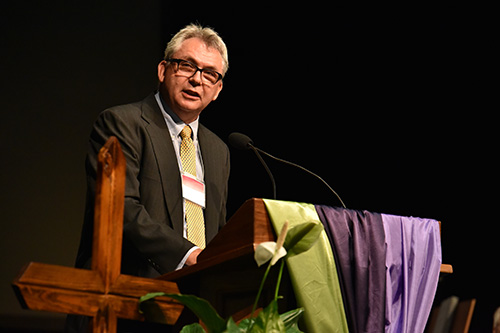
Josh Brockway speaking at Annual Conference 2015. By Regina Holmes

Josh Brockway speaking at Annual Conference 2015.
By Regina Holmes

A reflection by Josh Brockway, director of Spiritual Life and Discipleship

Truth be told, I wasn’t ready for my pastoral care class in seminary. One spring afternoon we participated in a role play exercise in which the scene was a funeral. Most of the class was the congregation, and one classmate lay on a table as if he were in a casket. A few minutes into the funeral, the teaching assistant began wailing, stood up, moved to the front of the room, and laid himself across the “deceased.” After ninety seconds of this, I was done. I shifted in my seat, trying to catch the glance of our professor so he would end this excruciating exercise.

In technical terms, I was consumed by anxiety. Even when I looked at my professor, he didn’t stop the mock funeral. He was completely calm and collected even though the class seemed out of control.

Pastoral counselors tell us that in times of high anxiety, we often make quick and rash decisions. Even more importantly, leaders in anxious systems have a calling to be calm. In difficult situations, leaders should both limit anxiety in a system and provide a wise, non-anxious presence to guide the community.

These are certainly anxious times for our culture and church. We need only read the daily news headlines or look at the most recent study about Christianity in the United States to see this. As a church, we are not immune. Financial concerns, membership decline, and significant conflicts all heighten the anxiety across the denomination. However, as a church we have called and trained leaders who know the questions before us and offer a non-anxious presence to guide us. We certainly need new thinking in days like these and an imagination formed in the ways of God.

While our monetary offerings to our congregations, districts, and the denomination will not ease the anxiety, they do support the leaders who guide us as people of faith.

Your gifts support the formation and education of our ministers through programs such as “Healthy Boundaries” and ethics training courses for our ordained and licensed ministers. These dollars also make possible live and recorded webinars such as the current series on Anabaptist core convictions, which is available to lay leaders and pastors. What is more, your gifts further our work to fulfill life-giving Annual Conference directives such as “Separate No More” that guide us to becoming a more culturally competent community.

While the world fuels our anxiety each day, these efforts and leaders offer us a non-anxious way to be faithful followers of Jesus. When questions of finances, church structure, or race and empire challenge our assumptions, the ministries of the Church of the Brethren provide places for us to become more Christ-like in all we do.

We as staff of the Church of the Brethren, on behalf of our districts and congregations, thank you for all you do. We thank you for every dollar that makes these ministries and many more possible. We pray that we all can experience and share the needed non-anxious presence that urges us toward a new day.

Learn more about the work of Congregational Life Ministries at www.brethren.org/clm . Support these and all of the ministries of the Church of the Brethren today at www.brethren.org/give .

(Read this issue of eBrethren)

Youth Peace Travel Team 2016 – Orientations!

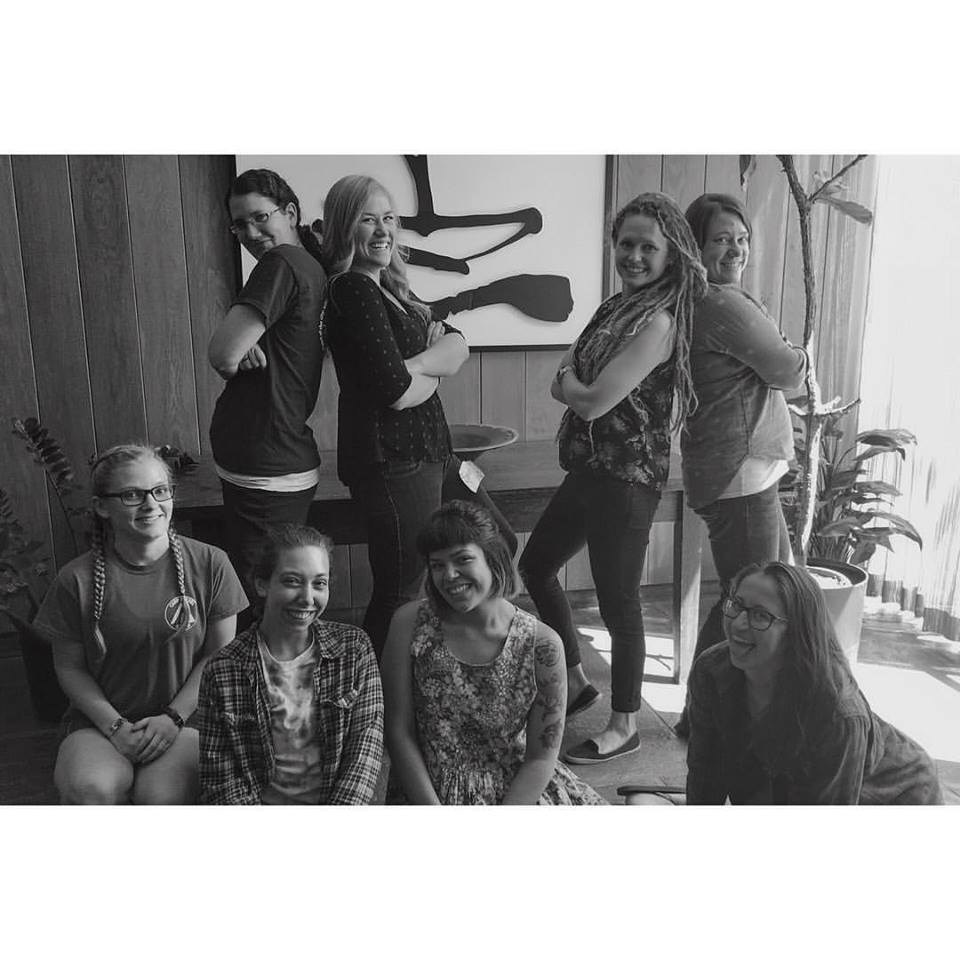
YPTT 2016 and their mentors. From L to right, back row: Audrey Hollenberg-Duffey, Sarah Neher, Chelsea Goss, Dana Cassell. Front row, L to R: Phoebe Hart, Sara White, Kiana Simonson, and Jenna Walmer.

Hello friends! The 2016 Youth Peace Travel Team is so excited to start sharing our experience with y’all this summer! We just finished up our Ministry Summer Service (MSS) training and are enjoying the first week of camp. We want to introduce ourselves a little bit and get y’all acquainted to the blog again for the summer. Each week there will be an introduction about where we are and each team member will share a little bit about their favorite experience that week.

Hello everyone! At MSS, I really enjoyed reconnecting with old friends and creating new friendships. I appreciated the time shared laughing in community, but also the spiritual discussions we had through lectio divina, examen, and other lessons throughout the week. My favorite moment during training was when we pulled into the hotel parking lot and “Don’t Stop Believing’ by Journey came on the radio and we all sang it at the top of our lungs.
Can’t wait to share more exciting experiences throughout the summer!

Peace, Love, and Pineapples, Jenna

Greetings friends! We have finished up training and arrived at our first camp. Training was full of connection, community, learning, and love. I am always awestruck by the number of gifts the young adults of the church bring when we gather. I feel beyond blessed to be supported by such grace and sophistication. The Youth Peace Travel Team (YPTT) was able to spend time with representatives from On Earth Peace, Outdoor ministries, Church of the Brethren, and Bethany Theological Seminary. Learning more in-depth information about the organizations and spending time with the faces of each extension of the church was an enriching experience. Exploring our call to peace and service with those of us a little older and wiser was an experience that I will be able to carry with me in my pocket as the team moves forward. The team then joined with fellow MSS interns to build a community of those serving and exploring vocation this summer. The week was filled with laughter and building friendships that we will also carry with us as we travel around the country this summer.

I am thankful for all of the learning we have done so far. But above all, I am thankful for the love that surrounds us as the YPTT, as members of the church, as friends, and as children of God. We are blessed. We are members of one family.

Blessings, Kiana

Greetings all! Over the past two weeks of training I have been blessed to get to know and share many growth experiences with my fellow YPTT members and Ministry Summer Service interns. Particular special for me was the opportunity for us all to plan and lead the Wednesday morning chapel service for those in the Elgin offices. We chose the theme of hope, reading from Romans 8: 22-28. As I head out this summer, I am hopeful for the opportunity to connect with Brethren from around the country, united by our common call to follow the life of Jesus. In visiting the offices in Elgin as well as Bethany Theological Seminary, I found a special sense of connectedness and support as we all head out on this journey together. I hope that we can share this spirit of community, and through it Christ’s spirit of peace, with all of the campers we encounter this summer.

In peace, Sara

Hey, y’all! I am so excited to be at our first camp. Training has been so great, both at YPTT orientation and MSS orientation. At Bethany Theological Seminary, I really enjoyed learning from professors and eating dinner with church leaders and friends of the Youth Peace Travel Team. We had three really great leaders for the week – Bekah, Marie, and Nate. They all had a lot of good advice and wisdom to share.
When that was over, we went to Ministry Summer Service orientation in Elgin, at the main offices of the Church of the Brethren. My favorite part of training was, again, getting to eat dinner with different people around the area. One night we met some amazing local leaders in the church and got to have a sort of “panel” with them. Though the invite wasn’t exclusively given to women, the leaders in attendance were all amazingly inspiring female pastors and leaders in the church, and hearing about their journeys was a wonderful experience. I also really loved talking with my mentor throughout training, because I got to learn a little about her time on YPTT and we got to discuss what it might be like this summer. I’m pumped to see what the rest of the summer holds!

Phoebe

Virtual Ghosts: An Update on Statelessness in the DR


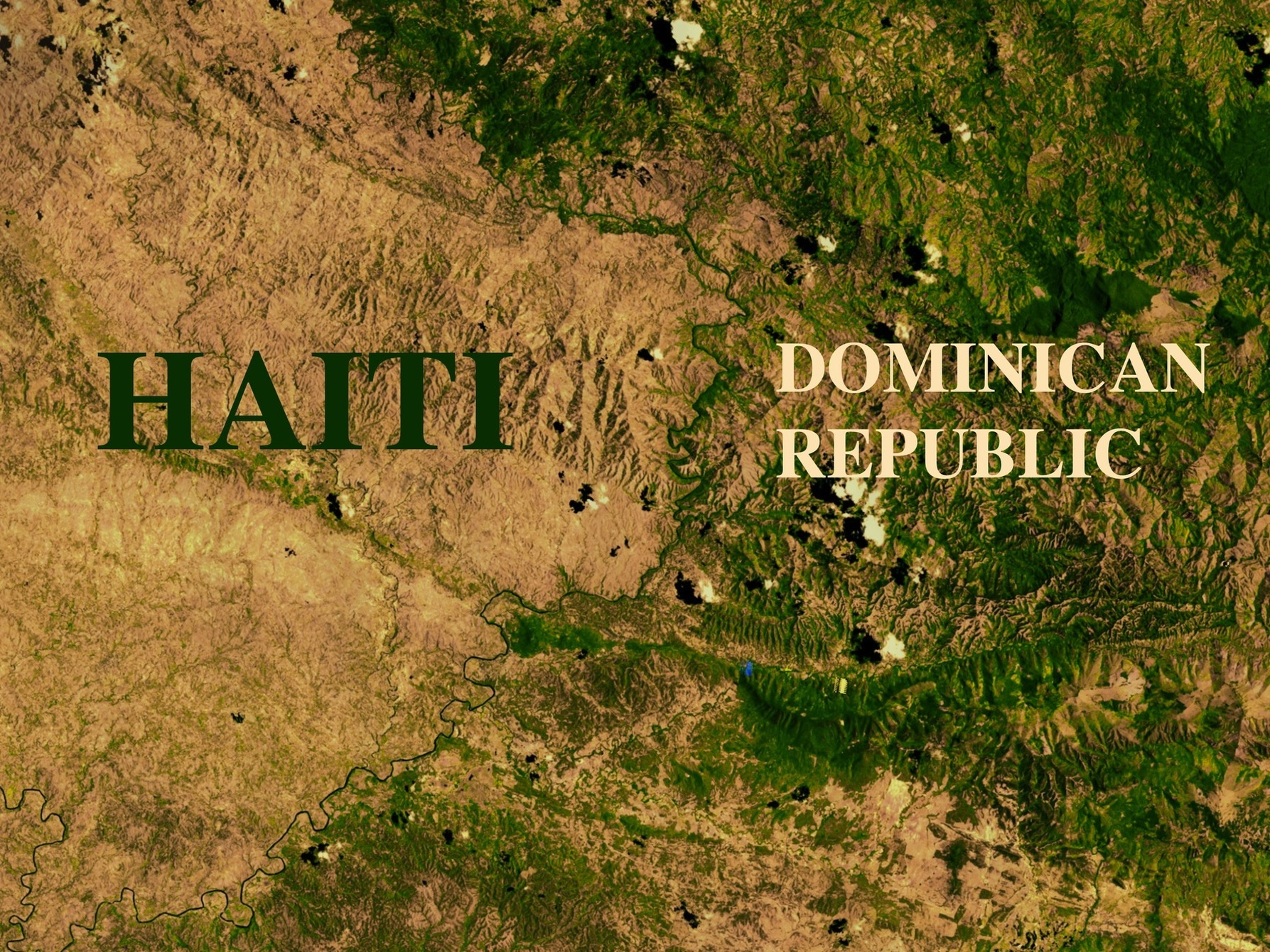
“With the stroke of a pen, authorities in the Dominican Republic have effectively wiped four generations of Dominicans off the map. Without nationality, tens of thousands of people have become virtual ghosts, who face serious obstacles in accessing basic services in the country,” said Erika Guevara-Rosas, Americas Director at Amnesty International. Here at the Office of Public Witness, these words propel us to act, raising awareness and engaging in efforts to help alleviate a dire situation. This reality faces a large population in the Dominican Republic (DR), where the Church of the Brethren has a significant presence. Deprived of the basic right of legal nationality, the DR’s stateless community lacks the paperwork to attend schools, work at a formal jobs, get married, and have opportunities that many people would see as inherent to a normal life. Since Nathan Hosler’s trip to the DR in 2014 and to the Haitian side of the border in 2015, the situation surrounding statelessness in the region merits a current report.

Context:
President of the DR since 2012, Danilo Medina, just won reelection in the 2016 presidential race. Although Medina’s administration has made some sweeping developments, such as creating 2,500 new schools and maintaining one of Latin America’s fastest growing economies, the painful situation for thousands of Dominicans of Haitian decent who were “repatriated” to Haiti has not improved under his administration. Following the 2010 constitutional change that eliminated citizenship to those born to migrants in the DR, the DR’s highest constitutional court passed decision 168-13 in September of 2013 that retroactively stripped the citizenship from all of those born to undocumented immigrants since 1929, mostly of Haitian decent.

This action left a population of approximately 200,000 people stateless. Following this, international alarms sounded. The United Nations, human rights organizations, and others cried out against the unjust racial bias inflicted upon those of Haitian decent born in the DR, rendering them with neither Dominican nor Haitian citizenship. The United Nations High Commissioner for Refugees (UNHCR) published a press release urging the Dominican Republic not to deport thousands of stateless people “whose citizenship was thrown into question by a 2013 ruling.” The Church of the Brethren also joined the voices in objection to this decision that affected our church community as well.

What has been done?
Succumbing to international pressure, the Medina administration created a naturalization program that expired in February of 2015. Many affected individuals did not learn about the program in time to apply until after it had already expired. Following this, a regularization plan that expired in June 2015 allowed individuals to register with the government. Since then, the Dominican government claims it has granted more than 250,000 previously undocumented migrants temporary visas and reinstated citizenship to 55,000 of the Dominicans born to migrants. However, this leaves a multitude of individuals who did not register. “Most people here were afraid to register,” Pérez said. “They didn’t understand the process or thought they would be deported.” Medina and his government consider the plan a success, not recognizing that many were unable to register.

The Church of the Brethren donated $16,000 and worked with the church in the DR to assist affected individuals through this regularization process. The documentation and trips to the government offices proved a significant financial burden to those trying to attain citizenship.

 Current situation and action:
Without family or social networks in Haiti, many stateless individuals are in makeshift camps along the DR-Haiti border. The International Organization for migration estimates about 20,000 official deportations have been carried out, while approximately 60,000 individuals have fled to Haiti on their own in fear of persecution, violence, or deportation. By the end of 2016, an estimated 120,000 individuals will cross over to Haiti. Camps are still swelling near the border, and tensions are rising. “Everyone here is more afraid of aggression from Dominican citizens than aggression from the government,” said one migrant. The Church of the Brethren has visited the border area, offering prayer and medical assistance. About 25 other organizations are working in the camps to provide various forms of assistance.

On behalf of the Church of the Brethren, the Office of Public Witness sent a letter signed by other faith-based organizations to Ambassador Brewster in Santo Domingo, DR, urging him to push for the creation of protocols for deportation that respect human rights, support those affected through documentation guidance and appeals processes, and the restoration of nationality to those affected. The Office of Public Witness continues to work with other organizations such as Church World Service to monitor and respond to this situation.

Christy Crouse
Peacebuilding and Policy Intern
Office of Public Witness
Washington, DC

Proclaiming freedom

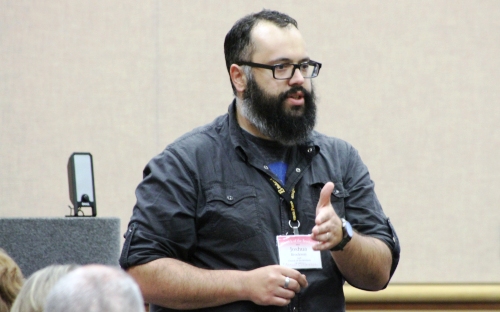
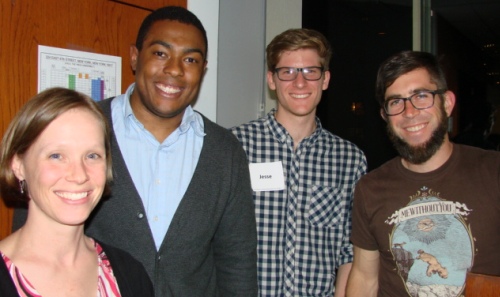
CCS leaders: from the left, Becky Ullom Naugle, Richard Newton, Jesse Winter, and Nate Hosler. Photo by Kendra Harbeck

CCS leaders: from the left, Becky Ullom Naugle,
Richard Newton, Jesse Winter, and Nate Hosler.
Photo by Kendra Harbeck

 A reflection from the 2016 Christian Citizenship Seminar

On April 23rd, Church of the Brethren youth from around the country met in New York City to learn about mass incarceration at Christian Citizenship Seminar (CCS). After hearing from Dr. Richard Newton, a professor at Elizabethtown College, and Ashley Ellis, an advocate for persons reentering society, the youth began to see the connection between mass incarceration and racism in the United States. The youth traveled to Washington, D.C. to continue learning about the issue and to prepare for legislative visits with their senators and representatives. During their visits to Capitol Hill, the youth asked their legislators to support sentencing reform legislation and bills that aided with prison reentry programs. Melen Ghebrai from Olympic View Church of the Brethren (Seattle, Wash.) offered the following reflection about her time at CCS.
—Jesse Winter, 
Brethren Volunteer Service worker serving with the Office of Public Witness 

CCS was an incredible life- changing experience. We began the week instantly exposed to the injustices of the criminal justice system and the immediate urge of reconstruction rather than reform. Each day we had new speakers explain what was happening and why it was important. I recognized the injustice but was confused about what we could do about it. As a high school student and person of color, all throughout my life I have been given the impression that my opinions on certain social and political issues do not matter. CCS, however, changed my doubt and gave me the voice I longed for. Throughout the week each powerful speaker built my passion, interests, and my desire to advocate for a renewed system in society that provides redemption and mercy for its citizens.

At CCS, I met several students from around the U.S and even overseas who share the same faith as me and belong to the Church of the Brethren, and this created a sense of community. We learned beside each other and asked questions, which fueled our interest and passion. As the week came to an end, we divided into groups for our lobby visits. I was accompanied by a volunteer from BVS, but did the visits mostly on my own. The experience was rewarding and very powerful.

Just a week prior I was sitting in a classroom advocating for students pushed from the school to the prison pipeline. It was nice walking through Capitol Hill and meeting with senators and representatives who are pushing for an end to this destructive system. CCS is something I would be very happy to attend next year. It was an opportunity that opened new doors and enlightened youth about the importance of remaining socially aware on the issues and solutions that shape our country.

Christian Citizenship Seminar is organized by the Office of Public Witness and Youth and Young Adult Ministries of the Church of the Brethren. Learn more about CCS at www.brethren.org/ccs, or support this ministry today at www.brethren.org/give.

(Read this issue of eBrethren)

Developing leaders around the world

Jay Wittmeyer speaking at Annual Conference 2015. Photo by Glenn Riegel

Jay Wittmeyer speaking at Annual Conference 2015.
Photo by Glenn Riegel

A reflection by Jay Wittmeyer, Executive Director of Global Mission and Service

On a trip to the Dominican Republic (DR) in March, members of the Mission Advisory Committee and I were greatly inspired by the work that the DR Brethren are doing to reach out into their communities.

On the first day we joined Gustavo Lendi, a pastor and current treasurer of the denomination, to visit poor families living in cardboard huts in a shanty settlement of Haiti called “Parc Cadeau.” Many children in the refugee camp were actually born in the DR but refused re-entry when they traveled to Haiti to visit relatives. Brother Gustavo, who has helped many stateless Haitians procure legal Dominican residency, is advocating on their behalf.

We were very impressed with the intentional focus of training leaders in the church. The Dominican Brethren have partnered with an Anabaptist seminary to hold classes in Brethren communities so church members can attend. Four pastors are attending university to earn theology degrees, and the denomination also hosts an annual pastors’ conference. Most importantly, elders of the church regularly travel to remote areas and provide one-day Bible studies to share Brethren beliefs and practices with low-income, poorly educated church members.

During our visit, we traveled to several city churches. There we heard stories of members working in slum areas to support youth and prevent them from getting caught in the drug culture of the Caribbean. We met a young adult who was saved from the drug lifestyle. We even met four teenagers who regularly preach in church, which helps them stay out of trouble.

We also visited a small church of both Haitians and Dominicans in a remote, mountain village. This little Brethren church has local leadership, but pastors from the city go out a few times a month to preach and teach. The community is very pleased to have a church. In total, we visited at least 16 churches and met many church members.

The last thing we did on our trip was attend the Dominican Brethren’s annual conference. Celebrating their 25th annual conference, the Dominican Brethren are forming a strong Brethren identity, and many members have grown up with it being the only church that they know.

As I reflected on our visit, I recognize the importance of effective leadership at the denominational level. Just as a local church needs individuals to serve as pastors, elders, or board chairs to lead the congregation, so also do denominations need leaders to care for the flock. Moderators motivate pastors, create unity among members, and encourage sacrifice and mutuality. They focus not only on individual members or single congregations, but on relationships between congregations and their members.

Much of the work of Global Mission and Service is focused on leadership development and supporting international leaders. We partner with them as they listen to the wisdom of their unique community, make decisions, and find a healthy balance between the social ministry of outreach and the theological ministries of teaching and spiritual growth. Whether in the Dominican Republic, Spain, Haiti, or elsewhere, the Church of the Brethren is developing leaders, planting churches, and reaching out into communities for Christ. By giving to the Church of the Brethren, you make all of this possible. Thank you for helping us make a difference around the world.

Learn more about Global Mission and Service at www.brethren.org/partners or support it today at www.brethren.org/give .

(Read this issue of eBrethren)

Children’s Trauma Training in Nigeria: a huge success

Leaders Kathy Fry-Miller and John Kinsel with Participants of the training

Leaders Kathy Fry-Miller and John Kinsel with Participants of the training

Fourteen women theologians including our host Suzan Mark, Women’s Ministry Director for Ekklesiyar Yan’uwa a Nigeria (EYN), attended the two-day training on trauma healing for children.

Day 1 of training was spent learning to know each other and learning about how people
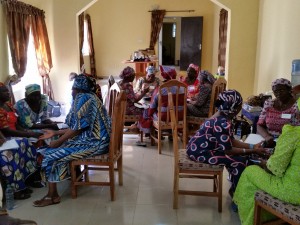
Training time

Training time

respond to trauma and how to support resilience. The group was then presented with the Healing Hearts Curriculum that consists of nine sessions based on the Beatitudes in Matthew 5, with accompanying Bible stories from “Shine On: A Story Bible.”

Participants received a small version of the Kit of Comfort that CDS volunteers use with children who are affected by disasters, with art materials, bean bags, and beautiful hand-made dolls and animals that Church of the Brethren congregations and individuals across the country created for this work.

Day 2 was spent completing the nine sessions and planning for the afternoon practicum at Favored Sisters school and orphanage. The practicum work was enthusiastically received by the children, as well as the trainers.

Reflections

Kathy Fry-Miller

All of the women in our training group have been affected by the violence of the Boko Haram. They all had to flee at some point, some many times. They have taken other families into their homes; they have taken children/orphans into their homes. They have responded to the crisis with compassion and faith. These women were inspiring to us. They have found amazing ways to cope with crisis through their love of God, through music, prayer, showing compassion, and being helpers.

I’m so grateful for this opportunity to travel to Nigeria and work with the wonderful people we met! Such gracious hospitality! Our relationships were full of friendship, warmth, joy, compassion. It really was a life-changing experience.

John Kinsel:

My biggest take-away was the strength, intelligence, hospitality, love and resilience of the Nigerian folks we met.  I have never experienced such pure integration of faith in my life, and it left me amazed, humbled and challenged.  The training itself, as I’ve been telling folks, couldn’t have gone better, due primarily to the receptiveness of the women theologians.  We had designed the presentation to be emergent versus didactic, and boy did it emerge via the insightful, energetic and hungry response from the women.  They took it all in, made it their own and, during their “practicum” at Favored Sisters School, demonstrated a capacity for loving connection with the children that left us awe-struck.  So many stories emerge from this experience, but they can be summed up by saying that I am convinced that children’s lives were changed that day!  The continuity and sustaining of this work is assured by the strength of these amazing women.  We were pleased also to meet with representatives from the Mennonite Central Committee who, while disappointed they had not been a part of the training, were enthusiastic about finding something that could feed their newly recognized awareness of the need to address the trauma of children, as well as adults.  They challenged us to adapt the curriculum to be appropriate for Christians and Muslims alike and Kathy and I have accepted that challenge.  Our vision is that this work can expand and provide psychological comfort to many children.
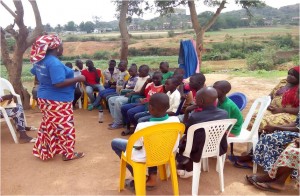
Children at the Practicum
Children at the Practicum

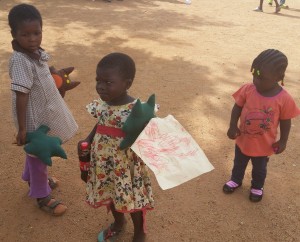
A Child holds her drawing

A Child holds her drawing

Stories from the Practicum

One little girl (under age 2) started screaming and ran away when one of the trainers was on the ground during the dramatization of the “Good Samaritan”. She thought it was a dead body.

One group did the session, “hunger and thirst for righteousness” which included making an origami paper cup, bringing a stone to leave at the “altar” in the cup, and taking a piece of sweet bread back with them. They sang, “Come, bring your burdens to God” as they did this. The trainer said, “The children needed something like that. They immediately learned the song. They immediately did the dramatic experience, bringing their burdens, leaving them, and taking the sweet bread. They feel burdens. They put their trust in God. One girl said that she knows now that she can carry her burden to God and remove that burden from her.”

One girl told her trainer, “When we fled from Boko Haram, I prayed that God would never forgive them. Now I will pray that God will forgive Boko Haram.”

One group did the activity where they held dolls/stuffed animals and sang “Jesus loves me”.

One of the directors at the Favored Sisters School said, “Some of these children will never, never forget that you came to us today.”

One little girl told her trainer, “You. You are my mother, because my mother is not here.” The trainer was so touched that even after a short 45 minute session, they bonded with these precious children. Another trainer said that children told her, “They were so happy, it was as if they had seen their parents.”

Response after the training

Suzan (Director of Women for EYN)

“I’ve been getting calls during our session, people who heard about this and have children who are traumatized and need help.Our future generations will live to tell stories about how the Church of the Brethren came to them.”

Suzan, a couple days later,

“I’ve been getting so many texts, calls, and emails from the women theologians over the past two days. They are so excited about doing this work.”

“I saw three children last evening walking around. I was showing them some pictures on my phone. They saw the picture of me standing by my car that was burned out, and asked about it. I told them the story of the Good Samaritan. I gave them paper to draw someone who has helped them. They each were so thoughtful, then they drew someone. Each one of them had someone in mind to draw. They told me the stories of their pictures and who helped them.”

One of the trainers said, “I went to school before, but here I REALLY went to school.”

(Information and pictures for this report wer provided by Kathy Fry-Miller, Associate Director Children’s Disaster Ministries)


Workshop held for Medical Clinic workers

by Norman S. Waggy, M.D.

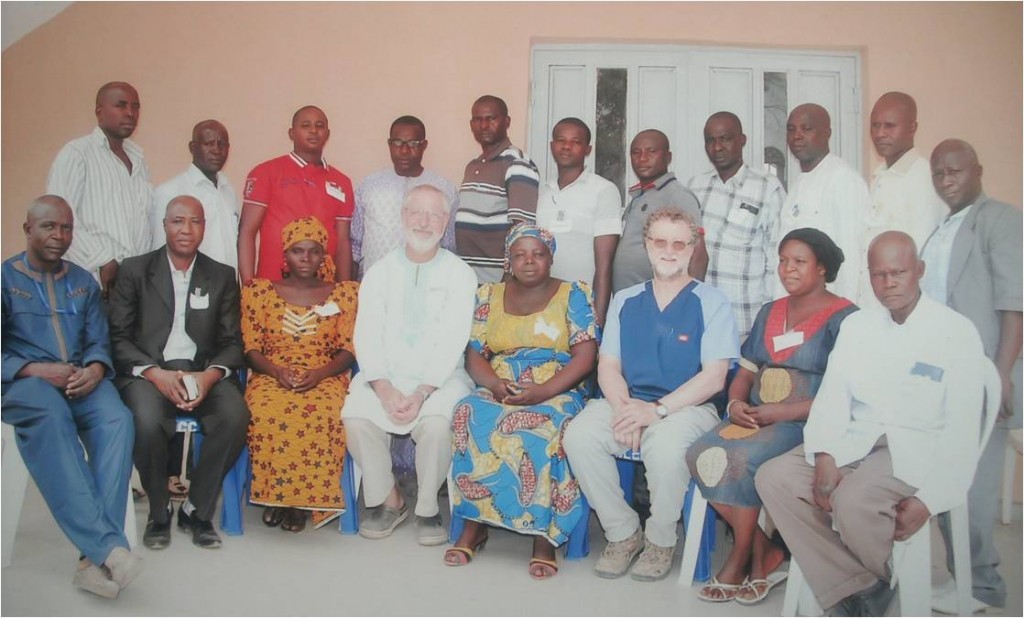
Group of dispensary staff and ICBDP medical workers that met for 2.5 days in Jos for a refresher course led by Norm and Paul

Group of dispensary staff and ICBDP medical workers that met for 2.5 days in Jos for a refresher course led by Norm and Paul

I had served as the medical consultant to the EYN Rural Health Program during the 1980’s, so the current status and well-being of the program was of particular interest to me.  Carl and Roxane Hill, coordinators for the Nigeria Crisis Fund, also asked me to assess the program as much as possible, and to provide observations and recommendations if appropriate.  Although I only was able to visit 3 dispensaries and the RHP Headquarters in Garkida during a VERY brief trip to Yola, Kwarhi, Fadama Rake, and Garkida, I did have the chance to listen to many who are working with the programme.

As a result of these visits and discussions, we determined that a “refresher course” for the dispensers in charge could be beneficial.  I had provided one-week refresher courses twice annually during the 1980’s for the EYN RHP dispensers, so I had a bit of an understanding of the types of teaching which might be beneficial.  I was able to contact people back in the US to e-mail copies of some of my teaching materials, some of which I rewrote as handouts.  Using that material as well as information from the internet and textbooks, I was able to write and print 9 handouts on various topics for each person.

Fortuantely, Paul Fry-Miller, a friend and Physician Assistant from North Manchester, IN arrived in Nigeria with his wife Kathy just the day before this course started.  Paul and I have worked together previously in Nicaragua, and I very much valued his advice, expertise, and friendship as we together taught this course.

We did not give the 16 participants much chance to catch their breath!  After they had travelled for over 10 hours in the bus on Sunday, we ate our evening meal together, had an opening worship, then during an opening session discussed their concerns and topics that they wanted to address.  By 9 pm they were ready to sleep at the EYN Guest House, before returning the next morning at 7 am for worship and teaching!  Our devotional topics during the course included “Health, Wellness, and Healing as part of God’s Plan”, “Servant Leadership and Humility”, and “Hope”.  The course ended late on Tuesday with a worship time led by Rev. James T. Mamza, Director of the EYN ICBDP, who encouraged participants to wisely use the gifts/talents that God has given each.

During our 12 teaching sessions over the 2 full days (a total of over 15 hours), we were able to address every one of the topics they requested.  Teachings included human sexuality/family planning/infertility, pharmacology, viruses, bacteria, appropriate use of antibiotics and antipyretics, sexually transmitted infections, urinary tract infections, diabetes, hypertension, lipids, hepatitis, gastritis/ulcers, typhoid, diarrhea, worms, oral rehydration solution, nosebleeds, sickle cell anemia, Lassa and Ebola viruses, childhood diseases and vaccines, and oral hygiene.  We were also able to discuss some of the case studies about which they had particular concerns.  Obviously, given the time constraints, we were only able to provide a very superficial treatment of each topic!

Overall, I believe that this course was well-received, and hopefully it will be helpful to the dispensers of the EYN RHP.  I felt that we all worked well together, and I appreciate the chance to provide this course.  The larger management issues facing the RHP will need to be addressed if the programme is to continue.  I hope we will have a chance to discuss these in the near future.