Devotions (EYN Daily Link) November 22 – 28, 2015

DAILY LINK WITH GOD 2015

EYN Devotions graphicA Daily Devotional Guide from the
EYN (Church of the Brethren in Nigeria)

EYN leaders in Nigeria believe prayer is one of the most important ways to support the Nigerian people and the Church.  These daily devotions were written by EYN members and published by the Church of the Brethren in Nigeria. Reading them daily is a powerful way we can be in solidarity and connect with our brothers and sisters caught in this crisis.  EYN’s daily devotional for 2015 will be posted a week at a time on this blog, appearing mid-week for the following week. More information about the crisis can be found at www.nigeriacrisis.org.

Click on this link for Devotions for November 22-28, 2015

Violence and Suffering Become a Way Life

This was a good article (link below) highlighting what it is like to live long term under chaos and violence. Sadly, life goes on and people adapt to a new normal. Continue to pray for our brothers and sisters in Nigeria. 

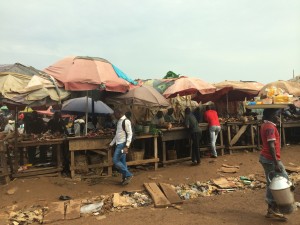
Market scene in Nigeria

Market scene in Nigeria

QUOTE from the article (see link below):

“Just a few weeks ago a suicide bomber with alleged affiliations to Boko Haram struck at a newly opened mosque in Jimeta, a suburb of the city, as hundreds of worshippers gathered to pray there for the first time. More than 100 people were wounded and 42 were killed.

The attack came not long after a double bombing in the city’s main market, killing traders and commuters alike. “It only took two days for the market to reopen,” says local Asauten Anderibom. “Everyone has to feed their families so they went back to trading right at the same spot Boko Haram struck.”

http://www.theguardian.com/world/2015/nov/09/nigeria-stories-life-in-the-time-of-boko-haram

Devotions (EYN Daily Link) November 15-21, 2015

DAILY LINK WITH GOD 2015

EYN Devotions graphicA Daily Devotional Guide from the
EYN (Church of the Brethren in Nigeria)

EYN leaders in Nigeria believe prayer is one of the most important ways to support the Nigerian people and the Church.  These daily devotions were written by EYN members and published by the Church of the Brethren in Nigeria. Reading them daily is a powerful way we can be in solidarity and connect with our brothers and sisters caught in this crisis.  EYN’s daily devotional for 2015 will be posted a week at a time on this blog, appearing mid-week for the following week. More information about the crisis can be found at www.nigeriacrisis.org.

Click on this link for Devotions November 15-21, 2015

2 visits to Chibok – 50 years apart

Chibok has always been a difficult place to get to. Here are stories of two journeys to Chibok 50 years apart.

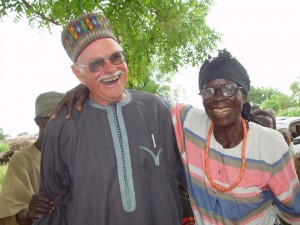
Ralph Royer (2003 visit to Nigeria)

Ralph Royer (2003 visit to Nigeria)

 Story #1 Chibok Visit – A trip to Remember

(recalled by Ralph Royer – long time missionary in Nigeria, Supervisor of the 40 Church of the Brethren Elementary Schools during the 1960’s)

In the early 1960s the government of northern Nigeria announced a desire to transfer primary schools, both mission and native schools, to what were called Local Education Authorities (LEA). There being only a few non native schools in Borno LEA made it a good place to start. I made several trips to Maiduguri to help work out some of the details to transfer our three schools in Borno LEA – Chibok, Kaurwatikari and Mbalala. It was decided to do the transfer in 1963 and I felt the schools and teachers needed to know this as ownership and employment etc was to transfer to the LEA.

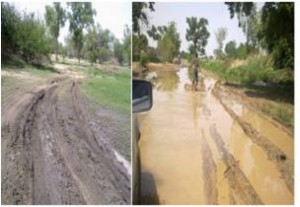
Current road to Chibok

Current road to Chibok

Usually Chibok was cut off by road from July to October, but this was August so I decided to take a small 50cc motorcycle from Lassa for the thirty miles to Chibok. At the Musa stream I had to get men to help hoist it over our heads to cross the stream. One of the shorter men stepped in a hole and briefly disappeared below the surface. When I was within seven miles of Chibok, I came to a large flowing stream at a spot I knew to be only a low area with an occasional mud puddle. Now it flowed two hundred feet across. I had already had help several times crossing streams, so seeing no around, I parked my moped by a tree and started walking in water up to my chest. A few miles on I met some Fulani cattle herders and their dog, but we could not converse and we each went on. After separating some distance, I heard a funny sound and turned around to see their dog really bearing down on me. I reached at it and the dog veered off, but it raised the hair on my neck and added to the seriousness of the whole situation with water everywhere. As I approached the last stream just behind the mission station, I began to wonder where the station was. There was nothing but water as far as I could see. A slight movement ahead caught my eye, it was a woman climbing into the branches of a tree. I watched as she went through to the other side and down holding onto small trees as she went forward. I followed and later found that this tree grew in the middle of the stream and we had crossed the stream where it was ten feet deep and three feet beyond each bank.

It was a very surprised Grace Brumbaugh who met me when I arrived at her house! They had four and a half inches of rain that afternoon and many mud houses had collapsed. It was also an appreciative group of teachers to whom I explained the upcoming changes in the running of the schools.

Over the next several years we arranged for the transfer of all of our forty-two schools. Informing these teachers required less “heroism”!

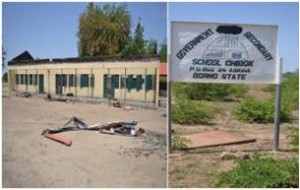
School from which the "Chibok girls" were abducted

School from which the “Chibok girls” were abducted

Story # 2 My Wilderness Journey To Land Of Chibok (An excerpt)

By Naija247news Posted In Crime & Investigative Reports

(A journalist tells of his trip to Chibok some time after Boko Haram had captured 276 girls)


The road to Chibok is bad and full of uncertainty; checking points everywhere mounted by vigilante group. Bombed cars, trucks and buses abound on the road to Chibok. Burnt houses and hot. Several villages sacked by the insurgents whose inhabitants now live under trees with their children begging for aid from travelers. Abandoned Police Posts that had received the insurgents’ baptism of fire! The Damboa-Chibok Road is particularly very bad. The major road has been taking over by flood. Drivers now drive through the desert forest like antelopes sneaking to avoid wet bushes from touching them. Some have been killed on the road by the insurgents and many escaped with varying degrees of gunshots injuries. Pastor Manasseh for instance, showed me injuries he escaped with on this road. At some checking points mounted by policemen and soldiers passengers are asked to step out of the car and walk through the check point.

We continue to remember those abducted by the Boko Haram and pray for their safe return.

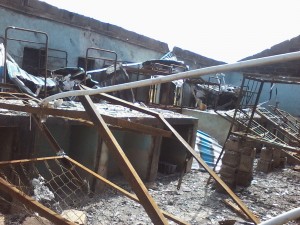
Destroyed Chibok school

Destroyed Chibok school


Devotions (EYN Daily Link) November 8-14, 2015

DAILY LINK WITH GOD 2015

EYN Devotions graphicA Daily Devotional Guide from the
EYN (Church of the Brethren in Nigeria)

EYN leaders in Nigeria believe prayer is one of the most important ways to support the Nigerian people and the Church.  These daily devotions were written by EYN members and published by the Church of the Brethren in Nigeria. Reading them daily is a powerful way we can be in solidarity and connect with our brothers and sisters caught in this crisis.  EYN’s daily devotional for 2015 will be posted a week at a time on this blog, appearing mid-week for the following week. More information about the crisis can be found at www.nigeriacrisis.org.

Click on this link for Devotions Nov 8-14, 2015

Completing a Degree During Troubled Times

by Janet Crago

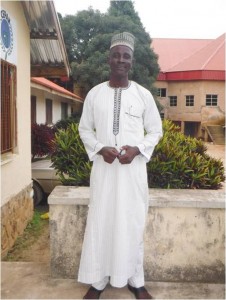
Zakariya Musa

Zakariya Musa

In 2014, Zakariya Musa was pursuing his Bachelor of Science degree in Mass Communication at the University of Maiduguri.  It was supposed to be a 6-year journey.  He works for EYN Headquarters as the Editor of Sabon Haske, which is an EYN publication reporting on major events in EYN.  The University of Maiduguri offered a program where he could travel to Maiduguri to attend classes on Friday evening and all day Saturday.  He would travel earlier in the day on Friday to get to Maiduguri for the Friday classes, then travel on Sunday to get back to EYN Headquarters at Kwarhi.  He was given study assignments to work on during the two weeks he would spend at EYN Headquarters before again returning to Maiduguri for the Fri – Sat classes, then back to Kwarhi again.  Zakariya would work at EYN Headquarters during the day, and study at night.  He has 8 children, so to get a quiet place to study, he would frequently go to the Library or the classrooms at Kulp Bible College (KBC) at night to study.  It was a very busy life.  But, this was a schedule he expected — before the Boko Haram insurgency geared up.


Maiduguri is a very large city north of EYN Headquarters.  If you travel on the road that goes north and is the shortest route, it takes about 4 hours.  Soon, however, it became unsafe to travel the shortest road up to Maiduguri.  Even today, because of the insurgency, it is not safe to pass on the road through Bama / Gwoza.  Instead, travelers leaving Kwarhi must first travel to Yola which is about 4 hours SOUTH of EYN Headquarters.  Then you have to travel from Yola to Numan, Adamawa state /to Gombe, Gombe state/ to Damaturu, Yobe State/to Maiduguri, Borno State, a further trip of approximately 10 hours through 3 state capitals.  So, total trip time now become 14 hours one way.  Getting his degree became very difficult as Zakariya continued to pursue it.  Not only did the travel time increase so much that it became almost impossible, but the trip is not even very safe in some places like Damaturu.  Another problem was that the city of Maiduguri imposed a curfew during this time to help ensure the safety of the city.  Zakariya’s probem was that they kept changing the time.  Sometimes it was 5 pm to 6 am, sometimes it was 6 pm to 7 am, and sometimes it was 7 pm to 7 am.  Zakariya always called ahead to determine the time so he didn’t have to stay in the bush.  He had to stay over night in Yola several times.   But, Zakariya still persevered toward his degree.

Then, to make matters worse, Boko Haram began an all-out effort to carve out a radical Islamic state in a section of northeast Nigeria.  They weren’t having success in overcoming Maiduguri itself so their eyes moved toward its surroundings with a bomb blast here and there within the city despite the heavy military checkpoints at all road linkages. They began a march south, overrunning Bama, Gwoza, Madagali and Michika in mid September, moving into KBC on Oct 29 and overrunning Mubi on Oct 30.  People were anxious all over the area, but didn’t want to abandon their homes and crops.  They didn’t want to run away until they had no other choice.

But, Oct 29th was that day for Zakariya’s family, who lived in Kwarhi near the EYN Headquarters.  His older children abandoned their house early in the morning of Oct 29th by starting their trek, on foot, toward Gashala, then Hong, then Gombi, before getting transport to Yola.  Unfortunately, Zakariya’s wife didn’t leave soon enough.  She got trapped in her home in Kwarhi.  Thankfully, she was able to sneak out later in the day.  She went through the bush to Gashala, then Hong.  She trekked about 15 miles before spending the night in Gashala.  She and her group (which included a pregnant woman who was in her eighth month) were finally able to get transport from Hong to Yola.  That same day, Zakariya had made the long journey back from Maiduguri and arrived in Yola the evening of Oct 29th.  His wife arrived on the 30th.

The pastor and parishioners of the Vinikilang EYN church, just outside Yola, were allowing displaced people to gather in a large open area near their church.  Zakariya estimates that there were about 400 adults staying in this open area.  Sometimes they were able to get one plate of food for the younger children.  He had very little money with him, but was able to purchase a little food for the rest of them.  They stayed there for 6 days.  Ultimately, the displaced people there dispersed to many areas, wherever they could get a safe place to stay until they could return home.  After discussing their options, Zakariya’s family decided to move to a refugee camp in Bukuru (near Jos) run by the Stephanos Foundation.  There they stayed in a shelter which only had half walls.  They decided to hang cloth around the open top half so they could have a little privacy.

Then, Zakariya got word from his university supervisors that he needed to finish his final project as his allotted time had almost expired.  He didn’t know how he was going to finish his project while living in a camp.  There was no private area to work in.  His advisor agreed to communicate with him about his project through email.  He had a laptop, but how was he going to power it?  Well, Zakariya is resourceful, and again he pulled off the almost impossible.  He finished his project on time and was able to complete his Bachelor of Science Degree.  But, the story doesn’t end there —
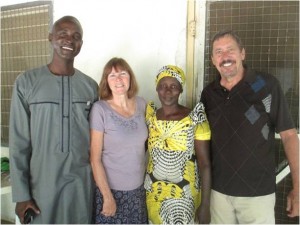
Zakariya with his wife and Carl & Roxane Hill

Zakariya with his wife and Carl & Roxane Hill

While working on his final project he got word from Gavva that his parents had been killedby the insurgents.  Gavva is one of the villages in northeast Nigeria very close to the Cameroon border where people are still afraid to go back because they are likely to be killed.  Then, he then got word that his mother had been seen alive.  But — he has now not heard from his mother for over 6 months, and he’s doubtful that this is really true. His father and mother lived in Gavva their whole lives, and Zakariya grew up there.  The death of his parents has been a terrible blow for him.

Zakariya thanks God for getting him through the difficult challenges of getting his degree.  He is also grateful to Stephanos Foundation for helping to provide for his family during a time when he’s also mourned for his parents and the other colleagues he has lost to the Boko Haram conflict.

When he reflects on what has happened to him he says he appreciates people, particularly in Jos, for their concern for EYN.  His prayer is for peace to come back to Nigeria, especially in the northeast where the insurgency has taken over.  He prays for God to give EYN a forgiving heart because we have all sinned before God.  He prays for the new government of Nigeria under the leadership of President Muhammadu Buhari and for the betterment of all citizens.


 

Devotions (EYN Daily Link) November 1-7, 2015

DAILY LINK WITH GOD 2015

EYN Devotions graphicA Daily Devotional Guide from the
EYN (Church of the Brethren in Nigeria)

EYN leaders in Nigeria believe prayer is one of the most important ways to support the Nigerian people and the Church.  These daily devotions were written by EYN members and published by the Church of the Brethren in Nigeria. Reading them daily is a powerful way we can be in solidarity and connect with our brothers and sisters caught in this crisis.  EYN’s daily devotional for 2015 will be posted a week at a time on this blog, appearing mid-week for the following week. More information about the crisis can be found atwww.nigeriacrisis.org.

Click on this link for Devotions Nov 1-7, 2015

Saratu’s Escape

By Janet Crago

Personal Note:  This story was especially important to Tom and Janet Crago because Saratu’s goat herd got its beginning in 2007 with a donation of $100 from Florence Crago, Tom’s mother, who was moved to help a widow in Nigeria when she heard her story.

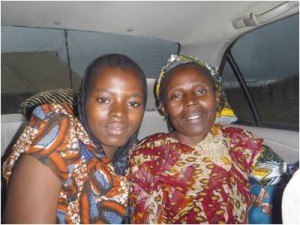
Saratu and Rita

Saratu and Rita

It was Oct 3, 2014.  They first came as thieves, and were dressed as soldiers.  They surrounded the whole village of Gavva East.  Saratu and her mother were at home.  It was 8 o’clock in the morning and Saratu was taking her bath.  When they started firing their guns, the sound of gunshots came from all over the village.  Everyone started running for the mountain.  The Boko Haram insurgents killed some people and kidnapped many women and children that day.  Saratu was one of the lucky ones.  Her mother was with her and they were fast enough to run and escape captivity.  Saratu tells of gunshots passing very close to her and how panicked she felt.  She ran until she thought she would burst from lack of breath.  It is a steep climb up the mountain.

After that day, the Christians from Gavva East did not return to live in their village.  They were too frightened. They stayed on the mountain.  They didn’t want to leave their home area and were hopeful that the Boko Haram had gone away for good.  This area of northeast Nigeria has had a very lucrative farming history.  They grow guinea corn, sesame seed, and onions.  But the Boko Haram were persistent in their aim of driving Christians from the area.  They came again on Oct 14, 2014.  They dressed in football (soccer) uniforms and pretended they were Christians.  They told everyone to come out and that it was safe, but the ones who came out were killed or captured.  Many more women and children were kidnapped.  The men were killed.

The word spread that the Muslims from Gavva East went to the Sambisa forest and joined Boko Haram.   So, the neighbors and former friends of Christians in Gavva East had now become their enemies who were trying to kill them or drive them away from their homeland.  The Boko Haram insurgents came back to the mountain hideaway on Oct 24, 2014.  They came from all directions around the mountain and surrounded it.  Saratu and her mother hid in a small cave.  The Boko Haram spent one week of relentless searching by surrounding the mountain and calling out to people to come out.  They would cry out every day saying, “Come out, come out, you will not be killed if you convert to Islam”.  But if you refused to convert they would slaughter you (cut your throat) and throw pieces of your body into the community’s mountain spring water source. They spoiled the water for everyone.  Saratu and her mother never came out.  They remained true to their Christian faith.  They stayed hidden while trembling with fear.  They refused to convert.  During this horrible week of intense fear, other insurgents were in the village of Gavva East looting houses.  They took away everything valuable, including the zinc roofs of the houses.  Then they set fire to the Christian homes.  It was a very difficult week.  The Christians in hiding would come out in the dead of night to search for a way to Cameroon.  Finally, they left on their trek to Cameroon.  Because they didn’t have water, they kept their eyes open for wet spots on the ground.  When they spotted a wet site, they would dig down until water started filling the hole.  When the water filled the hole enough, they would drink the water.  They did not eat for a week on this trek to Cameroon.

Survival in the Cameroon, too, was difficult. The town where they went was predominantly Islamic.  They discovered that if they could do a little work for a Muslim home, they would be given a little money for food.

At one point, a Muslim man who took passengers to Yola told them that he would take them to Yola for 5,000 Naira ($25) each, but he just took their money and disappeared.  Many others fell for this trick as well.  Finally, Saratu and her mother were able to arrange transport for the two of them to be taken to Yola for 18,000 ($90) each.  Saratu’s father was able to send them the money.  When they got to Yola, it was easy to arrange transport back to Maiduguri.  By that time, Saratu’s girls had not heard from their mother for 6 months.  They had lost hope that she was still alive.

Saratu is a widow with four daughters.  Her husband, Daniel, was killed in a road accident

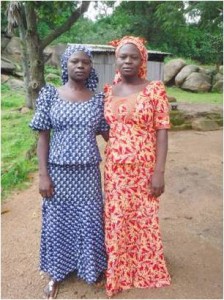
Twins Walla and Wassa

Twins Walla and Wassa

when Saratu was just 27.  Walla and Wassa are her oldest children and twins. They are attending university.  Rita has just completed secondary school and is staying with an uncle.  Her youngest, Renate, is attending boarding school.  Saratu left 22 goats behind when she had to flee.  Losing her goats was a big concern because she was using the money from the sale of goats to pay for her girl’s school fees.  They also gave her a source of protein for her own family.


Saratu is now about the business of recovery.  She recently got a job at the Center for Caring and Empowerment Initiative (CCEPI) in Jos, run by Dr. Rebeccah Dali, the wife of EYN’s President.  She is very happy to have work again.  Before her escape, she had been employed by the Literacy program in Gavva.  This program was a function of EYN providing much needed education in the Gavva area.  That program doesn’t exist any more because all Christians have had to leave the area and all the buildings have been destroyed.  The Christians of Gavva East are still mourning the loss of the Literacy program.  They now have to focus on moving on with their lives in another area.  Please pray that God will bless them in their new workplaces and that their industry and Godliness will have a huge influence in the new place.

Devotions (EYN Daily Link) October 25-31, 2015

DAILY LINK WITH GOD 2015

EYN Devotions graphicA Daily Devotional Guide from the
EYN (Church of the Brethren in Nigeria)

EYN leaders in Nigeria believe prayer is one of the most important ways to support the Nigerian people and the Church.  These daily devotions were written by EYN members and published by the Church of the Brethren in Nigeria. Reading them daily is a powerful way we can be in solidarity and connect with our brothers and sisters caught in this crisis.  EYN’s daily devotional for 2015 will be posted a week at a time on this blog, appearing mid-week for the following week. More information about the crisis can be found atwww.nigeriacrisis.org.

Click on this link for Devotions Oct 25-31, 2015

Tough going at Kulp Bible College

When asked for a brief report on the start of Kulp Bible College (KBC) last week, Dr. Rebecca Dali wrote the following:

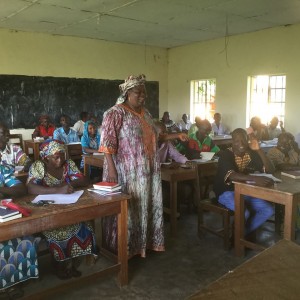
Final year Bachelors of Arts class

Final year Bachelors of Arts class

Greetings in Jesus name. I hope you are well. I went to KBC and taught from 7am to 4pm daily because I taught extra lessons to cover for next weeks lessons.

Generally the report so far

  1. Most of the old (returning) students  BA 2,3 &4 and DCRS 2&3 were in class and most of them are very attentive to learning. New Student are few only 2 in DCRS 1 and 5 in BA 1.
  2. 30% of the teaching staff did not resume their teaching assignment although I saw some came on Friday.
  3. Security: Students and staff are carry on with their normal work, some are harvesting their groundnuts, maize etc. but most of them are not sleeping at night they are being like watchmen in the nights. It resulted to many students sleeping in the class. Boko Haram still attack villages near Lassa, Chibok areas and also Madagali, Wagga areas and many students in those areas are looking sad and not free as other students.
  4. Economically it is very hard for them to pay school fees and feed themselves including paying medical bills. CCEPI with partners is providing food 10,000 worth of 25kg of Rice and Maize. 4 mudus of Groundnuts and Beans, 2litres of Groundnut oil and salt per household. We gave Vouchers and the beneficiaries will go to Rescue authorized  and trained  vendors to claim the food. We registered these households since July and started  to get the foodstuffs since August, 2015. Therefore some student who did not register are not getting them. And from all indication they will receive the last one next week.  Hunger will emerge and extreme poverty has already set in. When I went more than 20 students ask me money as small as 20Naira to buy salt which was not usual.
  5. Many of their children are out of school, I went around the compound during school time and many are staying at home. Some said their parents could not buy uniforms and pay school fees. I went to EYN Women Fellowship Primary school and the Headmistress said the students are not paying tuition fees.
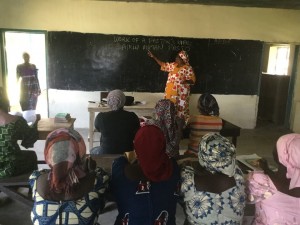
Teaching "Work of a Pastor's wife"

Teaching “Work of a Pastor’s wife”

Generally, the situation has worsened because of Boko Haram and life is not easy. Even those who graduated they are still in the compound. Some of them have no home to go to and no pastoral work. This is what I briefly observed in my 7 days in Kulp.

thank you.

Rebecca