Moving on, but not letting go?

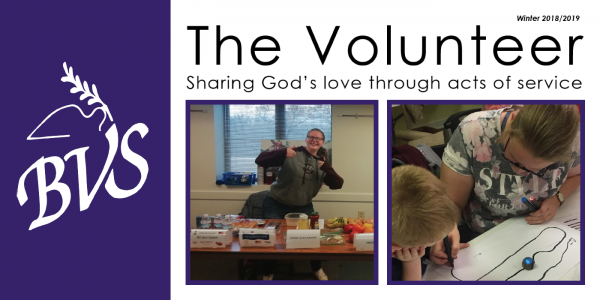
By Lisa-Marie Mayerle, Brethren Volunteer Service Unit #319

This year, I decided to be a part of Brethren Volunteer Service, and trust me… it was not easy to make that decision. For me, joining BVS meant not knowing where I would end up, which project I would be going to, or how I would be living for the next year. But, it was the best decision I have ever made. Of course I had a lot of insecurities during the process, but in the end I knew that this was my best opportunity to serve for a year, to explore another culture, and to make a difference.

I would say that the worst part of the transition was saying goodbye—leaving everyone I love behind. All my friends and family in Germany would continue their lives without me, but my life would continue on as well. It felt like I needed to move on and let go. So, I left with a face full of tears and a heart full of sadness and happiness mixed together. I knew it was time for a new chapter of my life.

The moment I arrived at my project in Hagerstown, Md., everyone welcomed me with open arms and a big smile on their face. In that exact moment, all my concerns and doubts were gone, and I knew that it was the right decision. I also realized that I had never left someone or something behind. Despite missing Germany, and even though I could not see or hear my family and friends every day, I can remember that they are always with me.

I enjoy every minute at my project and I love to share about it with my loved ones. The people I work with are amazing and support me. I feel like I am a part of a bigger family, and the thought of leaving them one day brings tears to my eyes. Every single minute with the kids, my co-workers, and my friends is precious, and I am so glad that I can be here. I am thankful for this journey and the relationships I am creating.

Learn more about Brethren Volunteer Service or read the most recent issue of The Volunteer at www.brethren.org/bvs. Support the ministry of BVS today at www.brethren.org/give .
(Read this issue of eBrethren.)

Black History Month: Past

For the end of Black History Month, I have curated three small collections of poetry, each with an accompanying reflection. The three reflections will dwell on the ideas of “past,” “present,” and “future.” Too often, it seems people and events must be decades old to be documented by the mainstream as “black history.” We must remember that black history is being created today, shaped by the past and informing the future. Looking at black stories from our past, present, and future requires us to think critically about how the church tells its own stories, as well as which stories we deem to be “our own.”

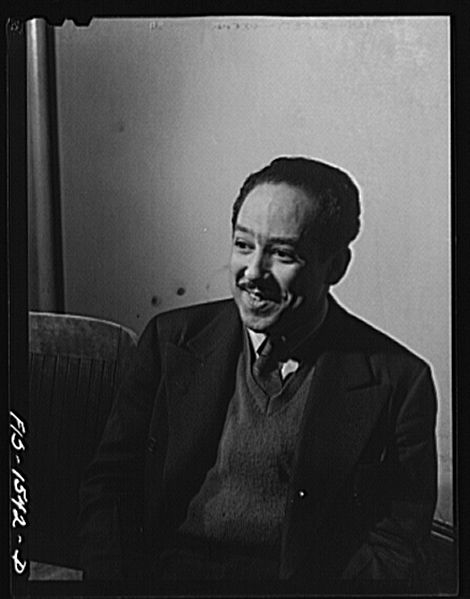
Langston Hughes, April 1942. By Jack Delano.

Past

  1. Frederick Douglass,” by Robert Hayden (1913-1980)
  2. Let America Be America Again,” Langston Hughes (1902-1967)
  3. I saw Emmett Till this week at the grocery store,” Eve L. Ewing (1986-)

We begin with past—the time with the clearest tie to the concept of history—and with Robert Hayden’s “Frederick Douglass.” Hayden’s words are a perfect framing for the way we should approach the past. He asserts that this incredible man, a former slave turned renowned abolitionist, will be honored not by the typical trappings of American remembrance, but instead by “the lives grown out of this life, the lives / fleshing his dream of the beautiful, needful thing.”

The past is not some dusty relic to be pulled out of a dark cabinet for a few days each year. It is something that we tell and retell every day, choosing which stories we highlight and the language we use to tell them. The people who make up today’s movements are the “lives grown out of this life,” the flesh on the bones of an idea that was once only a dream.

In Langston Hughes’s famous poem, “Let America Be America Again,” he challenges the narratives America tells about itself—narratives of freedom for all, where dreams are lived out and opportunities are ripe for the taking, if only one does the hard work to snatch them up. Hughes instead repeats the refrain, (America never was America to me.) He not only refers to his own identity as a black man, but also dons the identities of other oppressed peoples, such as Native Americans, farmers, immigrants, and poor. He rewrites the story, not saying that he doesn’t belong in America, but rather that America first and foremost belongs to those who built it.

Brethren openly condemn this dangerous type of American nationalism that ignores injustice and calls for blind obedience. In the 1967 statement “The Church, the State and Christian Citizenship,” Annual Conference asserted: “The church must warn against idolatrous nationalism in foreign affairs and call people to broader horizons of concern. In relation to domestic policy the church will try to help and to protect those who have been deprived of their rightful voice and are neglected or injured in some way.”

Eve Ewing takes a different approach to the past. In her quiet poem set in an ordinary grocery store, she imagines an alternate past in which 14-year-old Emmett Till was not brutally murdered. Instead, he has grown old, become a familiar face in the community, lived a long life. This is a moment of peace for a story that is only one of extreme violence and tragedy.

“How are things going for you,” she asks.

“Oh, it goes, it goes.”

By telling this story, one which was never allowed to happen, she manages to tell Till’s story all the same. His story is one of a young life brutally cut short by men so deeply entrenched in racism that they took the life of an innocent boy. It is the false memory of this ordinary moment in the grocery store, a brief glimpse of warmth, that brings the harsh reality of the past rushing in. She references everything Till’s life and death represent without saying it. “It goes, it goes” suggests the echo that, in fact, it does not.

As Christians, and as people in community, we use stories from the past to help us define who we are. We tell and retell the stories from the Bible to provide the foundation for understanding our identities and the world around us. All three of these poems by black writers ask us questions about which stories from the past we tell and how they inform us now. As we remember black history, perhaps we need to be creative about imagining new ways for the church to tell its stories and grapple with its past.

Life is Difficult in the Maiduguri Camps

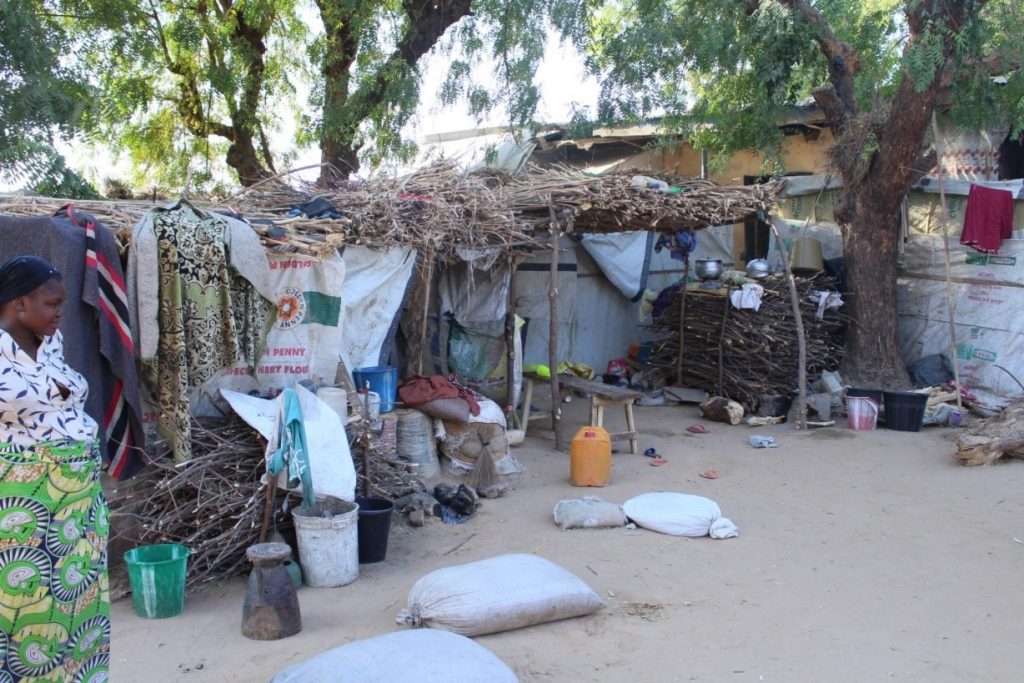
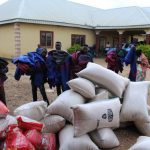
The Ekklesiayar Yan’uwa a Nigeria (EYN) Disaster Ministry visited two camps in Maiduguri. Shagari has 48 households and Cherubim & Seraphim has 65 households. The people are crowded into a small compound with 9-13 people sleeping in one 10X10 “tent” right next to the next one. There is often a lack of sufficient food for the camp, medical assistance is minimal, and many children are still not attending any school.

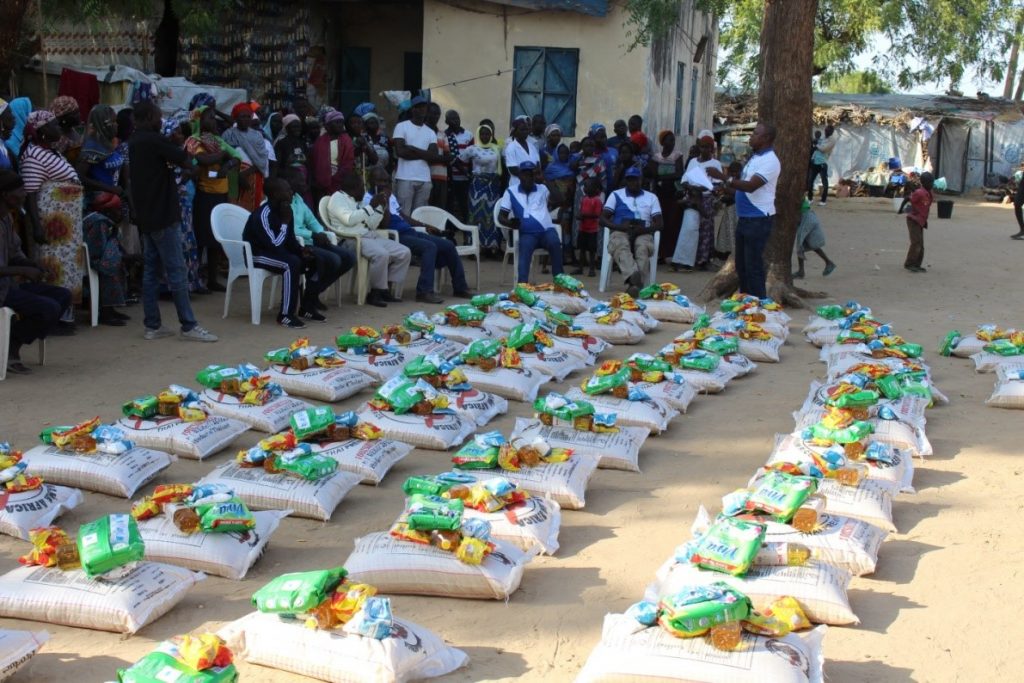
The Disaster Ministry registered the people at these two camps and brought food supplies.

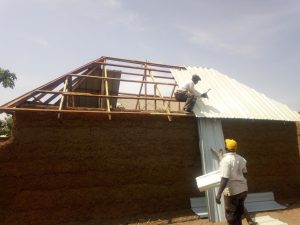
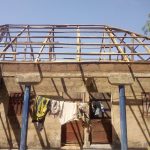
In the town of Dabna in Hong Local Government Area 60 houses were destroyed by the Boko Haram insurgency. The Disaster Ministry was able to put roofs on 27 of these homes. Not everyone can be helped but the church helps choose those who need the most help. Please continue to pray for Nigeria!

Pictures are by EYN Disaster Team
 

More than we can imagine

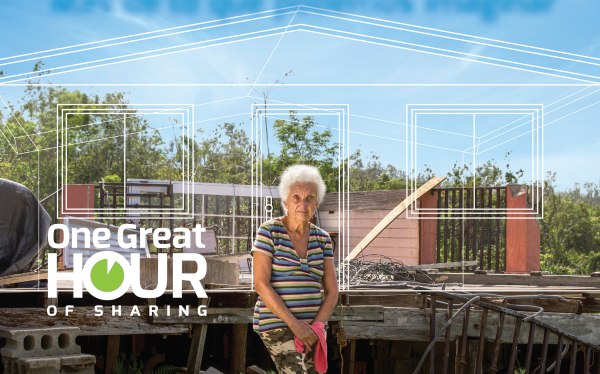
A theme interpretation written by Chuck Blaisdell for the 2019 One Great Hour of Sharing

“Now to God be the glory, who by the power at work within us is able to accomplish abundantly far more than we can ask or imagine” (Ephesians 3:20).

Imagination.

It may seem like a weak word compared to all the need we see every day in the world. We hear “imagination” and we may think “fantasy” (“Imagine you are on a beach…”), of something that escapes the reality of the world as it is. We hear “imagination” and we wonder if it is truly helpful when some would say we actually need clear-eyed “realism” to address the challenges that we face.

Imagination.

Yet far from being a light or weak thing, far from being an aloof or escapist notion, far from being un-real, imagination is actually among the most powerful engines for change that human beings have! Long ago, the philosopher Aristotle said, “Thinking itself begins in wonder, begins in imagination,” and he was right. Imagination, particularly when fueled by a vision of God’s hopes for all humankind, can keep us energized, seeking to do good, and striving to better the lives of those whom we encounter.

Imagination.

The theme for the 2019 One Great Hour of Sharing is “More than we can imagine!” It is rooted in Ephesians 3:20 and reminds us that we are not alone in our imagining a better world for all of God’s children. Indeed, it is God’s imagination that fuels and empowers ours! You see, God imagines a world where:

  • No one is left to face the wreckage of natural disasters alone.
  • Each person has their daily needs of food and water met.
  • Every individual receives the respect and dignity that they deserve.
  • Families displaced from their homes are able to build new lives.
  • Disciples of all ages grow in faith and share the love of God with others.
  • Pastors and leaders are equipped to care for the needs of their communities.
  • Churches serve as beacons of hope for all to see.
  • AND far more than we could ever ask or imagine!

God also imagines Christians all over the world coming together to help make these things ever more a reality for more and more people.

Our imagination of what could be is founded and grounded in that for which God envisions and hopes. And we can help! Through our gifts of treasure and talent, prayer and presence, we can make this world ever more like the way God would wish it, ever more the way that God would imagine it.

Find this and other worship resources for the 2019 One Great Hour of Sharing at www.brethren.org/oghs or give to the offering today at www.brethren.org/giveoffering .

(Read this issue of eBrethren.)

World Order and the Brethren

Ambassadors of Christ

Photo by Glenn Riegel

A reflection by Traci Rabenstein, director of Mission Advancement

“We are therefore Christ’s ambassadors,
as though God were making his appeal through us.”
~2 Corinthians 5:20, NIV

Even though we’ve entered a new year, I still find myself humming Christmas hymns. One chorus in particular has stuck in my mind:  “Go, tell it on the mountain, over the hills and everywhere. Go, tell it on the mountain that Jesus Christ is born!”  The message of the song is simple, but in its simplicity is a strong call to action for the church. It is a call that challenges us to tell everyone about the transformative impact that Jesus Christ has in their lives and in our world. We are challenged to share the good news with all who will hear it, even shouting it from the mountaintops.

In Paul’s second letter to the church in Corinth, he calls them to the work of serving as ambassadors of Christ. Prior to verse 20 in chapter 5, Paul mentions that our love for Christ should compel us to no longer see anyone from a “worldly point of view” but, instead, to see each person as a new creation in Christ. “The old has gone, the new is here!” (2nd Corinthians 2:17, NIV). And as “new creations,” we inherently become ambassadors of Christ. We are now called by Jesus to be his messengers.
“Go, tell it on the mountain, over the hills and everywhere!”

In the Old Testament, being an ambassador for the king was a significant responsibility and honor. When ambassadors entered another country, they were treated just as if they were royalty themselves, and not just simply representatives. Being ambassadors today may not be exactly the same, but they still have the responsibility of sharing a message of the one whom they represent. While we may not be thrilled at the idea of being compared to government officials, it is important for us to remember that we represent Jesus and the kingdom of God in a very similar way.

I believe we are on earth at the right time for the right purpose to fulfill God’s greater plan for all people. We are here right now to fulfill God’s will, to speak as “new creations” in Jesus, and to welcome the new creation ordained by  God’s kingdom. Some of us are called to be ambassadors within the communities where we live, work, serve, and worship. Others are ambassadors at the district level, where the message of God can be extended further through the ministries supported by congregations.

Through denominational ministries, staff work diligently on behalf of the larger church to be Christ’s ambassadors, where the message reaches across the United States and out into the world. Through Brethren Volunteer Service and the Office of Global Mission and Service, some are called as missionaries who accompany brothers and sisters to nurture budding churches in places like South Sudan, Democratic Republic of Congo, Rwanda, and Venezuela. Others witness to God’s message of peace and justice by speaking with local and national representatives with support from the Office of Peacebuilding and Policy. Some hear the call to grow in discipleship or to revitalize and strengthen local ministries, and respond by attending events hosted by Discipleship Ministries. While these examples only scratch the surface of the work coordinated by Church of the Brethren staff, they reveal the importance of serving as Christ’s ambassadors.

Each of us, in our “new form,” have been blessed with gifts and talents that allow us to uniquely represent God where we are. Whether you volunteer your time and talent, pray for our ministries without ceasing, or support the work of the church through financial gifts, you are serving as an ambassador of Christ. Come, let us  “Go, tell it on the mountain, over the hills and everywhere” that Jesus Christ is making all things new.

Learn more about the ministries of the Church of the Brethren at www.brethren.org or support them today at www.brethren.org/give.

(Read this issue of eBrethren.)

BCCN: Re-framing Creation Care

by Brethren Creation Care Network

Gus Speth, an environmental law professor, noted a failure of environmental policy to a group of evangelical leaders in 2006:

“I used to think that top environmental problems were biodiversity loss, ecosystem collapse and climate change. I thought that thirty years of good science could address these problems. I was wrong. The top environmental problems are selfishness, greed and apathy, and to deal with these we need a cultural and spiritual transformation. And we scientists don’t know how to do that.”

Speth’s confession for a spiritual transformation suggests that the Christian faith has an important contribution to alleviating ecological degradation. Most of humanity has forgotten that nothing in creation is owned – rather, it’s on loan to us from the One who created it all.

Humanity stands at a very crucial point in our history. Instead of being distracted by the politics of the day, humanity needs a metanoia moment (Greek phrase meaning “to turn around”), which requires a change of the heart. We believe Christian hope can inspire this change. It is not a passive hope – waiting for external agencies to bring about what we desire; but rather an active hope – partnering with God to bring about transformation over despair.

The Church of the Brethren has the opportunity to be partners with Jesus in living out his active hope to the world. The Brethren Creation Care Network (BCCN) is our avenue towards a Christ-centered ministry for the healing of creation. We can rise to the challenge of creation care by building a community of support through your energy and talents. Please contact Nathan Hosler to join BCCN at nhosler@brethren.org.

We would also like to highlight an upcoming retreat hosted at Camp Emmaus (Illinois). Outdoor Ministry Association Board members Jonathan Stauffer and Randall Westfall have come to believe that living attuned with God’s creation is essential to our discipleship with Jesus. In recent years, we have rediscovered just how attuned to creation Jesus was. He knew God’s wisdom came from these encounters and sought them out intentionally. He sought the solace of the wilderness, the sea, the mountain, and the garden to regenerate his ministry and mission. Jesus was drawing on a blueprint as old as creation itself.

As a result, Jonathan and Randall have crafted an innovative weekend retreat entitled “Cultivating a Verdant Faith.” Sessions will be held March 8 – 10 at Camp Emmaus in the winter retreat lodge and on trails. By exploring the four directions of eco-discipleship, along with bible study, worship, and group discussions; participants will unearth their relationship with creation in new and profound ways. Ages 18 and up, are invited to unplug and rediscover the eco-blueprint of faith that our Creator gave us.

If you’re interested in registering for this unique spiritual formation experience, please see this brochure. For further questions about the event contact Jonathan and Randall. CEUs will be available through Brethren Academy. (Note: Retreat limited to 25 participants.) They hope to see you at Camp Emmaus in March 2019!

Nigeria Crisis Response helps thousands in 2018


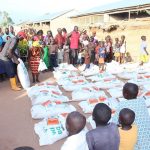
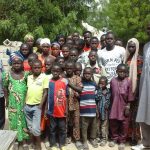
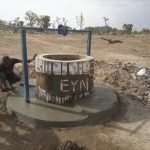
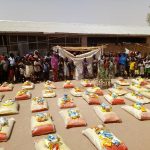
Pictured – Medical Assistance, Skills & Business training for widows & orphans, Fertilizer & Seeds, Trauma Healing, Education Assistance, Clean Water Sources, Food Distributions, Special Relief to victims of Fulani Herdsmen, and Home Repairs were all part of the relief effort for 2018. (Pictures provided from 2018 Reports)

19 food distributions were organized for over 2500 families. One woman who received food had been captured by Boko Haram in 2015 and was freed with help from the Nigerian Army in November 2018. She was so appreciative of the food and household items because once freed they had nothing.

6300 people received medical help and screening for Hepatitis B. The medical officer and assistants travel thousands of miles to hold mobile clinics for the Internally Displaced Persons (IDP’s) and this year they embarked on a screening and inoculation program for Hepatitis B.

169 homes were rebuilt costing about $1000 a home. This program is in high demand for all those whose houses were burned by Boko Haram. Only the most needy (about 20 per town) receive the assistance and the recipients must complete the walls before the Disaster Team provides the roofing.

Trauma workshops and counselling have been provided for around 500 people. This trauma awareness includes being able to tell their stories and is going a long way to help overcome the extreme trauma they have incurred. Forgiveness is emphasized and many who participate in a workshop go home and tell others so the healing is spreading.

The level of education in NE Nigeria has deteriorated over the past few years. Some schools were closed, some burned to the ground, and others used to house IDP’s. The Nigeria Crisis Response sponsors a boarding school, several learning centers and has provided school fees for more than 1000 children. Children of the IDP’s and many others still have not been able to go to school and more assistance is needed.

Most people in the NE survive by farming. The Response helped 2500 families  with seeds and fertilizer. This year the distribution was streamlined through the Districts. The District Leader from Mubi said the hardest thing is choosing who will receive the help when so many are in need. With 17 of his district’s 25 churches destroyed, the needs are overwhelming. A Soybean Value Chain project is also being sponsored with help from Global Food Initiative and Illinois Soybean Innovation Lab.

Good water sources are always in demand. The IDP camps all need to provide and maintain a water source. Some wells were destroyed by Boko Haram and other places have never had clean water. The Response provided 11 communities with wells/bore holes, helping thousands of Christian and Muslim households.

Widows and orphans must find ways to support themselves and their families. 5 skill training centers operated in 2018 graduating 269 students. Each student receives the tools necessary to start a business. In addition, 135 widows were give around $100 as start-up capital. Through the EYN Women’s Ministry, workshops have been held, literacy programs put in place and peace groups started. The influence of the women is growing throughout the society.

Numerous other activities were held during the year. Seminars were held for capacity building, the District Leaders received training in Disaster Preparedness, Yola IDP camp was fenced, Shaffa Theological Education by Extension office was repaired, a new vehicle was purchased, special relief efforts were organized for victims of the Fulani herdsmen attacks, 2 Tripartite meetings were held, a Muslim & Christian Peace conference was organized, joint church re-building workcamp were held in Michika, and much more. WHAT A  YEAR!

Please continue to pray for Nigeria.


Stitched with hope and love

By Matt DeBall, coordinator of Mission Advancement Communications
“My soul magnifies the Lord, and my spirit rejoices in God my Savior, for [God] has looked with favor on the lowliness of [God’s] servant. Surely, from now on all generations will call me blessed.” ~Luke 1:46b-48

Do you have a favorite blanket? Mine is a purple, gray, black, and white afghan that my wife made for me years ago, right after we started dating. I was on a mission trip at the time, and it was carefully crocheted with the hope of my safe return, and with love.

As experienced during Advent, Mary’s song is a beautiful stitch in the larger, intricate blanket of God’s story. God’s promise to bless her and to save Israel filled her with joy, and she sang a new yet familiar song, testifying to what God had done and would do.

The song of Mary echoes the sentiments of an earlier song. “Give thanks to the LORD….Sing praises to the LORD, [who] has done gloriously; let this be known in all the earth. Shout aloud and sing for joy… for great in your midst is the Holy One of Israel” (Isaiah 12:4-6). Mary and Isaiah both offered praise to God for past faithfulness, current presence, and future promise. Their eyes could not behold the fulfillment of God’s promises, but through faith, their hearts perceived God’s work as already complete. Their words are great for us to read (and sing) now because of all that God has done, is doing, and will still do in our midst.

As we reflect on this past year, God has surely done great things among us. Youth and advisors gathered at National Youth Conference to be challenged in their walk of faith. Church planters and others gathered at the New and Renew Conference for professional development and encouragement for the work of nurturing new disciples. Josiah and Christine Ludwick and their children began a year of service in Rwanda to preach, teach, and demonstrate a Brethren way of living. Brethren in Spain continued to add new congregations and expanded their membership. In Nigeria, Global Mission executive Jay Wittmeyer was present at the commissioning of a new EYN congregation at the Gurku Interfaith Camp for displaced people.  These are just a few examples of how your gifts helped add to our larger community blanket in 2018.

As you reach for your favorite blanket this winter season, please sing a song of thanksgiving for all that God has done through the Church of the Brethren, offer a prayer for the continued work of our ministries, and make a gift with hopeful expectation of what God will do. God surely has great things in store for us, and with God’s help and through your partnership, 2019 will be wonderfully stitched with hope and love.

(Read this issue of eBrethren.)

Continuing the work of Jesus into 2019

By David Steele, general secretary

Greetings in the name of our Savior born for us—the Messiah, our Lord!

On behalf of our worldwide staff, volunteers, and the Mission and Ministry Board, I want to express our gratitude for the many ways you faithfully strive to live out the gospel—to simply try to do what Jesus did. The vital ministries of Church of the Brethren members and congregations, small and large, are at the heart of our denomination. Your witness is essential in our partnership as we together herald the Good News of the birth of Jesus Christ.

As we close the year, we celebrate that our Brethren witness is meaningfully extended into new places and in new ways. The Church of the Brethren is seeking to become a Global Church of the Brethren. Our growth around the world and our commitment to deeper and more meaningful relationships are helping this vision become a reality as we enter 2019.

In August, Josiah and Christine Ludwick and their children began a year of service in Rwanda to preach, teach, and demonstrate a Brethren way of living. Their appointment is vital to the efforts of establishing a peace testimony in the Great Lakes region of Africa as they host theological education and training, assist in the construction of church buildings, and deepen relationships.

In Venezuela, the Brethren witness is growing but economic turmoil has prevented the placement of mission staff at this time. Global Mission and Service staff and volunteers travel there when possible and work with Venezuelan leadership to broaden the understanding of our church’s theology and practice.

Brethren in Spain continue to add new congregations and expand their membership. Many are immigrants, but Spanish citizens are beginning to take notice and come to services.

Haitian Brethren have proved themselves faithful again this year by reaching out to the suffering when an earthquake struck in the north of the country.

In Nigeria, Global Mission executive Jay Wittmeyer was present at the commissioning of a new EYN congregation at the Gurku Interfaith Camp for displaced people. The Nigerian Brethren also commissioned their newest church district in Lagos, with EYN now numbering 55 districts. The Nigeria Crisis Response continues to bring healing and hope to thousands of families displaced by violence.

Embracing Jesus’ call to go and make disciples has been at the heart of our ministries throughout this year.

Youth and advisors gathered at National Youth Conference to be challenged in their walk of faith.

Church planters and others gathered at the New and Renew Conference for professional development and encouragement for the work of nurturing new disciples.

The Discipleship Ministries team provided resource leadership at congregational and district events, web-based learning opportunities, and collaboration with Bethany Seminary for an Urban Ministry intensive in Atlanta.

For Brethren Disaster Ministries, loss of Paradise Church of the Brethren and most of the congregation’s homes ended an intense year of responding to disasters—including a rebuilding project in North Carolina that closed during Hurricane Florence but quickly reopened to help people affected by Hurricane Matthew. In Puerto Rico, our disaster response expanded into the mountains around Castañer, where a long-term home rebuilding project will continue through next year.

Children’s Disaster Services supported families affected by floods, hurricanes, volcanoes, shootings, and the Camp Fire that burned Paradise.

Together, we have shared hope and God’s love. God has enabled us to extend Christ’s mission, serving those in need both near and far, growing disciples, calling and developing leaders, and transforming communities.  Thank you for your partnership, your generous support, and your prayers. May we together continue the work of Jesus.

Learn more about the ministries of the Church of the Brethren at www.brethren.org or support them today at www.brethren.org/give.

(Read this issue of eBrethren.)