Youth Peace Advocate: Camp Ithiel

Camp Ithiel is by far the most diverse camp, ethnically and religiously, I have visited so far this summer. According to the program director, most of the kids who attend camp at Ithiel are not Brethren. (Not to say none of the campers were Brethren. (However, we did have a whole group from the Miami Haitian Church of the Brethren.) I really appreciated having the chance to work with campers and staff from a variety of different backgrounds and traditions.
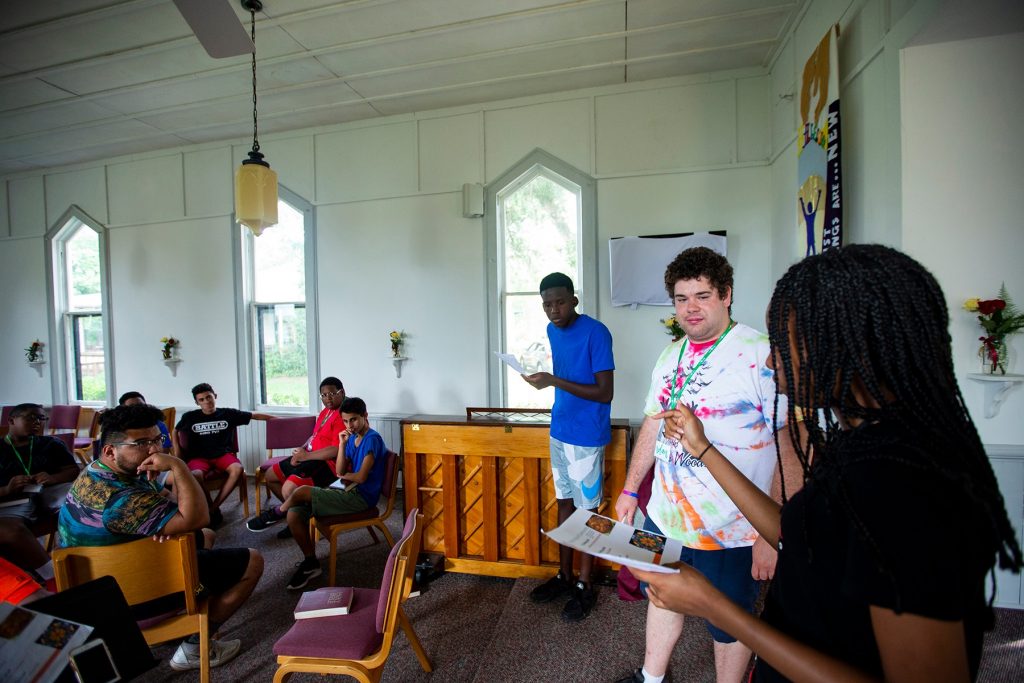
The camp is located in the middle of a well-to-do neighborhood in Gotha, Florida (near Orlando). It felt kind of weird to see large mansions just across the lake from the camp!

This week I led stations, part of a daily rotation for family groups. There were four groups and only three stations, so one of the sessions I led each day was extra-large and made of two family groups. This week was their Jr. High camp, and junior higher are a tough crowd to read. Yet on the last day, several campers thanked me for what I’d taught and asked if I was coming back next year. Something must have resonated!

This week I incorporated part of what Camp Brethren Woods developed for Shalom time, and I expect to continue doing so for the rest of the summer. It has been an adventure learning the “ins and outs” of each camp and what makes them each unique. I hope I am able to share other good ideas and traditions between them as I move towards the second half of my summer.

We only had one campfire, but had Vespers in the camp’s chapel  – which is also where the New Covenant Church of the Brethren worships on Sundays. We didn’t sing any of the silly/secular camp songs I usually enjoy leading, but had an excellent team of worship leaders. Two of the staff were charged with leading Vespers, and a couple of the councilors helped as well. I learned on the last day that they are part of a band named “Civilization of Worship” and are working on their first album. Here is a cover they released last Christmas (https://youtu.be/WF02_8LaFl8).

The dean for the week led Morning Watch overlooking the lake every morning. I appreciated getting the word and theme for the day into the campers’ minds at the start of each day. In some of the previous camps, I have not had the chance to see how the campers are engaging with the scriptures outside my sessions. As I had the mornings free this week, I appreciated having that chance to here. The worship leaders were very in-tune with the feeling of worship (orthopathy or “right feeling” if you’re like me and like big, theological words) and often provided underscoring for the reflections and prayers at Vespers.

At the same time we were there, Camp Ithiel rented out one of its buildings to a local Jewish day camp. A couple of campers struggled with sharing our space, but I apricated their presence. Although we did not have any sort of cross-over between the camps, it was good to see and hear them around.

The fourth day of camp is “Agape” and the scripture is John 13:1-17, that gospel’s account of the Last Supper and Jesus washing his disciples’ feet. The intended theme is “God’s Reconciling Love.” This week, Camp Ithiel, I choose to use the “Little Red Riding Hood/Maligned Wolf and M&M game” portions of Brethren Wood’s Shalom session. I felt the mediation lesson was important to share.

Loving God,

In your son Jesus you modeled for us what it means to serve one another and work for peace and reconciliation in this broken world. Grant that we may follow his example to love our neighbors as ourselves and be peacemakers in our own communities.

            In your son’s name we pray,

                        Amen.
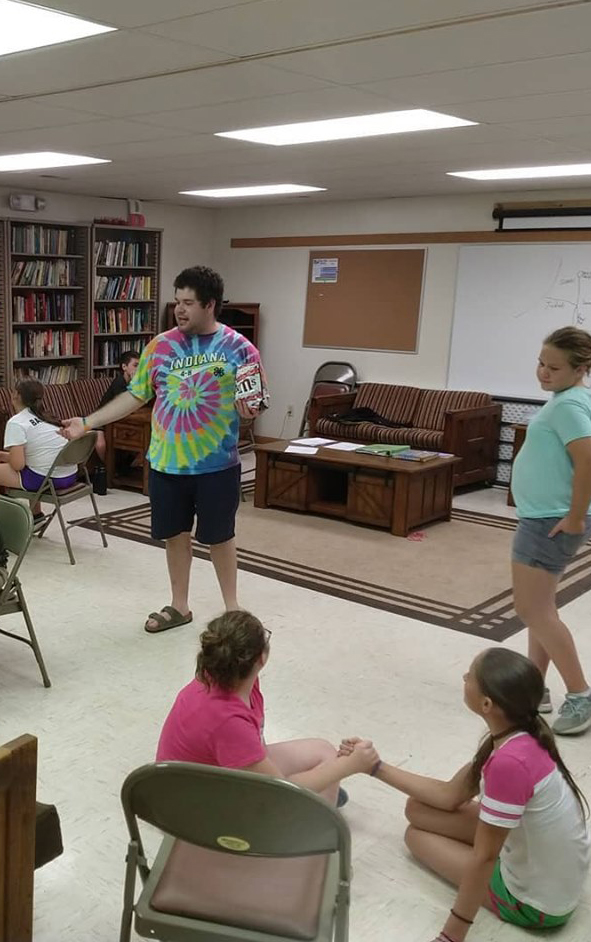
Youth Peace Advocate: Camp Brethren Woods

To be honest, I was a bit on edge the first couple of days at Camp Brethren Woods. While I root all my sessions in scripture and avoid getting too political, I am cautious as I learn the context of each new camp. For the first couple of days, I am unsure of how what I say will be received. As I got to know the staff, campers, and camp and after some conversations with my mentor for the summer, Ben Bear, I realized I shouldn’t have worried.

Brethren Woods has a tradition of Shalom Time which they asked me to lead, and has a curriculum for this session they developed with the Fairfield Center, a local organization offering mediation services. Using two retellings of Little Red Riding Hood, one from her perspective and one from the wolf’s perspective, helps to get kids thinking about how people can experience the exact same event and yet interpret it very differently.

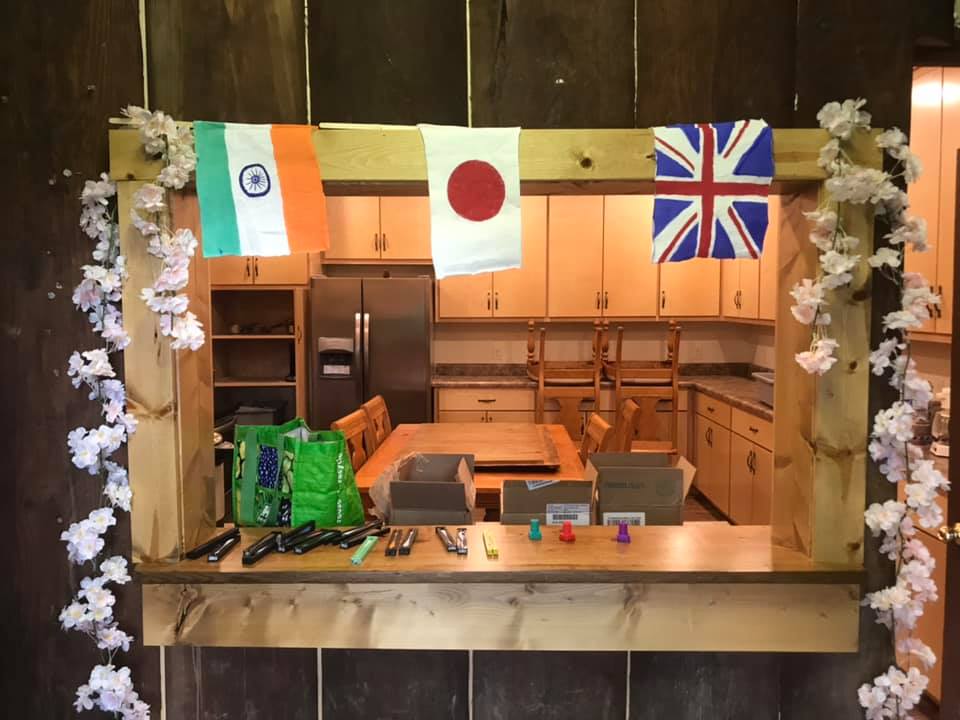
I also helped with several other activities around camp, including the water carnival and a geocaching session. One evening, the camp held a World Fair. The camp had three counselors from South Africa and one from the Netherlands. As an alumni for BCA’s Cheltenham program, I volunteered to represent the UK (as well as Japan and India) with teatime.

I was frustrated after the World Fair. One of my favorite parts of camp is campfires, and at Brethren Woods I looked forward to Vespers every evening. While we were cleaning up after teatime, one of the staff noticed the pile of unwashed dishes in the kitchen and asked that while we were cleaning all the cups from the tea that we wash those as well. I was frustrated because washing dishes isn’t in my job description and having to clean meant I would likely miss Vespers. The camp lifeguard called me out on my complaining, challenging me to remember I am serving this summer for the Gospel. It’s not about me – it’s about the campers. I should strive to serve cheerfully, even if I’m not doing something I enjoy. I tried to change my mood, and we finished in time to catch the very end of Vespers. On the way there we caught an amazing view of the sunset, which we wouldn’t have seen if we had left earlier.

The third day of camp’s theme is Shalom, the focus in on responding to conflict, and the scripture is Genesis 27: 1-26, the story of Jacob tricking his father Isaac into giving him the blessing Isaac intended to give to his brother Esau. In my session I take the story further to explain the how they later make up, but I also note that Jacob told his brother he’d meet him in Seir, but then headed to Succoth. We usually end the story when Jacob and Esau make up, but generations later the book of Obadiah records that Edom (the nation descended from Esau) is fighting and oppressing the defendants of Jacob. Jacob and Esau forgave each other but failed to solve their core conflict. Consequently, the conflict transferred to their children and later descendants. When I asked the Sr. High campers if they could think of any similar unresolved generational conflicts in the modern day, one brought up the Civil War. Regardless of individual perspectives about that conflict, it is still very relevant to our country’s conversations and struggles today. I’d suggest that the treatment of Native Americans and the legacy of slavery in the United States also reflects this Biblical narrative.

God of Jacob and Esau,

In the history of the decedents of Jacob and Esau, you show us the cost of failing to address conflict and passing it on to the next generation. Help us to see where these conflicts are present in our own lives, and to be discontent with thinking the past is none of our concern. May we strive to make your peace present in the world.

Amen

Youth Peace Advocate: Camp Blue Diamond

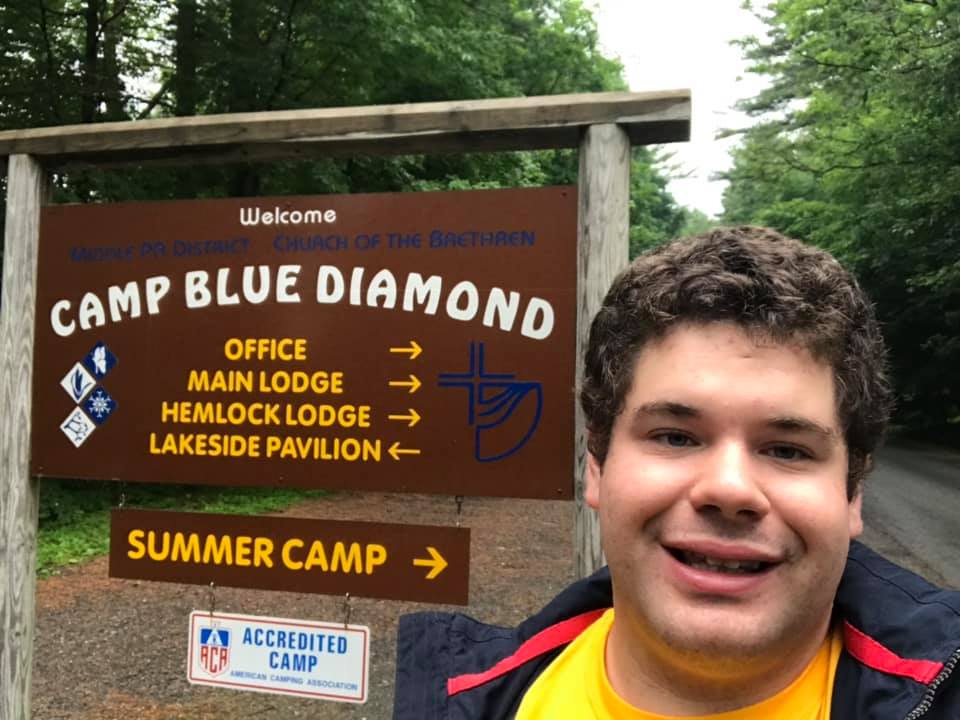
Each of the camps I have visited so far this summer have felt at once familiar and new. Located in the midst of a state forest, I was there for Camp Blue Diamond’s first full week of camp. Working with junior (elementary age) and junior high camp was a definite change of pace from senior high the week before. I got to lead sessions with each cabin group or unit, which combined with the different age groups meant I needed to make some changes and revisions to the outlines I had drafted the previous week and the way I presented my material. Nevertheless, I enjoyed my time in Pennsylvania.

 This week I really began to feel settled in as the Youth Peace Advocate. While changes were made and plans improved, I had a solid foundation to work from with what I developed in Camp Colorado. Because there were two camps there while I was, I only had two individual sessions with each cabin group.

Because each cabin group scheduled their time with me based on what fit best with their larger schedule for the week, I did have some lopsided days. Wednesday was also hike day, and I joined the Jr. High group taking Tussey Trail. I was warned it was the hardest, but figured after last week’s hike through the Colorado mountains I would be fine. That was a mistake. On the other hand, the view was amazing, and I got a chance to share some of my favorite camp songs with campers on the way down. (Their counselors were so happy I taught the kids “Cheese” and “The Green Grass Grew All Around.”) Another highlight was homemade ice-cream with one of the Junior camp groups.

The Sunday before camp started, I attended Stone Church of the Brethren on Juniata College’s campus, and got to see Connor Ladd, a friend and fellow Ministry Summer Service intern. Connor and I attended Camp Mack together, and he is a current student at Manchester University, where I just graduated from. We were also both involved with ROBOT (Radically Obedient Brethren Outreach Team), a group of Brethren students at Manchester students who lead worship at local congregations. I had met Ben Lattimer, one of the congregation’s pastors and Connor’s mentors for the summer together with his wife Cindy, during Ministry Summer Service orientation. It was good to see Connor and Ben again! It was my first-time visiting Juniata’s campus, and I was glad to see another Brethren school.

The camp curriculum’s theme for the first full day of camp is “Ubuntu,” a South African word that Archbishop Desmond Tutu defines it as “My humanity is caught up, is inextricably bound up, in yours… [A] person is a person through other persons… It is not, ‘I think, therefore I am.’ Rather, I am human because I belong. I participate. I share.”[1] The scripture passage of the day is 1 Corinthians 12:1–27, Paul’s description of the church as the body of Christ made of many different members. In the camps we have been using this day to build our camp community for the week.

In the session I have run these first two weeks after meditating on a portion of the scripture passage, I ask the group to consider the pros and cons of four different metaphors for community. I ask them to think of community as: a melting pot, where those who enter in melt into and conform to the dominant group; a boiling gumbo, where each person keeps their own individuality and contributes to a greater whole although there is tension and conflict; a seven-layer salad, where the individuals keep their identity and contribute but there is a hierarchy where some are valued over others; and a kaleidoscope, a unified whole where differences are valued and no part is more important than any other. While each metaphor has limits, I have been intending to lead the conversation to the kaleidoscope as the best model but have been surprised by the number of times so far when the campers have suggested the gumbo or melting pot as the best. What do you think? The session ends the campers making a web of yarn, telling each other something they appreciate about and/or how they see God in each other.

Loving God,

            In the scriptures it says you gather your children under your wing like a hen gathers her chicks. Gather us together into one community that we may come to know, love, and serve each other following the example of Jesus, in whose name we pray,

Amen.

[1]  Desmond Tutu, No Future without Forgiveness (New York: Doubleday, 1999), 196, 197.

Youth Peace Advocate: Camp Colorado

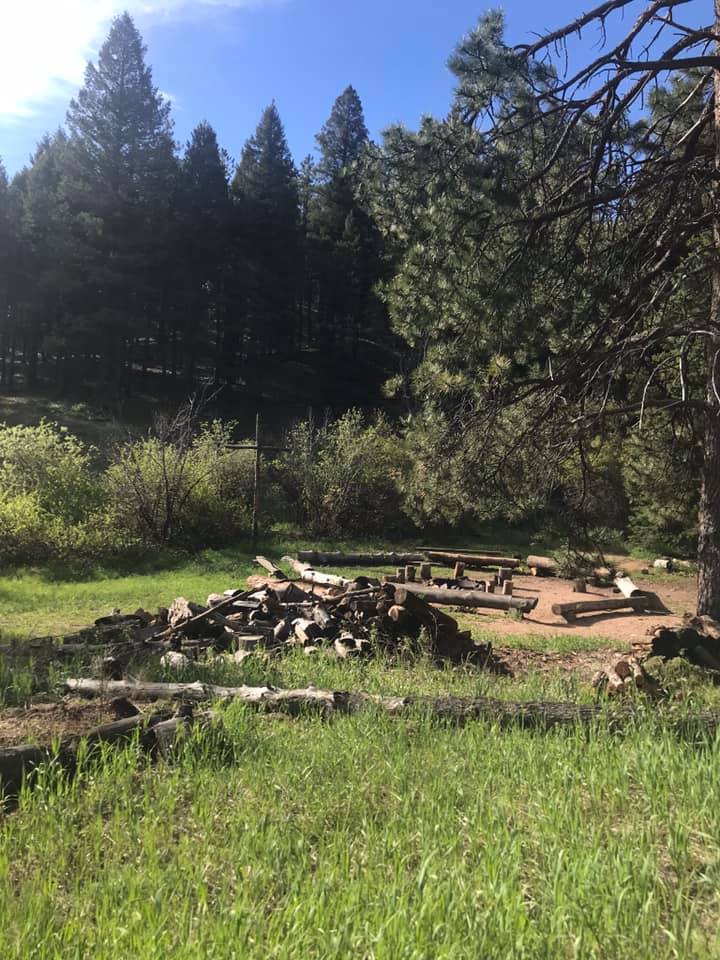
The campfire circle (more than a mile high!) at Camp Colorado.

A friend of mine who was raised Catholic once compared attending an Anglican worship service to someone coming into your house and rearranging all the furniture. I think this is an appropriate metaphor for my week at Camp Colorado. The basic format was very familiar from my years as a camper and councilor at Camp Mack, but Camp Colorado also has its own distinct identity. I have the sense this will be a continuing pattern this summer.

As someone who enjoys ritual and liturgy, I appreciated that on Sunday night for the first campfire of the week we celebrated the ordinances of communion and anointing, though I’ve never used chocolate chip cookies for communion bread before. We also celebrated communion with fruit snacks later in the week. I was prepared to learn new camp songs and different variations on familiar ones, though as someone who loves leading campfires it was a little it felt weird to be the one who didn’t know the songs.

Camp Colorado has a beautiful campground located high up in the mountains in the midst of a national forest. It had been built up as one of the most beautiful Brethren camps and did not disappoint. On Tuesday we hiked to the to the top of Devil’s Head nearby. It was a long hike that I certainly wasn’t prepared for, but the view from the top was breathtaking. By making it to the lookout station I officially joined the “Ancient and Honorable Order of Squirrels.” (I would have thought that was headquartered at Manchester University, but apparently not.) Thursday, we had a chance to swim in a nearby river. The water was ice cold, unsurprising given the river starts with melted snow from the mountaintops. I did eventually submerse myself, though it took a while. One of the campers was kind enough to warn me against leaning my elbows on the table during meals unless I wanted to run around the main lodge.
           

Camp Colorado was a great place to start my journey as the Youth Peace Advocate. This week was their Sr. High camp, and we had set aside “Peace Time” every full day of camp. Highlights included making a web of yarn while sharing with each other what we appreciated about them/how we saw God in them, playing charades with the camper’s ideas of how they can work for peace in their communities, and making skits that adapted the parable of the Good Samaritan to the modern day. When things were drawing to a close they told me that despite only knowing me for a week, they felt like they had known me their whole life.

The word of the day for the first day of camp curriculum this summer is “Aloha.” The scripture is Luke 14:15-24 (The Parable of the Great Banquet), and the theme is hospitality. May we remember to never be too wrapped up in our own lives to ignore what God is calling us to, and to welcome and love everyone we meet just as he welcomes and loves us.

            Abundant God,

            Your kingdom subverts the powers and expectations of this world. You provide a place at the table for everyone, not because of what they have done but because of who you are. Help us to live out your example, especially among those we would rather not share the meal with.

            In your son Jesus’s name we pray,

            Amen

The powerful name of Jesus


By Traci Rabenstein, director of Mission Advancement

“When Peter saw [how they responded to the man being healed], he addressed the people, ‘You Israelites, why do you wonder at this, or why do you stare at us, as though by our own power or piety we had made him walk? The God of Abraham, the God of Isaac, and the God of Jacob, the God of our ancestors has glorified his servant Jesus, … but you rejected the Holy and Righteous One. . . . Repent therefore, and turn to God so that your sins may be wiped out’” (Acts 3:12-19).

What a commotion there was when Peter and John visited the temple in Jerusalem. The people were filled with disbelief when Peter healed the lame man by simply declaring the name of Jesus. We know that the Holy Spirit had just descended on the believers at Pentecost, giving them the ability to perform miracles like Jesus. However, it seems that many of the people at the temple hadn’t gotten the memo and wondered, “How can this be?”

Peter seemed caught off guard by their reaction and questioned why they were marveling at him and John when it was the name of Jesus and the power of God that had healed the man. Through faith in Christ, the disciples received the Holy Spirit, and because of that same faith, the lame man was healed.

Despite clear explanations in life, just like the one that Peter gave, don’t we still ask, “How can this be?” Our Lord Jesus Christ gave selflessly of himself, suffered and died, and was raised. Do we believe in the powerful name of Jesus and are we open to receive the healing that it brings? Do we fully embrace the protection and the comfort that believing in the risen Savior gives to us?

There are moments when our faith holds strong and we believe whole-heartedly that the Holy Spirit of God is active in our lives and in our world. On those days, we walk taller and with confidence in the name of Jesus. However, we also have moments and days when we are plagued with doubt. When things go wrong, when we can’t see a way out, or when it seems like things couldn’t possibly get any better, we sit in disbelief at what is happening around us.

I sit in disbelief because it has been five years since the girls of Chibok were kidnapped. While we rejoice for those who have been restored, we are still saddened by those who haven’t. I sit in disbelief that it has been nearly 10 years since the first insurgency of Boko Haram occurred against the Ekklesiyar Yan’uwa a Nigeria (EYN, Church of the Brethren). I sit in disbelief that people take pride in our nation because it started with influence from the Christian faith but they also struggle to be kind and loving to others.

Despite everything that prompts disbelief, we can stand with hopeful expectation of when Christ will return to usher in the next phase of God’s plan for all of creation. Peter reminded the people of why Christ entered the world, and even though some who were sitting in the temple that day were part of the crowd who sentenced Jesus to death, they still had the opportunity to repent and accept the healing and transformative power of God. With Christ’s death and resurrection, our sins were wiped away, and, through believing in Jesus, we are healed.

It is wonderful to trust in the name of Jesus. It is exciting to serve in a church where we show the world another way of living. It is empowering to know that the same Spirit that resided in the risen Savior resides in you and me. The question and challenge we have is: what will we do with this power?! Will we sit and do nothing? Or will we evoke the name of Jesus and continue his work?

May God give us strength and wisdom to persevere through disbelief, and may the Holy Spirit open our eyes and hearts to do mighty works in the powerful name of Jesus.

The ministries of the Church of the Brethren are carried out in the name of Jesus. Learn more about them at www.brethren.org or support them today at www.brethren.org/give.

(Read this issue of eBrethren.)

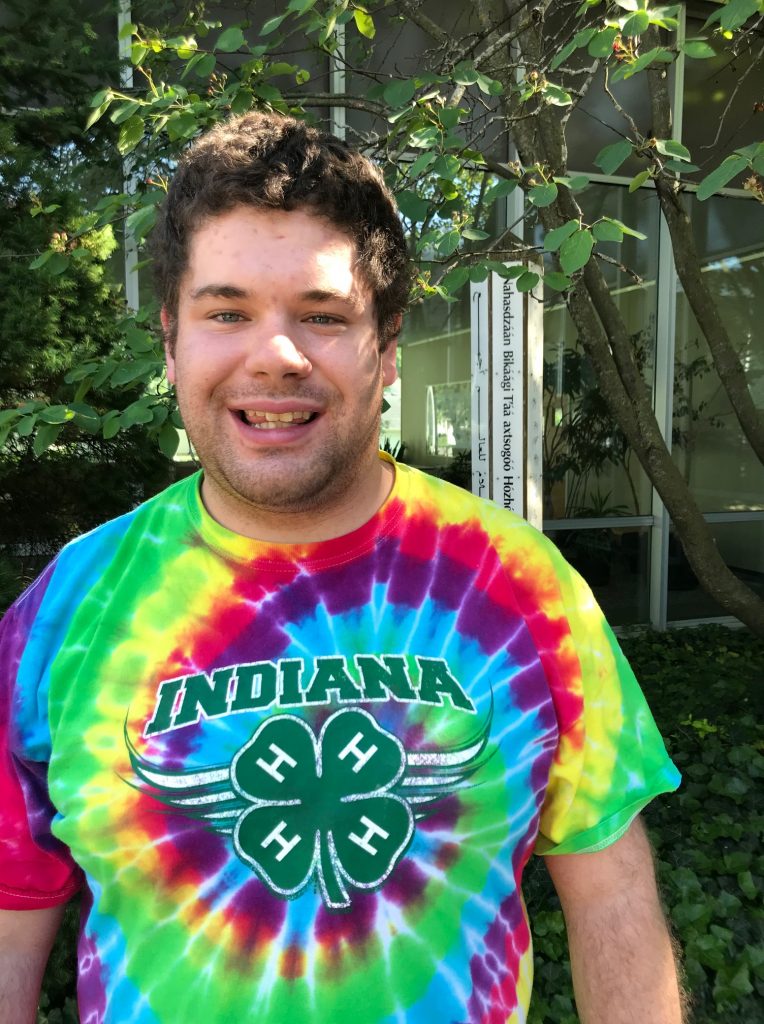
Meet 2019 Youth Peace Advocate: Nolan McBride

Hi! I’m Nolan McBride, and I will be the Youth Peace Advocate this summer! I am extremely excited, as I have wanted to be on the Youth Peace Travel Team since they visited Camp Mack when I was a camper. Having just graduated from Manchester University (with a double major in History and Religious Studies with a concentration on Social Justice and a minor in Peace Studies in case you were wondering), I am finally getting the chance to live that dream this summer!

I am from Elkhart, Indiana, and am a member of Union Center Church of the Brethren in Nappanee, where Frank Ramirez is the pastor. Just over a year ago I became bi-denominational and also worship at St. David’s Episcopal Church in Elkhart. Camp Alexander Mack is my home camp, and I’ve been going there all of my life – literally! I am a triplet, and my sister Jamie and brother Alex are both working at Camp Mack this summer. In college, I was active in the A Capella Choir, theater department, Simply Brethren (the Brethren student group on campus), and the Campus Interfaith Board. I also spent my Junior year studying abroad at the University of Gloucestershire in Cheltenham, England. I also contribute to the Dunker Punks podcast. (My episodes are 39, 52, 65, and 79 if you want to hear my voice!)

As Youth Peace Advocate, I am being sponsored by the Church of the Brethren’s offices of Youth and Young Adult Ministry and Peacebuilding and Policy, Bethany Theological Seminary, On Earth Peace, and the Outdoor Ministries Association. I will first go to Camp Colorado, followed by Camp Blue Diamond, Camp Brethren Woods, Camp Ithiel, Camp Alexander Mack, Camp Brethren Heights, Camp Emmaus, and finally Camp Pine Lake.

Peacemaking and peacebuilding is central to my understanding of the teachings and example of Jesus. I hope to be able this summer to encourage campers engage with the scriptural foundations of the Brethren’s peace witness, and help them understand that peacebuilding is not simply the absence of violence, but actively pursuing nonviolent methods (which are statistically more effective and quicker than violence) to address and transform the injustices in our world. To that end it is convenient for me that the camp curriculum this year is “Peace Works,” which focuses specifically on the Biblical foundations of peacemaking, especially as practiced by Jesus.

Recently, I’ve be preparing for the summer – first with Youth Peace Advocate orientation, followed by Ministry Summer Service orientation. I hope you will enjoy following along this adventure with me!

Home Repairs, Security Wall, and Emergency Food Distribution in May

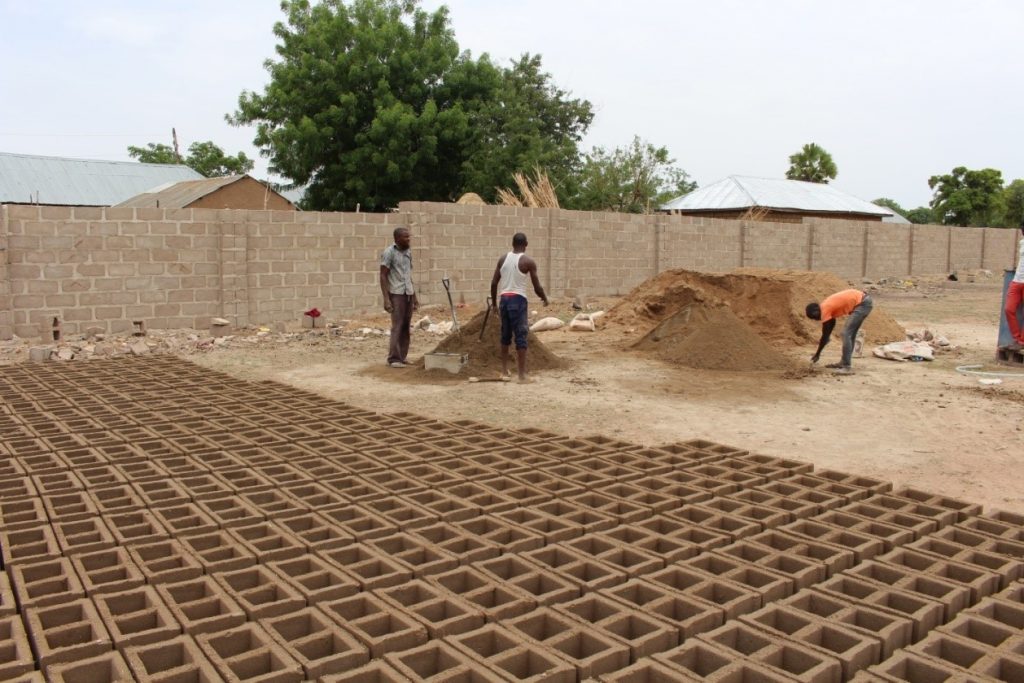
With security still an issue, the Disaster Ministry continued working on a wall to surround the EYN National Headquarters and Kulp Theological Seminary. The wall is the first line of defense against a Boko Haram attack. The work consists of molding the cement blocks, digging and laying a foundation, and finally cementing the blocks together for the wall. Taking some tips from Brethren Disaster Ministry in America, they are utilizing volunteers for much of the work and local masons for the rest. One difference between American and Nigeria is that in Nigeria the volunteers are considerably younger (average age of 30 instead of 70). The project is progressing as planned.

Blocks molded for the security wall

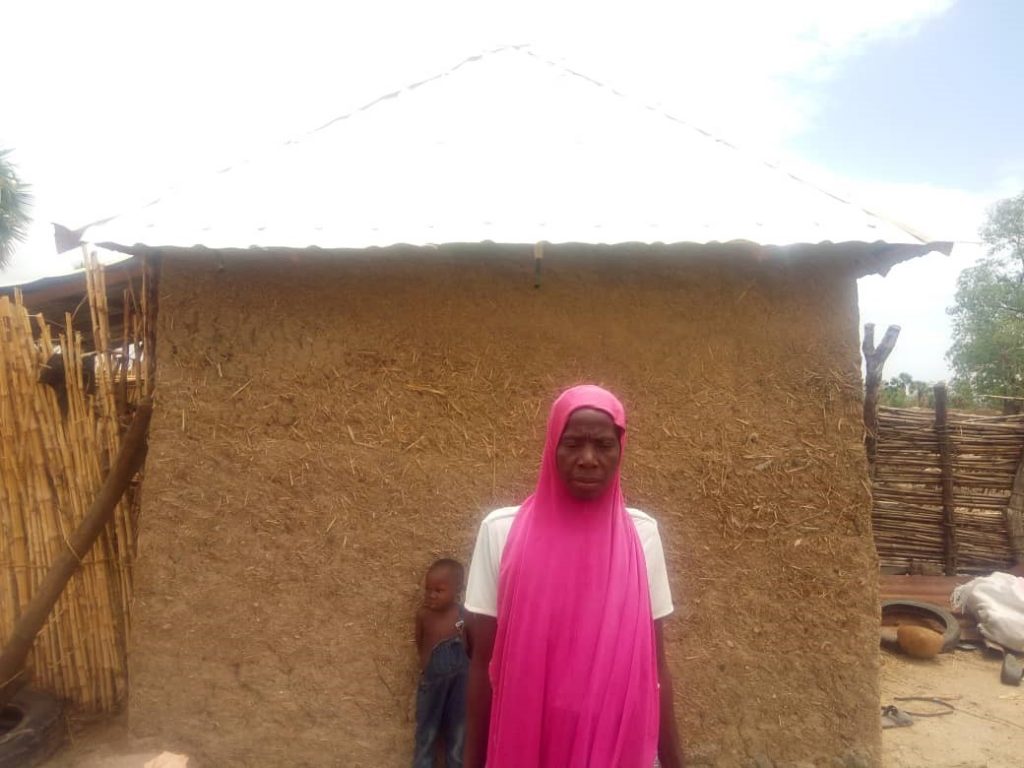
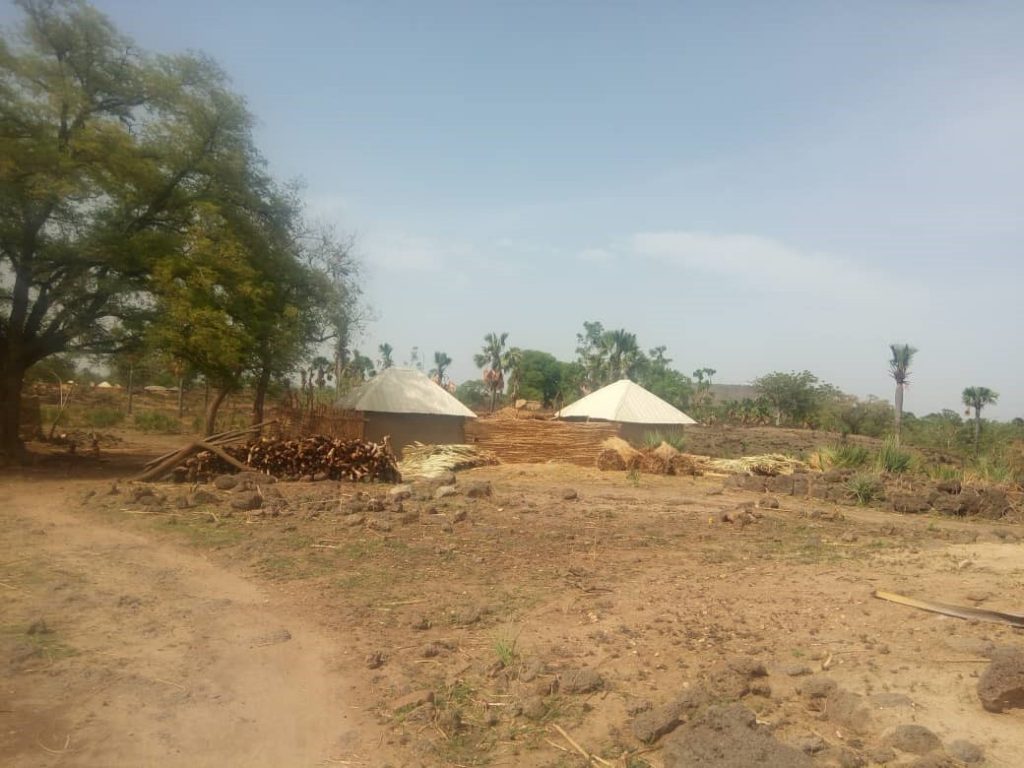
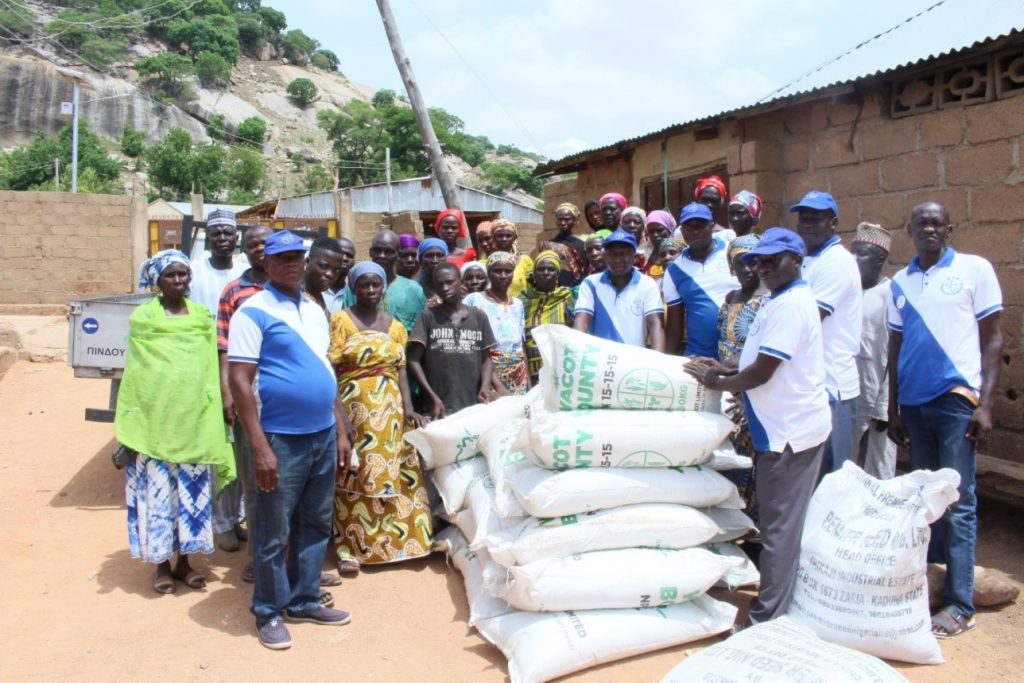
Home repairs also continued in May. It is best to get the repairs done before the rains come in June – October. The latest roof repairs were completed in Tsakasimta, a village in a remote area near Biu where 90% of the homes were destroyed by the Boko Haram. 29 rooms were roofed for those selected as most vulnerable. The beneficiaries of the new roofs were so happy and appreciative while others only slightly less vulnerable cried because their still unlivable homes were not chosen.

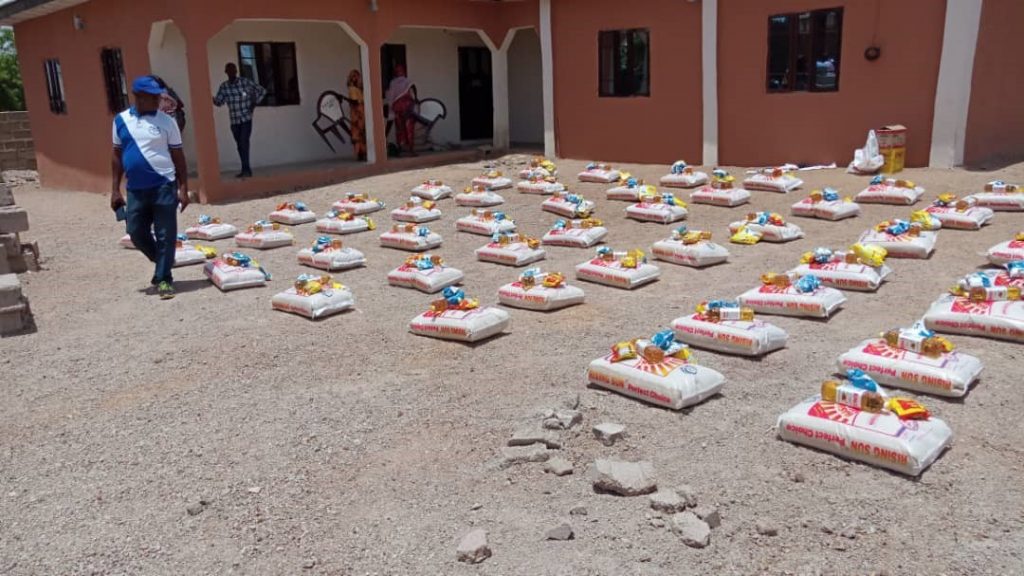
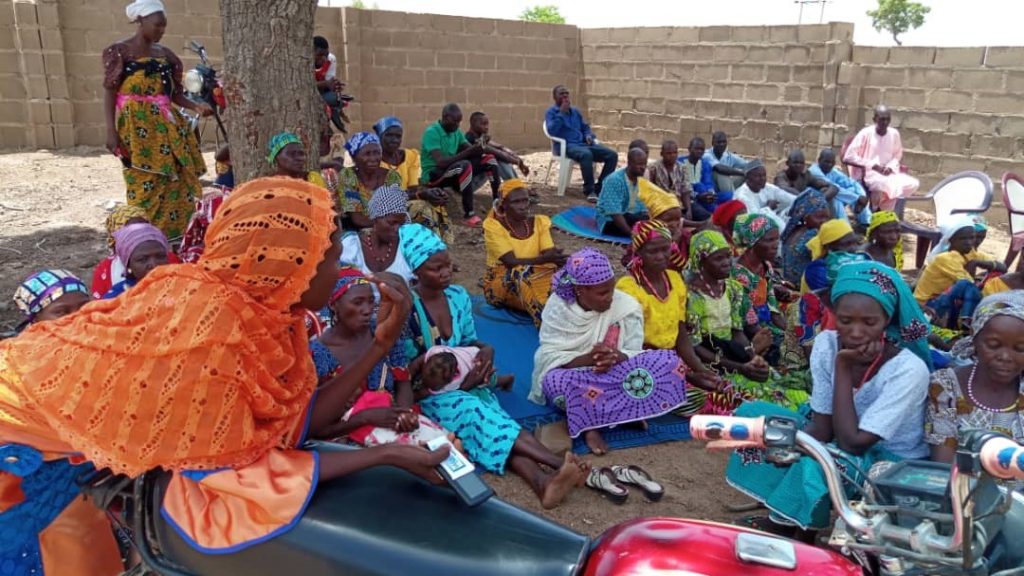
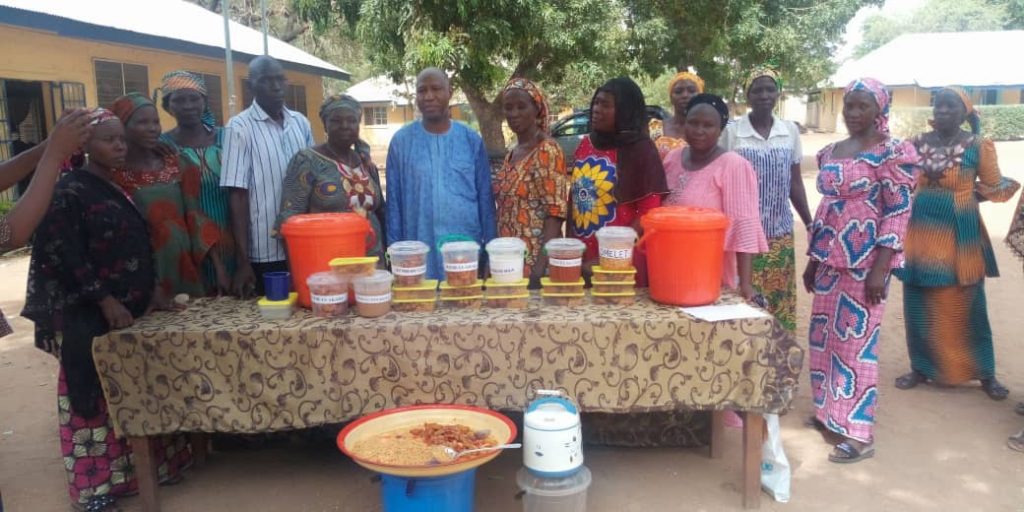
Following recent Boko Haram attacks, a special relief of food and supplies was carried out to displaced person who gathered in the Yawa District. 67 households were assisted with rice, oil, spices and detergent. Many of the displaced have still not been able to return to their homes to asses the damage and to plant for next year.

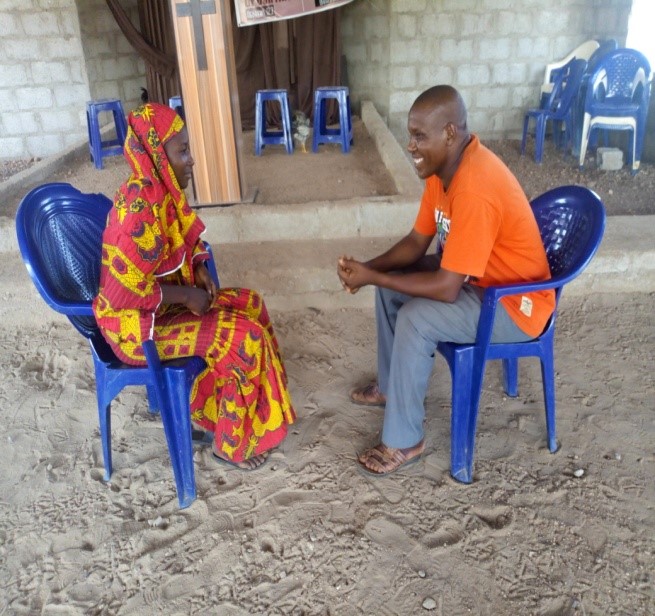
As violence continues, dealing with Trauma is ongoing. One-on-One counseling allows people to share their stories, forgive the perpetrators of the crimes and continue with life.

Saratu shared, “I am a widow, my village was attacked and I witnessed the slaughter of my husband and 8 others. In addition 16 women and 7 children were abducted by the insurgents. I narrowly escaped and lived on the mountain under severe hardships for 4 months. I thought my world had come to an end but after this one-on-one counseling, I know that life must continue and I am regaining my strength physically, emotionally and spiritually. I have also forgiven the perpetrators and pray that God will one day call them to salvation.”

Saratu continues healing following One-on-One Trauma Counseling

Additional Activities in May


God is here

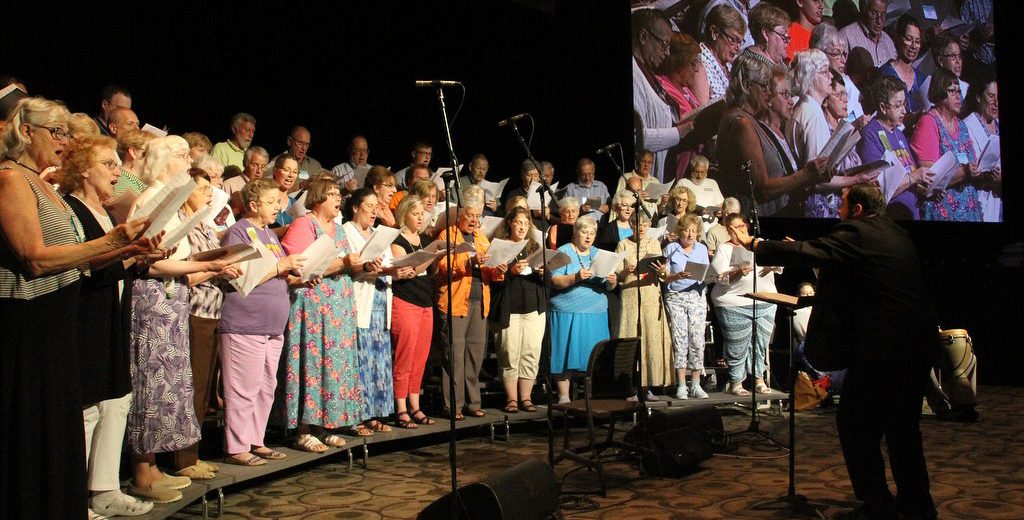
Choir singing - Annual Conference
Photo by Regina Holmes

A reflection by Becky Ullom Naugle, director of Youth and Young Adult Ministries

“Our Father in heaven, reveal who you are. Set the world right; Do what’s best—as above, so below. Keep us alive with three square meals. Keep us forgiven with you and forgiving others. Keep us safe from ourselves and the Devil. You’re in charge! You can do anything you want! You’re ablaze in beauty! Yes. Yes. Yes” (Matthew 6:9-13, The Message).

It’s a non-traditional lullaby, but the song “Called or Not Called” is one of my go-to songs when my newest son needs comfort. Holding him, I step and turn, back and forth, singing Shawn Kirchner’s version with the noted “gospel swing”:  “Called or not called, God is here. Named or unnamed, known or unknown, seen or unseen–God is here.” The song soothes both of us. Being reminded that God is here, bidden or unbidden, is good medicine for a weary momma.

I’m always looking for good medicine, this balmy music. No, not music about sunny weather and gentle breezes, but music that heals my heart and renews my courage. You probably also have your “old favorites,” and are searching for new ones, too.

I recently discovered a new piece of choral music that made me cry the first time I heard it. I don’t know how I found the song “Baba Yetu,” but I loved it! (Here’s one version as sung by the choir of Stellenbosch University, the oldest university in South Africa.) It stirred my soul and I played it again as soon as it was over. Then, I learned that “Baba Yetu” is “the Lord’s Prayer” in Swahili. How had I not heard this song before? The “Lord’s Prayer” isn’t new material, I’ve been around church-y spaces for a few decades, and even sung in a choir or two. I was intrigued! Research seemed in order!

My next discovery dampened the excitement:  “Baba Yetu” is not a traditional African hymn. Its genesis? An American composer, Christopher Tin, wrote it … as the theme song … for a video game. Seriously? I wanted an epic history, as lyrical and inspiring as the music, and I didn’t want to have concerns about cultural appropriation.

Composer Christopher Tin was a fan of the video game “Civilization,” which was created by one of his former college roommates at Stanford. The game’s objective is to “Build an empire to stand the test of time.”

Others too, however, have found “Baba Yetu” inspiring. In 2011, it won a Grammy, making it the first piece of music composed for a video game to do so.

It’s absolutely fascinating to me that the text of the “Lord’s Prayer” would be used for the introductory music of a video game. I didn’t do enough research to learn why this happened–or how many people took notice–but as I sat with this odd fusion of religion and culture, ancient and modern, I grew less annoyed and more appreciative. Why not share a great piece of modern sacred music with unsuspecting secular culture? Isn’t this the call of Christians in every generation:  to rephrase God’s truth using contemporary tools? “Baba Yetu” is probably the closest contact some folks will ever have with the “Lord’s Prayer.” Shouldn’t I acknowledge and celebrate this? Glory be to God for finding a clever and cool way into the lives of so many! Known or unknown, God is here. Called or not called, God is here!

Just like it does for me, I hope “Baba Yetu” puts a bounce in your step!

Learn more about Youth and Young Adult Ministries at www.brethren.org/yya or support them today at www.brethren.org/givediscipleship.

(Read this issue of eBrethren.)

Boko Haram continues “Tactic of Fear”

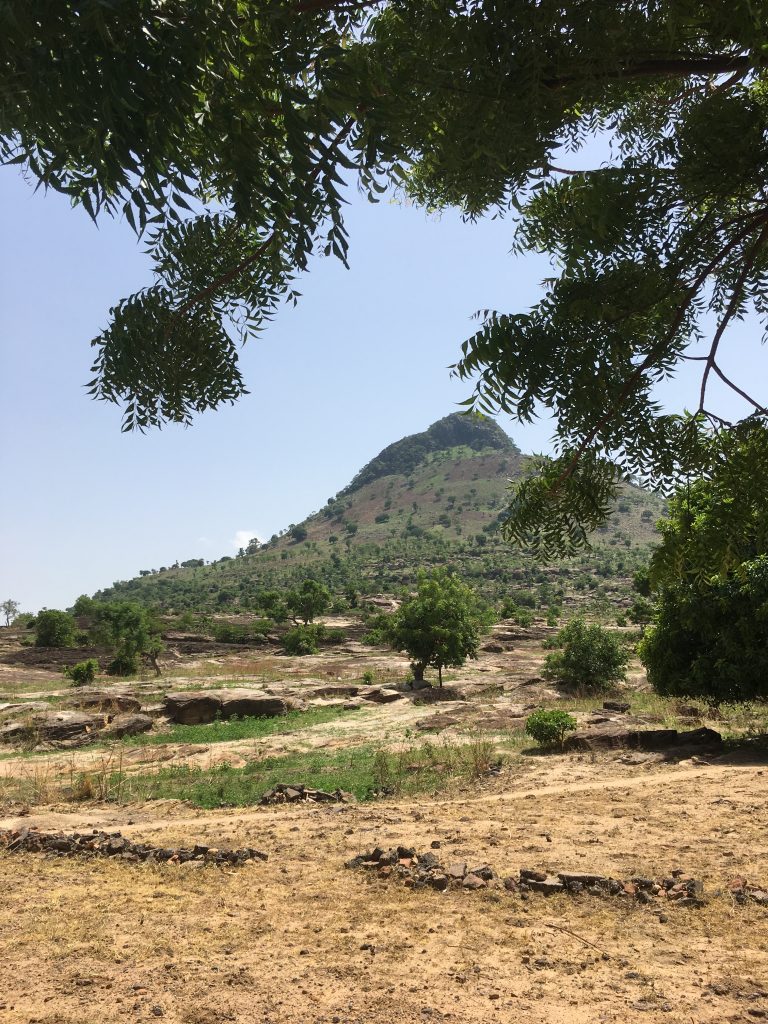
In May, Boko Haram (BH) attacked the villages of Lassa and Dille. These villages are just 30 miles from the Ekklesiyar Yan’uwa a Nigeria (EYN) headquarters. They attacked Lassa late one night and Dille the next night. In Lassa the BH burned shops and businesses and in Dille they destroyed people’s food supplies.

Northeast Nigeria
Northeast Nigeria

We received the following information from a young correspondent, Joshua, who has relatives in Dille but whose family home is in Uba. Vigilantes (local persons who help with security) posted on a high hill near Dille, saw the Boko Haram approaching the town. They were about 5 miles away. They immediately informed the military stationed there so they could go out and stop the attack. But the military said they had to wait until they entered the town. So, the vigilantes went around the town from house to house warning families that the Boko Haram were coming. Most families picked up and ran to the bush or to nearby villages. One mother and her three children didn’t get out in time and spent the night listening to the attack but remained unharmed. The next day, they ran to Uba to stay with her relatives.

Another man escaped from Dille after being held by the BH for a few hours. He was released and told to run away because, “Our contract is not to kill people but to keep them from farming.” It seems the Boko Haram tactic is to keep fear alive. Through these random attacks, everyone is afraid their village will be next. If people are too afraid to go out and farm, how will they survive the next year?

Our correspondent said there were 30 relatives staying at his family home in Uba. When we asked how they provide food for so many, he answered, “We give what we have and then we rely on God to provide.” The 30 people will stay for a day, or a week or until they feel it is safe to return to their hometown of Dille.

Fear paralyzes people, it wears them down, it causes health problems, it is what Boko Haram feeds on. Rev Yuguda, Director of EYN Disaster Ministry shared, “The security situation is getting worse in our region. People have fled these communities (Lassa and Dille), while the neighboring villages are living in panic. We only trust and depend on God for his mercy.”

Continue to pray for the situation in Nigeria.

Correspondent, Joshua, at family home in Uba – with his parents
and Carl & Roxane Hill

Sunday morning stewardship

Excerpted from a reflection by Grace Duddy Pomroy, senior financial educator and content developer at Portico Benefit Services, co-owner of Embracing Stewardship, LLC, and member of the Ecumenical Stewardship Center Board of Directors

When I graduated from college and went to seminary, I hoped to find a church with a contemporary worship style and more casual liturgy, bursting at the seams with young adults. The first Sunday that my friend and I went out church shopping we decided to visit a church representing quite the opposite of my wish list—a historic church with traditional liturgy and organ music and where the median age was about 70.

While the church was beautiful, I was prepared to dislike it and resume our search again the following week. However, as the service unfolded, my heart was softened. The organ music was beautiful, the worship space was unlike any I had ever seen, and the preaching was engaging; but what impressed me most was what came after worship—the fellowship. As my friend and I worked our way up the center aisle to greet the pastor (and get on our way to brunch), we were stopped countless times by church members who seemed genuinely curious to get to know us. What brought us here? What were we studying in graduate school? Where did we live? They saw us not as much-needed able-bodies (and additional financial support) to serve this small congregation but as people whom they could welcome into this tight-knit but ever-expanding community. I don’t think I have ever felt more welcomed in my life! Despite our protests, we were ushered into the fellowship hall for snacks, coffee, and more conversation.

Intergenerational stewardship begins with the belief that we all have something to give and we all have something to receive. Age doesn’t matter, and in many ways, neither does wealth. Just because I was in my early 20s, I wasn’t any more or less valuable than the 70-year-old women I would serve alongside. We all have something to learn from one another.

As a small congregation, we needed each other. There was a deep belief that everyone had something to give and something to receive, no matter their age, and that was something to be celebrated. Everyone was encouraged to participate. On Sunday morning, people of all ages would take part in every aspect of the service from singing in the choir to lighting the candles before worship. The attitude that all were welcome was held together by a pervasive sense of humor and a laid-back approach to high liturgy. Participation was more important than perfection. And with the Spirit’s help, as we each offered our gifts, we made it happen Sunday after Sunday.

A year later when I was invited to serve as stewardship chair, I wanted to keep this same generous, intergenerational spirit alive. I chose a stewardship committee that reflected where the church was and where it wanted to be. Each person was invited specifically for the gift they would share: a pastoral intern for teaching and preaching, a book editor for editing communications, and a long-time member of the church for thanking people. Our ragtag group spanned the age spectrum, but we each had gifts to bring. Whenever we met, there was a spirit of mutual respect, generosity, and learning that pervaded the space. Together, we led an annual stewardship response program and started a year-round stewardship emphasis.

When people think about intergenerational stewardship they often see it as a new initiative to bring to their congregation. But what I found in the congregations I’ve attended, and the many I’ve visited over the years, is that it’s already there. It’s present in the variety of ages involved in collecting the offering, serving their community on Saturday morning, and giving generously.

Take a look around: Where is intergenerational stewardship already present in your congregation? What can you learn? How might you name it as stewardship?

This reflection was originally featured in the new digital format of Giving magazine produced by the Ecumenical Stewardship Center. Find stewardship resources for you and your congregation at www.stewardshipresources.org.

(Read this issue of eBrethren.)