EYN Devotions February 22-28, 2015

DAILY LINK WITH GOD 2015EYN Devotions graphic
A Daily Devotional Guide from the
EYN (Church of the Brethren in Nigeria)

EYN leaders in Nigeria believe prayer is one of the most important ways to support the Nigerian people and the Church.  These daily devotions were written by EYN members and published by the Church of the Brethren in Nigeria. Reading them daily is a powerful way we can be in solidarity and connect with our brothers and sisters caught in this crisis.  EYN’s daily devotional for 2015 will be posted a week at a time on this blog, appearing mid-week for the following week. More information about the crisis can be found at www.nigeriacrisis.org.

Click on this link for the EYN Devotion Blog Feb 22-28, 2015

Stories from Nigeria: Disempowerment as an IDP

Disempowerment as an IDP – Asabe

ASABE

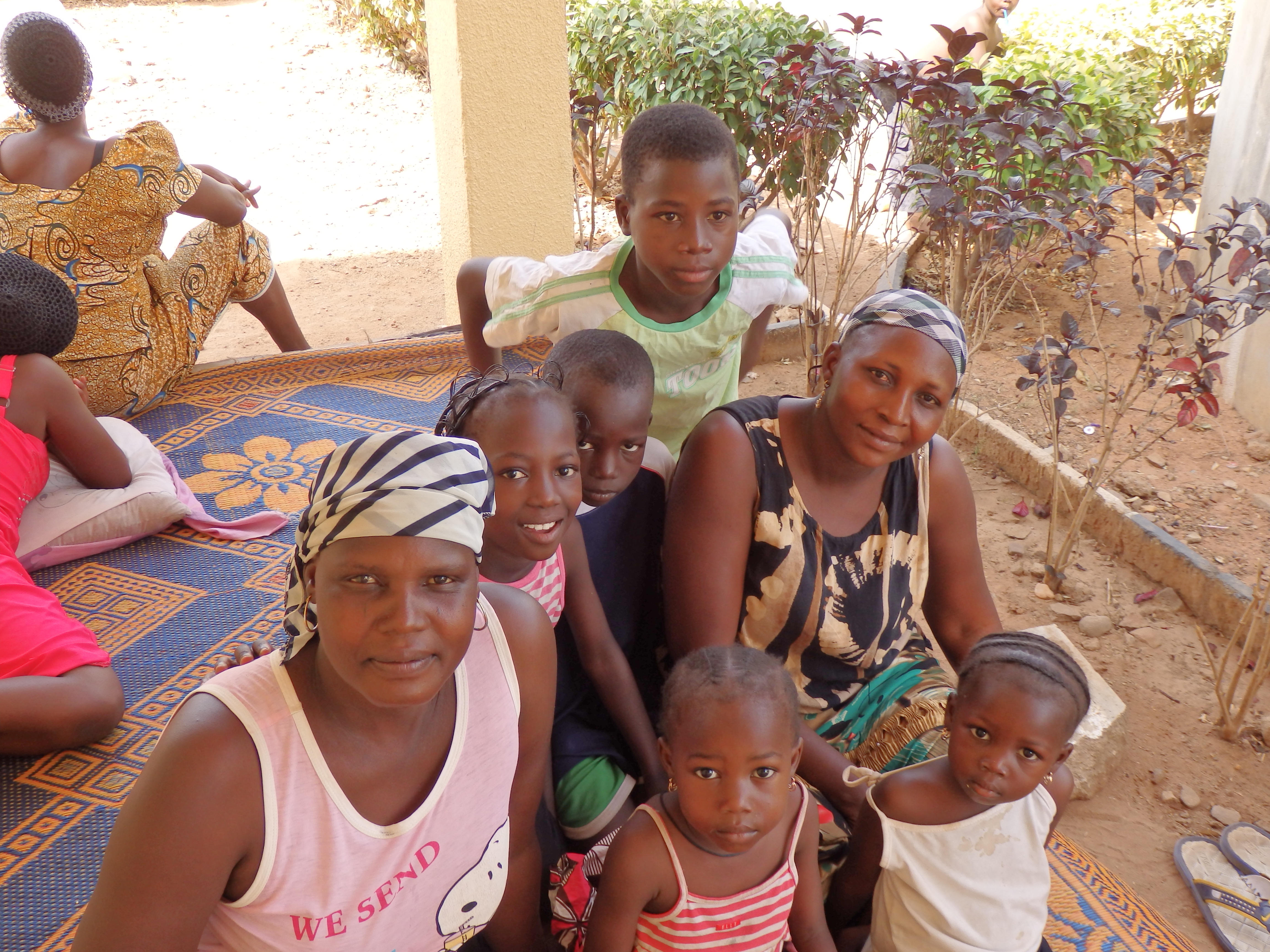
“She and her relatives spend the day moving her mat from one shady spot to another.” Photo Credit: Cliff Kindy

Being an internally displaced person (IDP) in Nigeria means that one is no longer able to live in one’s own home. Here in Nigeria one and a half million persons have become displaced because of the attacks and threats from Boko Haram. Being displaced means having to relocate to another place. It might entail moving to the home of friends or family who are quite welcoming. It might mean living in the bush where conditions might be minimal but a higher level of security is felt. Or it might mean settling into a camp where there are many other IDPs and some level of support from NGOs or government.

Recently I talked more deeply with an IDP who is living here at the Catholic Retreat Center in Yola. Through marriage she is connected with the bishop of this region and was invited to live here with her extended family when Boko Haram took over her village. She and her family are from EYN. Her father pastored at Lassa.

She has been here for five months. At home she would be busy with tasks that care for her family. Here she sits and waits for food to be given to her. She and her relatives spend the day moving her mat from one shady spot to another as the scorching sun moves across the day. She waits for clothes to be provided for her needs because she had to flee with just what she was wearing. She says she feels she has no power.

At home she has her own garden. If she needs food she goes “to pick the food, cashews, lemons, groundnuts,” to feed her family. If she needs clothes she has them in her house or can sell farm produce or animals for money to buy them. She has resources to purchase school supplies for her children.

Here she feels unable to help others – her family or neighbors. She is without the resources that are so available to her at home. This city is a strange place where she does not have access. At home she has connections but here she is rootless and powerless.

What does this feeling of powerlessness do over a long period? One begins to feel very small and helpless. A recognition of total dependency on others builds a new reality. Where one had been self-reliant and quite independent one becomes incapable of changing the dynamics that impact one’s life. For sure the larger problems appear beyond one’s influence. The problem of violence from Boko Haram seems untouchable. And even the smaller issues begin to appear like mountains.

Prayer? Her prayer that Boko Haram would be stopped before reaching her village was not answered. Her prayer that her needs would be met in a positive way seems to be answered only minimally. Her prayer that the threat of Boko Haram would be eradicated by the government so she could return home has seemingly not been heard. Despair starts to set into her life. Does God even care?

The monotony of life here at the Center is nothing like her life in the village. There she can constantly influence her future. Here she has few ways to change her future. Living door to door here with other IDPs who are similarly disempowered and dependent makes her feel small and worthless.

Later in the evening one of her neighbors exploded with anger for the entire neighborhood to listen in to the family squabble. Having no diversions of work or community activity allows tensions to build between people until they explode. Are there networks of healing in this place?

Continue to pray for Asabe and all the IDP’s in Nigeria.   “Carry each other’s burdens, and in this way you will fulfill the law of Christ.” Galatians 6:2

EYN Devotions February 15-21, 2015

DAILY LINK WITH GOD 2015EYN Devotions graphic
A Daily Devotional Guide from the
EYN (Church of the Brethren in Nigeria)

EYN leaders in Nigeria believe prayer is one of the most important ways to support the Nigerian people and the Church.  These daily devotions were written by EYN members and published by the Church of the Brethren in Nigeria. Reading them daily is a powerful way we can be in solidarity and connect with our brothers and sisters caught in this crisis.  EYN’s daily devotional for 2015 will be posted a week at a time on this blog, appearing mid-week for the following week. More information about the crisis can be found at www.nigeriacrisis.org.

Click on this link for the EYN Devotion Blog Feb 15-21, 2015

Stories from Nigeria: Rev. L

By Cliff Kindy, Brethren Disaster Ministries volunteer reporting from Nigeria
Names abbreviated for security purposes.

Rev. L explains he is the district secretary for Attagara District of EYN and is from Attagara Village. On June 3, 2014, Boko Haram raided Attagara. Sixty-eight people died in the attack and sixty-five of them were from EYN. The raiders burned seven churches including the only EYN congregation. Unfortunately the other eleven churches in his district fell to the flames of Boko Haram as well as most of the EYN churches in the three neighboring districts.

Rev. L fled across the border to Cameroon while his wife and children fled to Michika. When Michika came under attack in early September the family reunited in Cameroon. Their new home was a refugee camp run by the United Nations. There were thirty thousand neighbors in their new home. The well that supplied the camp ran dry, the nearby river is without water now during the dry season and the nearest village is far enough away that those going for water may choose to stay overnight.

The UN sometimes only brings enough food for seven thousand people so the community has been good and shared what is available. The camp is far enough from the border that Boko Haram raids into Cameroon have not reached the camp but security officials from Cameroon recently rounded up nine people from the camp they accused of being Boko Haram.

People want to return to Nigeria but there continues to be very high risk in their home communities. Boko Haram dumped dead bodies in the wells of Attagara. All the homes are burned there. Even if Boko Haram leaves will they plant explosives as they depart and what about the family members who joined Boko Haram and choose to live in Attagara? But how long will Cameroon continue to host these visitors in the UN camp? Is there a safe place to go in Nigeria?

Most of the EYN refugees are farmers and would be willing to stay in Cameroon. Rev. L plans to visit the government to see if there is a large plot of land where the refugees could settle and farm. He also wants to see about some smaller plots to build five EYN churches. He has decided to stay in Cameroon and work with the church.

You see there are fifteen thousand EYN members in the camp. Since the camp is divided into five wards or sections each ward has an EYN congregation that numbers about three thousand people. There are three ordained EYN pastors and twenty-three evangelists very engaged in the life of these congregations. There have been fifty-three baptisms and two hundred thirty-five births among the EYN members. Their neighbors in the camp are about nine thousand Catholics, four thousand Muslims and one or two thousand Christians from other denominations. Are you interested in helping to plant new EYN churches in Cameroon?

Fear and I: Cliff and Boko Haram

By Cliff Kindy, Brethren Disaster Ministries volunteer reporting from Nigeria

Fear of Boko Haram has a major impact on the people of EYN today. Fear has driven most of the members of EYN to move from their homes. That fear impacts where I am allowed to travel as one who works with EYN. That same fear shapes the impressions that members of the Church of the Brethren have of Nigeria.

Fear is the primary tool of violence. Fear is used to immobilize an enemy. Fear can terrorize and incapacitate an enemy. Fear prevents an enemy from considering ways to overcome its power. Fear is used by Boko Haram. Fear is used by the Islamic State. Fear is used by Al Qaeda. The attack on the World Trade Center was an act to stimulate fear. Of course the Islamic State learned its tactics in the prisons and torture chambers of the United States when it controlled Abu Ghraib Prison in Iraq.

The Bible is full of passages that try to debunk fear. The angel’s words to Zachariah in the temple, to Mary when she was told she would carry the Messiah, to the shepherds waiting on their flocks in the dark of night and Jesus’ words to his disciples hidden behind locked doors are all paths to alleviate fear and build courage for the road ahead.

Boko Haram is a new manifestation of fear. It is mostly invisible because few people from the outside have spent time with this group. Those who have experienced the violence of Boko Haram are often immobilized by the shock of the acts carried out by Boko Haram. But what if burial teams of Christians and Muslims went into the areas conceded to Boko Haram and offered to bury the bodies? Those teams might take back conceded space in their willingness to face down fear.

Night and invisibility assist the growth of terror. Boko Haram has learned its lessons well. Surely torture and fear have a long bloody history. The torture chambers of the Inquisition, the hell holes of the Nazi Holocaust, the cells of Guantanamo Prison and the hidden rendition sites of the United States all are training schools of terror and terrorist groups. Their invisibility allows imagination to blow things out of proportion and then glimpses of them can be used to increase fear and terror. The training manual of the School of the Americas (the school now in Ft. Benning, Georgia) refined the tools of fear. Those tools of fear became the tools to “re-form” civil society to fit the needs of Empire. So religious leaders, political activists, union leaders, human rights workers and ordinary farmers became the targets of pressure, torture and death. The parallel school comes from the Israeli military. Its experiences and the tools used to destroy Palestinian society are marketed around the world for dominant political societies to control or eliminate their opposition.

Learning to deal with fear is an important tool for followers of the Prince of Peace, for nonviolent practitioners. I compare the learning process to Arlene’s (my wife) steps in preparing to cook for large numbers of people. She is a good cook but she didn’t start out cooking for a crowd of three hundred. I don’t start out facing down Boko Haram in the village streets of Gwoza, their center of operation in eastern Nigeria. But I do want to reach the place where I would be willing to go there. What if a team went to take gifts to the leaders of Boko Haram? Gifts of one thousand moringa tree (miracle healing tree of Nigeria) starts, a peace choir from the women’s fellowship (ZME) of EYN, a tool box of nonviolent tools to replace the dysfunctional violent tools they use, and a trauma healing team of Muslims and Christians? Acting with this spirit counteracts fear.

When Arlene prepares raised donuts for three hundred people she works in a helpful context. 1) She has cooked donuts often, 2) she has helpers, 3) she has favorite recipes which she has tested, 4) she has tools that expedite the process and 5) she has spaces to let the dough rise, cook in hot fat, cool, hang from dripping racks after icing and 6) spaces to feed hungry people.

When I visit a war zone I try to build a favorable context by reading all I can find about the place. I pray while working in the garden. I dream scenarios of possible situations and my responses. I go by invitation so I know that there are others to walk with me and teammates with whom to work.

I have practiced fear management in other places while working with Christian Peacemaker Teams. When suicide bombers came to our house in Baghdad or when the armed robbers raided our compound in the Democratic Republic of the Congo we spent hours debriefing the experiences. Deconstructing the experiences helps me to understand the pieces and also deal with the trauma.

Yes, trauma does affect most of us in these and other types of situations. Trauma healing works to frame the experience in ways other than terror. Trauma is our body’s safety fuse that blows when fear is about to overwhelm our body’s capacity to cope. But then trauma comes back to haunt us because the normal emotional circuits have been broken and need to be rebuilt through long patient work. Forgiveness is one way that can change the dynamics and understanding of an event. Or if I can understand violence and fear in a way that allows me to envision a positive future then I regain control of my responses in both energizing and life giving ways. So dealing with fear both before it happens and after it happens, and doing it many times, allows me to understand the construction and deconstruction of fear. Maybe this parallels the ease with which Arlene can undertake a cooking assignment for a large group of people.

Realizing that fear impacts any nonviolent actions that I use helps me to recognize my reactions to fear and move to minimize its effect so that I can be the one who takes the initiative rather than being immobilized by the fear that an “enemy” throws at me. What if we held a 50,000 person march from central Nigeria toward the northeast where Boko Haram is ensconced? It would attract heavy media coverage. Muslims and Christians would make up the marchers since both are about equally impacted by Boko Haram’s violence. Invite the Catholic archbishop, the Muslim Emir of Kano and Pope Francis to participate. Take the choir of ZME, the Muslim youth who protected the churches of Christians during Christmas celebrations and the Christian youth who protected the mosques during Muslim holy days. The message would be that together we desire a different and better future from what Boko Haram is creating. Invite them to help shape the future in ways that all benefit. Clearly a caliphate with no people, with wells containing dead bodies, destroyed homes, burned medical clinics and destroyed harvests does not lead to a workable future.

I carry tools that counteract fear too. The New Testament is full of tools that re-take the initiative for peace. Paul invites us to overcome evil with good. Jesus says to love our enemies, pray for those who misuse us, feed our enemies if they are hungry and give them something to drink if they are thirsty. He said that the peacemakers are blessed!

Sure, we could encourage Nigeria to do what the United States military did in Iraq and Afghanistan, Somalia and Libya, Syria and Yemen… I don’t wish that on Nigeria. I think we have much more effective tools at our disposal. The suggestions I have peppered through this writing may not be the ones for Nigeria but perhaps they can stimulate even better and more creative ideas for Nigerian peacemakers to use.

Ananias in Acts 9 is resistant to the prodding of Jesus because of his fear but finally agrees to lay hands on the Boko Haram leader of the early church. So Saul/Paul regains his sight and receives the Holy Spirit. He is transformed, as is Ananias. This Paul goes on to write about half of my New Testament. So where are the Ananiases in Nigeria who, in spite of their fear, will lay hands on the Sauls of Boko Haram? See, one needs to be close to them to do that — close enough to share some of Arlene’s donuts with Boko Haram.


EYN Devotions February 8-14, 2015

DAILY LINK WITH GOD 2015EYN Devotions graphic
A Daily Devotional Guide from the
EYN (Church of the Brethren in Nigeria)

EYN leaders in Nigeria believe prayer is one of the most important ways to support the Nigerian people and the Church.  These daily devotions were written by EYN members and published by the Church of the Brethren in Nigeria. Reading them daily is a powerful way we can be in solidarity and connect with our brothers and sisters caught in this crisis.  EYN’s daily devotional for 2015 will be posted a week at a time on this blog, appearing mid-week for the following week. More information about the crisis can be found at www.nigeriacrisis.org.

Click on this link for the EYN Devotion Blog Feb 8-14, 2015

Reports from Nigeria: A phone report from Cliff Kindy

Phone Report from Cliff Kindy to Carl and Roxane Hill on Feb. 3, 2015. Cliff is currently a Brethren Disaster Ministries volunteer reporting from Nigeria.

  • Cliff is helping organize a
    Cliff at Garku

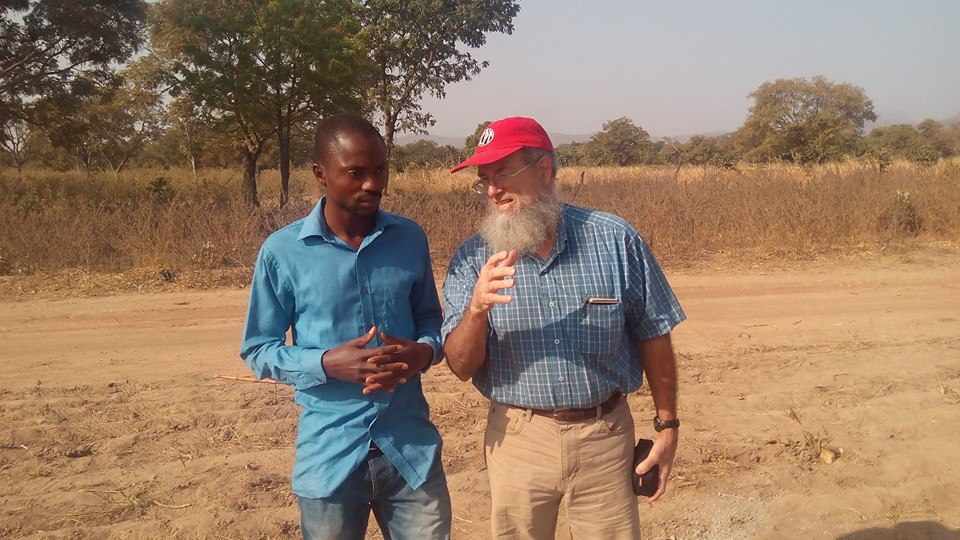
    Cliff Kindy (right) volunteering in Nigeria. Photo courtesy of EYN Nigeria.

    Peace and Democracy Conference in Yola: promoting civic responsibility as the national elections draw near (scheduled for 14 February)

  • He will accompany delegates from the Swiss Embassy as they visit IDP (internally displaced persons) camps in Yola and survey the conditions in Mubi
  • Boko Haram insurgents continue their campaign of fear with bomb blasts in Gombe where President Goodluck Jonathan was campaigning earlier this week
  • Cliff has been instrumental in encouraging and participating in various Trauma Healing workshops – Mennonite Central Committee is sponsoring one for EYN leadership this week, helping these leaders to lead despite the trauma they may be experiencing
  • Cliff received reports that the Nigerian military attacked Boko Haram headquarters in the Sambisa Forest. With the successful defense of the city of Maiduguri, it appears that Boko Haram is being limited to hit-and-run tactics
  • With Cliff’s encouragement, EYN’s director of education has established a teacher-training program and set up locations to begin teaching at the five IDP camps in Jos
  • Cliff is asking for prayers for his mother who was recently hospitalized
  • Continued prayer for Cliff’s safety and health as he continues his important work in Nigeria
  • Lastly, as most of us are digging out of the recent snow storm, Cliff is enduring 100-degree heat with failing electricity and fighting mosquitoes in humid east Nigeria – way to go, Cliff!

Stories from Nigeria: Churches – What a difference a year makes

By Roxane Hill, co-director of Nigeria Crisis Response

Michika EYN dedication

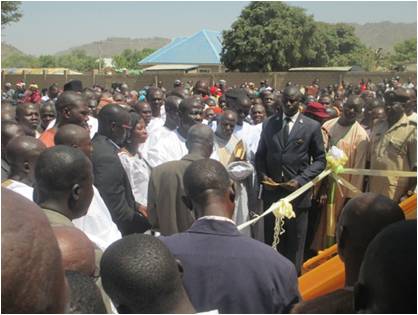
EYN church dedication outside of Michika. Photo Credit: Carl & Roxane Hill

On a bright sunny day last February, Carl and I attended a dedication service for a new church (Local Church Branch) of Ekklesiyar Yan’uwa a Nigeria (EYN, the Church of the Brethren in Nigeria) just outside of Michika. The atmosphere was festive and the people were excited to imagine what God would do at this new church. There were so many of us at the dedication that we had to gather outside for the prayer.

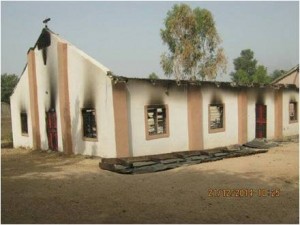
Michika EYN burned 2

Photo courtesy of EYN Nigeria.


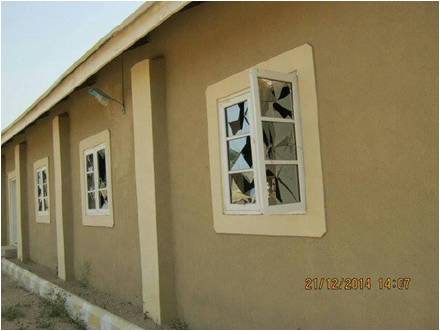
Fast forward to the outlook today. – The church branch has been burned, the roof caved in and the people who would have attended have been displaced. But… God is still sovereign and he knows the past, present, and what the future holds. Despite the devastation and destruction, God’s people will continue to meet where they can.

Michika EYN burned 1

Burned EYN church outside of Michika. Photo courtesy of EYN Nigeria


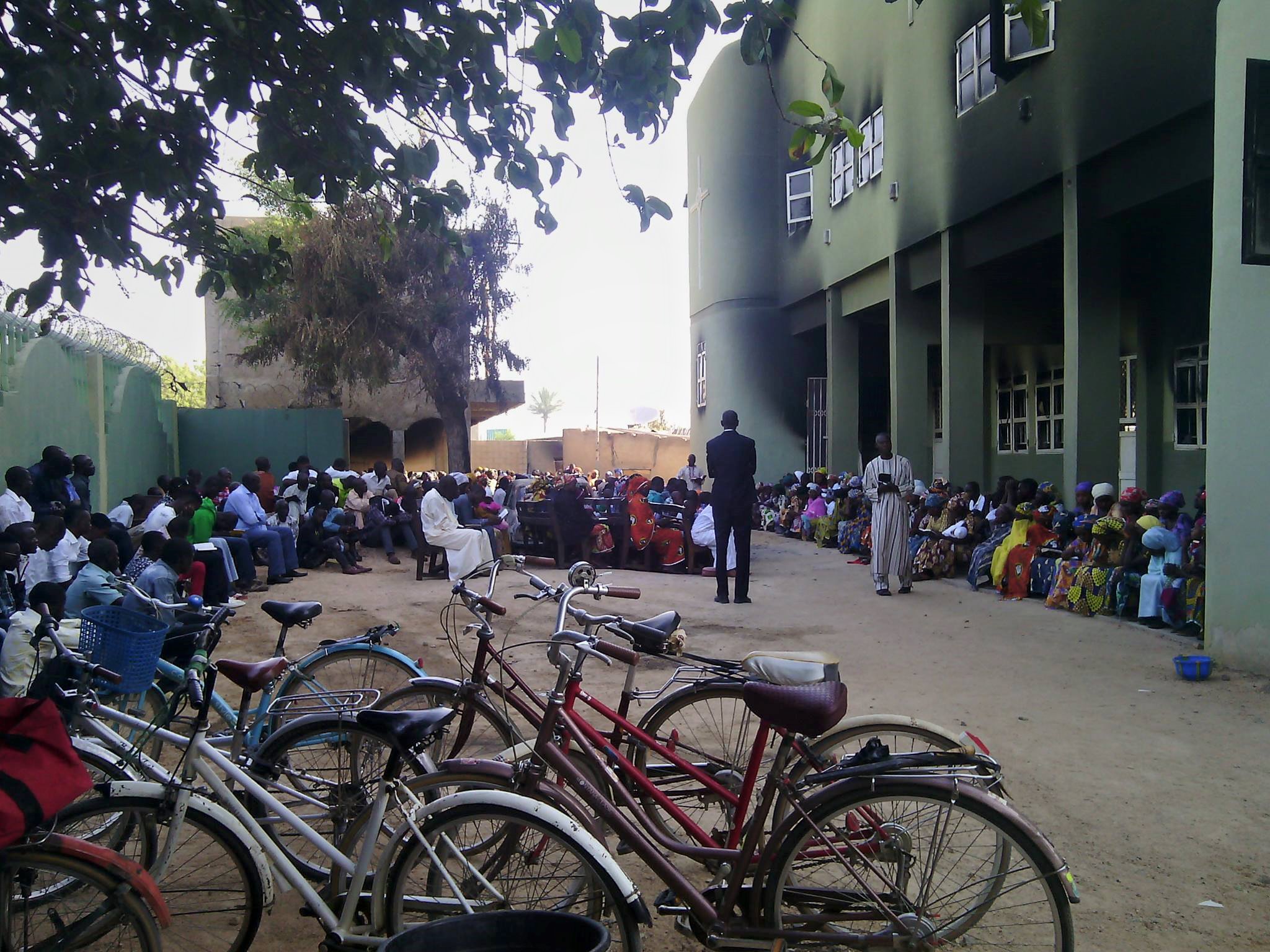
On Christmas Day 2014, in Mubi, a town 60 miles from Michika, displaced persons returned and held a service outside their burned church.

With the Nigerians, we continue to pray and we continue to put our hope in Jesus Christ.

Christmas Service outside church by Monday Ali

Christmas Service outside of a burned church in Mubi. Photo courtesy of EYN Nigeria.

Reports from Nigeria: Progress Report for the Week of Jan 26, 2015

PROGRESS in our Nigeria Crisis Response

  • New Headquarters for EYN has been established
  • EYN staff have been housed and their children have been enrolled in local schools
  • Building of staff housing is going on at Headquarters
  • 2 trucks were purchased to use in the distribution of food and construction supplies
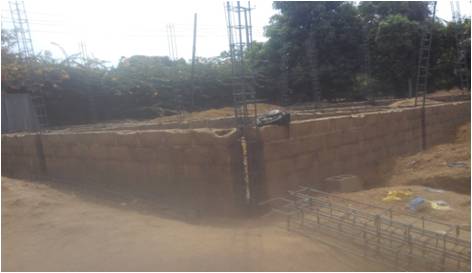
  • Lifeline Interfaith project – 100 Christian and Muslim families are being settled, water bore hole was dug, building of semi-permanent houses has commenced
  • Food was distributed to over 12,000 displaced persons in the last 2 weeks
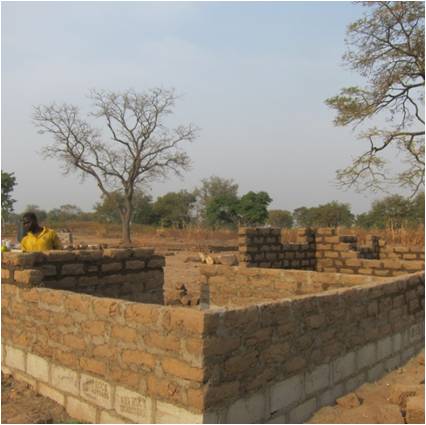
  • Land has been purchased and is being cleared for care centers for the displaced people
  • WYEAHI (Women and Youth Empowerment For Advancement & Health Initiative) – has begun registration for the sustainability projects
  • Numerous trauma healing seminars for pastors, men and women have been held (Mennonite Central Committee in Nigeria is assisting in this effort)
Lifelines Interfaith project Jan 2015

Building houses at the Lifelines Interfaith project. Photo courtesy of EYN Nigeria.

EYN staff quarters at HQ 1.28.14

Building of the staff quarters at EYN Headquarters. Photo courtesy of EYN Nigeria.


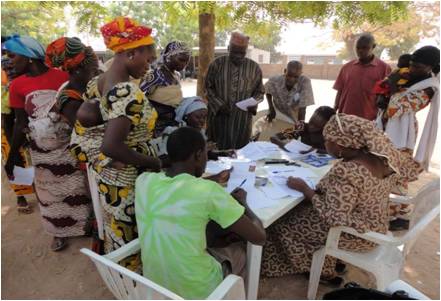
WYEAHI IDP registration table

Registration table with WYEAHI staff busy registering the Internally Displaced Persons. Photo courtesy of EYN Nigeria.

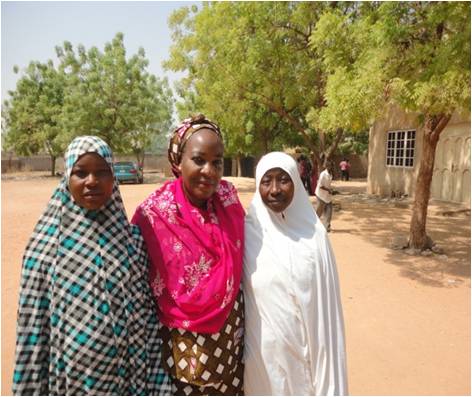
Aishatu, head of WYEAHI

Aishatu, head of WYEAHI, with two Muslim women among those that came for registration. Photo courtesy of EYN Nigeria.

Highlighting WYEAHI (Women and Youth Empowerment For Advancement & Health Initiative)
Aishatu Margima is the Executive Director of the NGO (Non-government organization). She will be assisting in the Nigeria Crisis by providing sustainability projects to displaced persons especially women who are widowed or separated from their husbands. These sustainability projects will include setting them up in small business ventures i.e. sewing machines, grinding machines, cooking & selling food items, giving animals for breeding and selling, and providing farming assistance with seeds, plows, and fertilizer. The first step in this process was an information session where Aishatu told about her program and registered individuals. This first session was completed at a church and both Muslims and Christians were successfully registered. One challenge is that funds are limited and she can only help so many; the organization will first concentrate on the most vulnerable.

Snapshots  (edited for grammar and security)
Amina
“Tragedy befell me during the insurgency attack in Maiduguri, Borno State of Nigeria on Tuesday 2nd October, 2014. On that fateful day they attacked, my beloved husband and two (2) of my lovely children were slaughtered before my naked eyes. They (the Boko Haram) took away our two cars and all valuable things in our house and left me a widow with five children.”

Maria testified that she has not seen her husband since the Michika crisis (July 2014). She is left with her kids and she is now six months pregnant.

EYN Devotions February 1-7, 2015

DAILY LINK WITH GOD 2015EYN Devotions graphic
A Daily Devotional Guide from the
EYN (Church of the Brethren in Nigeria)

EYN leaders in Nigeria believe prayer is one of the most important ways to support the Nigerian people and the Church.  These daily devotions were written by EYN members and published by the Church of the Brethren in Nigeria. Reading them daily is a powerful way we can be in solidarity and connect with our brothers and sisters caught in this crisis.  EYN’s daily devotional for 2015 will be posted a week at a time on this blog, appearing mid-week for the following week. More information about the crisis can be found at www.nigeriacrisis.org.

EYN Devotion Blog Feb 1-7, 2015